

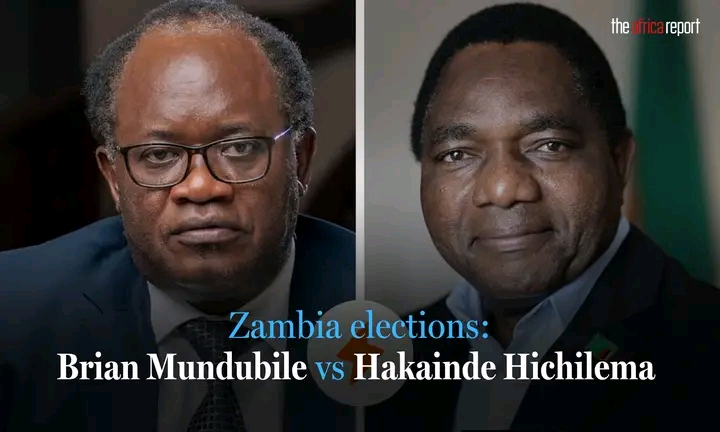
EDITOR’S NOTE | Tonse Must Publish Its PVT
Zambia has reached the most sensitive stage of this election. Voting is over. Results exist at polling-station level. But the Electoral Commission of Zambia has suspended counting and announcements nationwide after reporting violence against election officials, threats and alleged theft of marked ballot papers. ECZ says it will review the suspension within 24 hours.
This interruption matters because ECZ had not announced a national presidential result before the suspension. What Zambians have largely been seeing are results generated at polling stations, copies of electoral records held by agents, constituency-level information and figures circulated by political parties, journalists and monitors. ECZ lists 226 constituencies and 8,786,300 registered voters for this election. Bringing thousands of polling-station results through constituency collation into one verified national presidential result is a process, not a single announcement.
Brian Mundubile has now gone further. He says the Tonse Alliance has conducted a Parallel Voter Tabulation using information transmitted by its agents from polling stations and totalling centres across Zambia. His conclusion is unequivocal: “Our tabulation indicates that we have won this election.”
Mundubile has also alleged interference involving security personnel, ballot boxes and Gen 20 forms in several parts of the country. His statement calls for transparency and says: “If the official results differ from the results recorded at polling stations, the answer is not secrecy. The answer is transparency.”
On this point, there is a straightforward test.
Publish the PVT.
If Tonse has received sufficient results from its agents to conclude it has won a national election involving nearly 8.8 million registered voters, it should be able to show the country the arithmetic supporting the declaration. Publish the polling-station figures. Publish the constituency aggregates. State how many polling stations are represented, which constituencies remain outstanding and what proportion of the national vote the tabulation covers. Where possible, make the underlying electoral records available for scrutiny.
This is not an argument against Mundubile. It is an argument for the transparency he himself is demanding from ECZ.
A credible PVT would strengthen his case if the numbers support it. It would allow newsrooms, observers, civil society, rival parties and ordinary citizens to compare Tonse’s records with copies held elsewhere. If discrepancies later emerge in the official tally, there would be a documented baseline against which those discrepancies could be tested.
The same standard applies to UPND. The governing party and its supporters should not selectively publish spectacular results from Southern, Western, North-Western or other favourable areas and use them to imply a national outcome. Tonse supporters should not take favourable returns from Copperbelt, Luapula, Northern or Eastern and extrapolate them into a national victory. A polling station is not a constituency. A constituency is not a province. Winning several provinces does not necessarily mean winning Zambia.
Our examination of the results reaching The People’s Brief already illustrates why.
Some of the signed Gen 20 material and credible results shared with us show Mundubile performing strongly in traditional PF territory. Kasama Central figures, for example, included 299–99 at Buseko Hall, 239–120 at NCU Offices and 339–66 at Kapongolo Primary, all in Mundubile’s favour.
But the northern vote is not moving uniformly. Results supplied from Kaputa included Hichilema 214–85 at Ilembwe, 345–160 at Chingoyo and 295–104 at Shikayamba. At Mukupa Kaoma in Lunte, the result shared with us was Hichilema 354, Mundubile 185. Those are precisely the kinds of numbers which complicate sweeping claims about entire regions.
Eastern Province presents another mixed picture. Three Chipata Trades Institute streams supplied to us gave Mundubile 268–182, 274–136 and 273–116. But Chadiza West produced a result of Hichilema 136, Mundubile 86, while other returns we have been tracking show UPND penetration in constituencies previously considered difficult terrain.
Then come the margins from UPND strongholds. At Mbeta Island in Sioma, a result supplied to us showed Hichilema 474, Mundubile 9. Other Western and North-Western returns have produced similarly lopsided margins. This is why electoral arithmetic matters. A candidate can win five provinces narrowly and still lose nationally if an opponent builds much larger vote margins elsewhere.
Parliamentary misinformation provides another warning.
Claims circulated on social media suggesting opposition forces had captured all parliamentary seats across the Copperbelt and Lusaka. Such blanket claims should never have been treated as established results. Candidate coverage itself was not uniform across every constituency, and subsequent constituency information has complicated some of the early victory narratives.
Roan is instructive. Chishimba Kambwili returned to contest the constituency after previously representing it for years, and contemporary reporting confirms his 2026 political movement through Citizens First and subsequently towards the Tonse-aligned camp. Early political claims around the constituency illustrate exactly why The People’s Brief will not declare parliamentary winners simply because a partisan page announces them. We require the electoral record or sufficiently credible constituency confirmation.
This information disorder now carries a political risk larger than any individual false result.
Supporters on both sides have spent hours consuming feeds telling them their candidate is winning. Each camp can construct an apparently convincing election simply by selecting favourable polling stations. When supporters become psychologically invested in those parallel realities, an eventual result contradicting their feed can easily be interpreted as evidence of manipulation rather than evidence that their information sample was incomplete.
That is how misinformation moves from the phone screen into an electoral crisis.
ECZ therefore carries an exceptional responsibility. The suspension cannot become an information vacuum. The Commission needs to explain clearly what has stopped, what remains legally permissible at polling and totalling centres, how electoral materials are being secured, and when collation and announcements will resume. The allegations raised by Mundubile concerning security personnel and electoral records also deserve clear, specific answers rather than political exchanges.
Tonse carries responsibility too. It says it possesses a nationwide body of results sufficient to declare victory. Show Zambia those results. Not selected screenshots. Not favourable constituencies. Not a victory statement. The PVT.
UPND should meet precisely the same standard for any national claims made through its structures.
Our lean team will continue working differently. We will use signed electoral records where they can be authenticated, constituency declarations where available, credible reporting from our contacts across the provinces and, ultimately, ECZ’s official collation. We will distinguish a party claim from a verified result. Where information changes, we will update it. Where evidence is insufficient, we will say so.
There will be enormous pressure to be first. Our obligation is to be right.
Zambians voted peacefully in their millions. They deserve more than competing Facebook victories, selective spreadsheets and rumours about ballot boxes. They deserve numbers capable of being checked against the original record.
Mundubile has asked for transparency. ECZ must provide it. UPND must respect it.
And if Tonse’s PVT shows what Mundubile says it shows, Tonse should publish it. The vote belongs to Zambia. So should the evidence.
-The People’s Brief | Editor
This makes a lot of sense.
These guys are too incompetent and immature politically. They are overly emotionally inclined without any sensible or logical thinking.
I personally think all this is deliberate to cause confusion. No rational leader would behave in this manner. It is reckless and absolutely criminal.
This is truly annoying and sad to see. A few power hungry people who can not respect process will not hold all of us hostage to this stupidity. Sit down and allow the institution mandated to verify and announce the real figures. Your chance to react to all these will be accorded.