

Trump Admin Delivers on Nuclear Renaissance: Three Plants Restarting, Fleet Upgrades Underway, New Reactors Coming
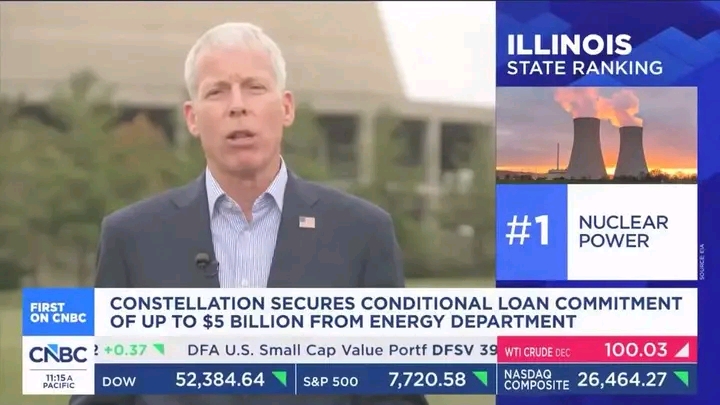
Energy Secretary Chris Wright stood at the Byron Generating Station in Illinois this week and declared the nuclear revival is no longer a talking point. It is underway.
Speaking live on CNBC from the plant, Wright said the facility behind him was days from closure just over five years ago. Democrat policies and heavy subsidies for intermittent wind and solar had made even existing nuclear plants uneconomic. “President Trump has come in with, we’re going to add energy to America, not just energy production, but energy demand. Those two things working together has made America revive nuclear power,” Wright said. “We’re restarting three power plants, uprating power plants all across the country, and soon you’ll be hearing announcements about new reactors being constructed. So, yes, the nuclear renaissance is real, Brian. It’s happening.”
The Department of Energy announced a conditional loan commitment of up to $5 billion to Constellation Energy, the nation’s largest nuclear operator. The money will finance uprates and modernization across 15 reactors at eight sites in Illinois, Maryland, and Pennsylvania. The work adds 1.1 gigawatts of capacity—enough to power more than 930,000 homes—while supporting more than 10,000 jobs. At Byron alone, the upgrades deliver an extra 150 megawatts from equipment already in place.
Illinois leads the country in nuclear generation. Wright noted the state ranking and the national fleet of 54 plants with 94 operating reactors. The three plants being restarted are Palisades in Michigan, Crane (formerly Three Mile Island Unit 1) in Pennsylvania, and Duane Arnold in Iowa. These restarts, combined with the Constellation uprates, advance the administration’s goal of adding 5 gigawatts through existing infrastructure rather than waiting a decade for new builds.
Wright framed the push as common-sense energy addition: reliable baseload power that lowers costs, supports manufacturing, and meets rising demand from industry and data centers. “It’s significantly more energy, puts downward pressure on rates, allows more manufacturing, more jobs to be created in the area served by these plants,” he said of the Constellation projects.
Previous administrations prioritized emission reductions over reliability and cost. The result was plants on the brink of shutdown and a grid increasingly dependent on weather-dependent sources.
The Trump approach reverses that by pairing production increases with demand growth, restoring nuclear’s economic case without relying on endless subsidies.- DTP