

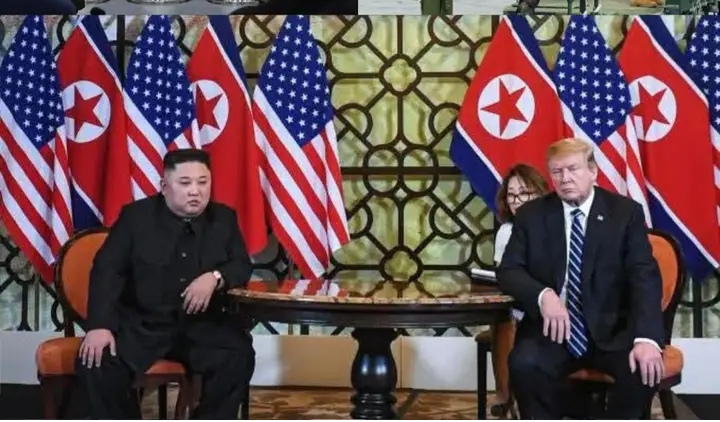
Trump Moves to Reduce U.S.-South Korea Military Drills, Citing Kim Jong Un Relationship
Trump Says U.S. Will Scale Back Military Exercises With South Korea
U.S. President Donald Trump has announced plans to reduce joint U.S.-South Korean military exercises, citing his relationship with North Korean leader Kim Jong Un and growing frustration over Seoul’s refusal to participate in the U.S. campaign against Iran.
Trump argued that the military drills are expensive and send an unnecessarily hostile signal to North Korea, which he described as a country that does not pose a direct threat to the United States.
The Ulchi Freedom Shield (UFS) exercise began as scheduled on Monday, with thousands of U.S. and South Korean troops participating. The 10-day exercise is focused on responding to emerging security threats, including drone attacks, cyber operations and GPS disruption.
North Korea has long condemned joint U.S.-South Korean military exercises, describing them as preparations for an invasion.
Trump also said he asked South Korea to assist U.S. efforts aimed at preventing Iran from obtaining nuclear weapons, but claimed Seoul responded: “No, thank you.”
South Korea has indicated that it remains in discussions with Washington about possible ways to contribute to maintaining freedom of navigation in the Strait of Hormuz, while ruling out direct participation in the war against Iran.
Kim Jong Un has not publicly commented on Trump’s latest decision to reduce the exercises. Meanwhile, North Korea has continued strengthening its military relationship with Russia. Pyongyang has provided military support to Moscow during the war in Ukraine, including troops that have fought alongside Russian forces, as well as missiles and drones.
Trump and Kim have previously held three high-level meetings focused on North Korea’s nuclear program. Despite the historic diplomacy, the negotiations ultimately failed to produce a comprehensive agreement on denuclearization.
Trump’s latest comments could mark another significant shift in U.S. military policy on the Korean Peninsula, while also testing Washington’s longstanding security commitment to Seoul.