

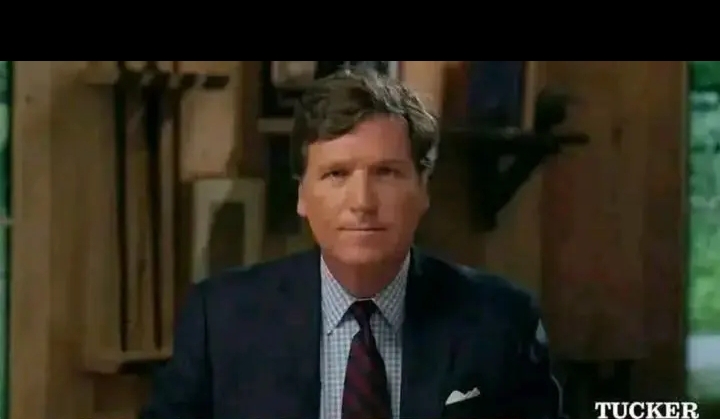
Tucker Carlson: “U.S. Strategy Provoked the Conflict With Russia”
American commentator Tucker Carlson has sharply criticized Washington’s policy toward Ukraine and Russia, arguing that successive U.S. administrations helped create the conditions for the current war by pushing Ukraine deeper into the Western orbit.
Carlson has repeatedly described the conflict as a “proxy war” in which Ukraine is being used as a battlefield in a broader confrontation between Washington and Moscow. He argues that the strategy has imposed enormous costs on Ukrainians while failing to deliver a clear strategic or security benefit to ordinary Americans.
Carlson’s central arguments
In his recent public and media appearances, Carlson has claimed that the United States has effectively “lost the war against Russia” and has accused Washington of prolonging a conflict that, in his view, is devastating Ukraine.
He has also argued that continued American financial and military assistance risks further weakening Ukraine rather than securing a decisive outcome against Russia. Carlson has therefore called for an end to what he describes as an open-ended U.S. commitment to the war.
His broader criticism focuses on the expansion of Western political and military influence into Ukraine. Carlson maintains that Washington and its European allies underestimated how strongly Moscow would react to Ukraine’s integration with Western institutions and security structures.
A narrative aligned with Moscow’s position
Carlson’s interpretation closely overlaps with a central element of the Kremlin’s narrative: that Russia’s confrontation with Ukraine cannot be separated from the wider struggle between Moscow and NATO.
Critics of Carlson argue that this framing minimizes Russia’s responsibility for launching the full-scale invasion of Ukraine and places excessive emphasis on U.S. and NATO policy as the primary cause of the conflict.
Supporters, however, argue that Carlson is challenging what they consider Washington’s conventional foreign-policy consensus and questioning whether continued weapons deliveries can realistically produce a favorable outcome for Ukraine.
Political impact in Washington
Carlson’s position has also become part of the wider American debate over military assistance to Kyiv. His criticism resonates with sections of the U.S. political right that oppose additional funding for Ukraine and believe Washington should prioritize domestic issues and other strategic threats.
The debate remains deeply divisive. Supporters of Ukraine argue that abandoning military assistance would strengthen Russia and undermine the principle that borders cannot be changed through force. Opponents counter that continued U.S. involvement risks prolonging the war and increasing the possibility of a broader confrontation with Moscow.
Carlson’s comments therefore represent more than criticism of a single administration. They reflect a growing faction within American politics that questions the strategic assumptions behind Washington’s support for Ukraine and calls for a fundamental reassessment of U.S. policy toward Russia.