

UKRAINIAN DRONES HIT VOLGOGRAD REFINERY—ONE OF RUSSIA’S LARGEST BURNS AGAIN
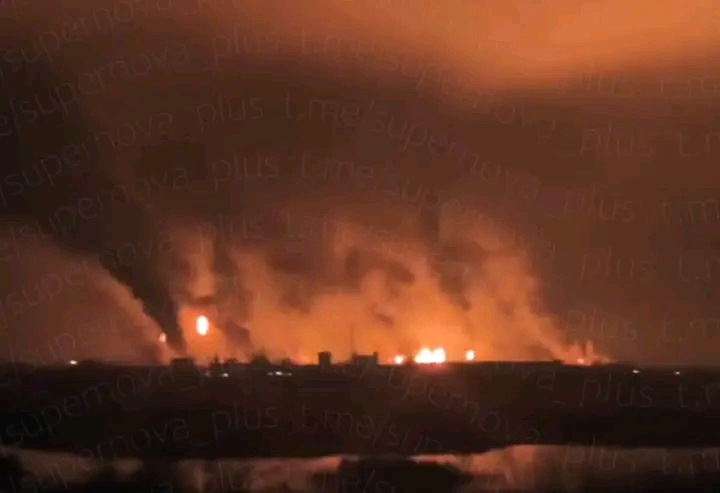
Ukrainian strike drones attacked the Lukoil oil refinery in Volgograd during the night of November 12–13, triggering explosions and fires across the southern industrial district.
Russian regional authorities acknowledged that several fires erupted at an industrial enterprise, predictably attributing them to falling drone debris. Available footage and OSINT analysis identified the burning facility as Lukoil-Volgogradneftepererabotka, with several separate fire points reportedly visible.
No casualties or damage to residential buildings have been reported. Volgograd airport temporarily stopped accepting and departing flights during the attack.
The Volgograd refinery is not a minor fuel depot. It is one of Russia’s largest refineries, capable of processing approximately 15 million tonnes of crude oil annually—around 270,000 barrels every day and close to 5% of Russia’s total refining capacity
The facility produces gasoline, diesel, aviation fuel, fuel oil, petroleum coke, bitumen and lubricants. Its products help supply southern Russia and feed the wider transportation and military-logistics system supporting the invasion of Ukraine.
Located roughly 300 kilometers from Ukraine’s internationally recognized border, the refinery has been struck repeatedly. Earlier attacks were reported in May, July and October, making this at least the fourth reported strike against the facility during 2026.
The October attack reportedly forced the refinery to stop processing crude completely while damaged equipment was inspected and repaired. It had only returned to operation before Ukrainian drones reached it again.
The exact equipment damaged overnight has not yet been confirmed, and there is no reliable information about how much production has been interrupted. Even limited fires, however, can force shutdowns while pipelines, processing units and electrical systems are inspected for damage.
This is the pressure created by repeated strikes. Ukraine does not need to erase an entire refinery in a single night. Every return visit forces Russia to stop equipment, redirect production, locate specialized components and spend more money repairing the same infrastructure.
Industry sources already estimate that Ukraine’s renewed campaign has removed as much as 30% of Russia’s oil-processing capacity from operation. Volgograd burning again adds another major facility to a system increasingly trapped between temporary repairs and the arrival of the next Ukrainian drone.