

UPND MANIFESTO ACTUALISATION: ONE MILLION TONNES OF WHEAT WITH THE 2027 BUDGET AS AN OPENER
The UPND Manifesto target of producing 1 million metric tonnes of wheat annually by 2031 may initially sound ambitious, but when Zambia’s land, water, yields and existing agricultural capability are examined carefully, the surprising conclusion is that one million tonnes is not beyond Zambia’s capacity at all. The expanded irrigation, mechanisation, finance and extension services will be central to getting there.
Zambia is currently producing 250,000 tonnes of wheat per year from only 35,000 hectares, with an extraordinary average yield of approximately 7.1 tonnes per hectare. That productivity is the key to understanding the opportunity before us.
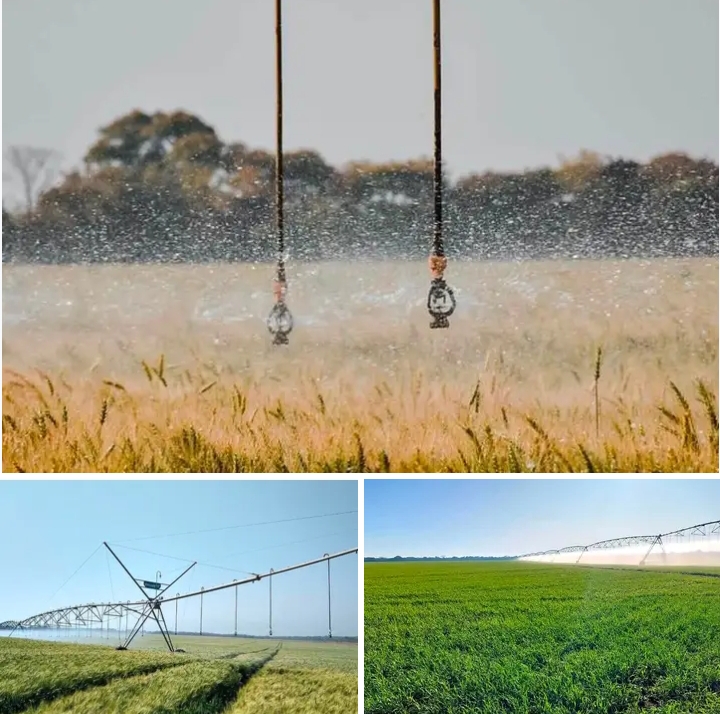
At that level of productivity, Zambia does not require millions of hectares to reach the manifesto target. At about 7 tonnes per hectare, approximately 140,000 to 145,000 hectares under wheat could produce one million tonnes. That means roughly quadrupling the present wheat area while broadly maintaining current commercial yields.
Now compare that requirement with Zambia’s irrigation potential. Zambia has approximately 2.75 million hectares of irrigation potential, including about 523,000 hectares considered economically developable, but only a fraction of that potential has historically been developed. Zambia also possesses substantial surface and groundwater resources.
If Zambia eventually develops around 210,000 to 280,000 hectares of competitive wheat production and maintains yields around 7 tonnes per hectare, annual production could move towards approximately 1.5 million to 2 million tonnes.
Wheat in Zambia has traditionally been heavily dependent upon winter irrigation, but the Zambia Agriculture Research Institute is now working on rain fed wheat varieties. During the 2024/25 season, newly released Tyetye and Mpheta varieties were distributed to smallholder farmers in seven provinces for demonstration. If this research scales successfully, wheat production could gradually move beyond the traditional large commercial farm and reach many more Zambian farmers.
The 2027 National Budget will be an anchor for accelerating irrigation schemes, dams and water harvesting; affordable agricultural finance; mechanisation; certified seed multiplication; research; electricity for irrigation; extension services; storage; aggregation and reliable market arrangements.
The real wealth is in the value chain. One million tonnes supports milling, flour production, bakeries, bread, biscuits, breakfast cereals, pasta, noodles, pastries, animal feeds, packaging, warehousing, transport, machinery maintenance, seed multiplication and agricultural research. These are businesses and jobs from the farm to the supermarket shelf.
This connects directly with President Hakainde Hichilema’s vision of provincial economic hubs. Different provinces can participate according to their comparative advantages in irrigated wheat production, seed multiplication, milling, food processing, machinery servicing, storage and logistics. The President’s vision is to increase not merely Zambia’s national GDP, but the productive economies of our provinces themselves.
There is also an international opportunity. Russia remains the world’s largest wheat exporter, while Ukraine remains a major supplier, but the war continues to constrain Ukraine’s production, logistics and exports. Therefore, our embassies cannot be merely diplomatic stations. They must increasingly become commercial outposts for Zambia identifying flour millers, grain traders, food manufacturers and institutional buyers before the crop is even planted. COMESA, SADC and the wider African market should be natural starting points.
There is also scope for a smaller, high value certified organic wheat industry. Zambia should investigate premium markets for organically certified grain and flour rather than competing only in bulk commodity wheat.
On AGOA, we must be precise. Zambia is currently AGOA eligible, and Zambia’s own National AGOA Response Strategy identified grains including wheat among potential medium term products for the American market.
Zambia Forward, TOGETHER in UNITY. 🇿🇲
Saviour Chishimba
President
United Progressive People (UPP)
UPND Alliance Partner