

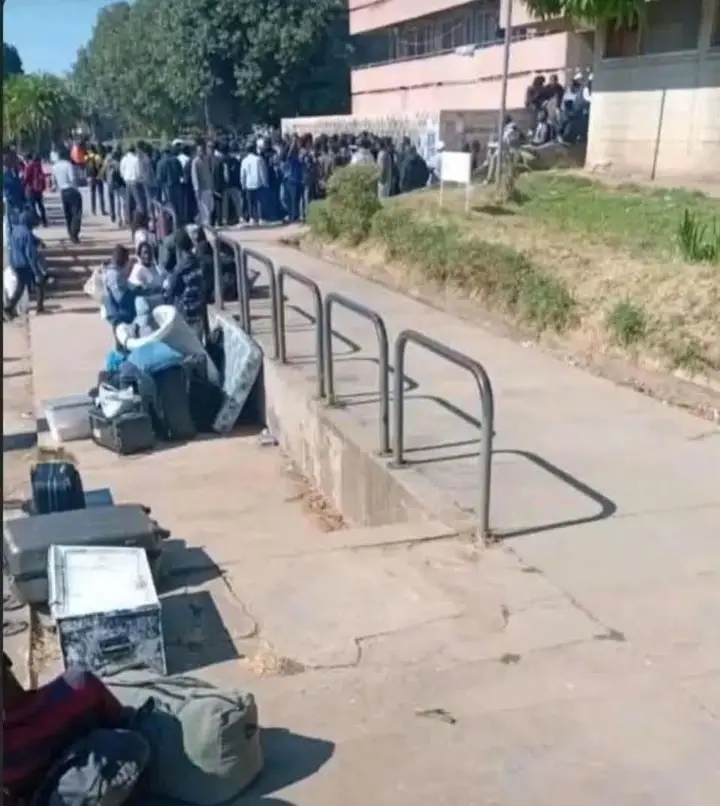
“WE OPENED AND CLOSED ON THE SAME DAY!”
UNZA Students Cry: ‘Who Will Refund Our Bus Fares and Our Parents’ Sacrifices?’
By Staff Reporter Zambian Political Watch
It was supposed to be the beginning of another academic chapter.
Instead, it became one of the most heartbreaking days in the lives of thousands of University of Zambia (UNZA) students.
“We opened and closed on the same day.”
That painful statement now sums up the frustration sweeping across the country after UNZA announced the postponement of students’ return for mid-year examinations.
For university management, it may have been an administrative announcement.
For students and their families, it was a crushing financial and emotional blow.
By the time the notice was released, countless parents had already emptied their pockets and sent their children back to Lusaka. Some borrowed money. Others sold farm produce, withdrew savings meant for groceries, or sacrificed other essential household needs just to raise transport fares.
Now those same families must somehow find money for another trip back and again when a new date is announced.
Students are asking difficult questions.
Who will pay for the return and the second transport fare
Who will cover accommodation costs already incurred?
Who will answer to parents who sacrificed everything, only for their children to be told to go back?
For many students, every journey to and from Lusaka is measured not just in kilometres but in sacrifice. Every bus ticket represents weeks of saving, months of planning and the hope of a better future through education.
That hope has now been replaced by uncertainty.
The announcement has left thousands wondering whether this disruption could have been anticipated earlier, before families committed scarce resources to travel and preparations for examinations.
“This isn’t just about postponing exams,” one student lamented.
“It’s about the burden placed on families who are already struggling with the high cost of living. We are the ones carrying the consequences.”
“Our parents did their part. We packed our bags. We prepared for our exams. Then, in a single notice, everything has come to a standstill.”
Education should inspire hope, not deepen hardship.
As students await a revised academic calendar, they are also waiting for something else a reassurance that the sacrifices made by their families are understood and that lessons will be learned to prevent such painful disruptions in the future.
Until then, one sentence continues to echo across Zambia’s largest public university:
“We opened and closed on the same day… but the financial burden on students and parents did not close with it.”