

EDITOR’S NOTE | In Politics, Some Things Should Never Be Said
Campaigns reveal character. Manifestos reveal policy. But off-the-cuff remarks often reveal something deeper: how leaders think about the country they seek to govern.
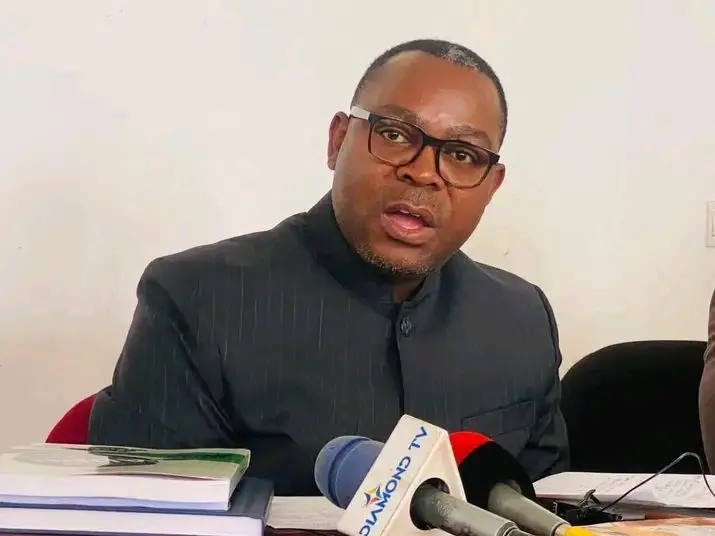
This weekend, Mutotwe Kafwaya, a senior figure in the Tonse Alliance and one of Brian Mundubile’s advisors, questioned the need for an international airport in Western Province, arguing that there was little economic justification beyond the annual Kuomboka Ceremony. Whether intended as political rhetoric or economic analysis, the remarks have landed badly, particularly in a province with a long memory.
Western Province is not reacting in isolation. It is reacting through history.
For many years, the Patriotic Front faced persistent criticism over what opponents described as regional imbalances in appointments, public investment and political inclusion. Those criticisms became part of Zambia’s political conversation long before the 2021 election. Whether one agreed with them or not, they shaped public perception. They also helped explain why provinces such as Western, Southern and North-Western increasingly consolidated behind the UPND.
Politics is not fought only on roads, schools and hospitals. It is also fought on whether people feel seen. Whether they feel included. Whether they believe the government belongs to them too.
This is why the remarks from Kafwaya have generated anger. They appear to confirm, for many people in Western Province, an old fear that some leaders still view development through the narrow lens of electoral arithmetic rather than national interest.
The irony is striking.
The Tonse Alliance has already indicated that it will devote fewer campaign resources to Southern, Western and North-Western provinces because they are considered UPND strongholds. That is a campaign strategy. Political parties make such calculations every election. But there is a profound difference between choosing where to campaign and suggesting that a province deserves less infrastructure because of its perceived economic value or voting pattern.
Governments do not build airports for party supporters. They build them for the Republic. Infrastructure is not a reward for voting correctly. It is an investment in future growth.
Western Province is not defined by one traditional ceremony. It is a gateway to Angola. It is home to agriculture, fisheries, tourism, livestock, wetlands of international significance and growing cross-border trade. If Zambia is serious about regional integration, economic diversification and expanding tourism, then provinces like Western require more connectivity, not less.
There is a broader political lesson here.
The Tonse Alliance has spent much of this campaign explaining statements that perhaps should never have been made. First came debates over foreign exchange reserves and inflation. Then promises whose financing remains unclear. Now regional development has entered the conversation. Every campaign makes mistakes. But when clarifications become more frequent than policy explanations, voters inevitably begin asking whether these are isolated slips or reflections of a deeper governing philosophy.
Words matter because they reveal priorities.
A future presidential adviser should speak in a manner that reassures every Zambian that they belong equally to the Republic. That includes those living in provinces that may never vote for his party. Leadership begins with understanding that political competition ends on election day, but national unity must endure long after the ballots have been counted.
Zambia has travelled too far to return to the politics of regions, insiders and outsiders.
The next President will inherit one country.
Not red provinces. Not green provinces. One Zambia. And every province deserves to hear that it matters.
© The People’s Brief | Editor
What is in the heart, the mouth speaks!!!
Bayamba ku funta aba bantu.
That’s what is in the mind of Kafwa.
HH is the only candidate who will unite Zambia.
AFTER 2031 we should reach a situation where by a KAONDE man can stand for an ELECTION in EASTERN province and Wins and a Tonga man can STAND IN NORTHERN an win.
That’s the Zambia we know NOT iyi yabene Kafwa. What type of thinking is that??
Ba Kafwaya, that’s paradoxical thinking, are you there to decide which province deserves what? The problem is that ba PF tamwakwata vision. See what Bally has done for Nakonde or Muchinga, he is putting an airport there and is not putting it for Muchinga or Nakonde but for the whole Country. It’s also for future development. Please think before you talk, you don’t lose anything by doing that. We don’t want dunderheads in the next Parliament, we want visionary MPs who will help the President to develop this country without political or tribal lenses.
Very clumsy this Mr. Kafwaya.
I am not surprised at all by these PF gangsters’ utterances, because I still remember that elderly woman retiree’s prayer of anguish at the ministry of justice HQ during the criminal PF’s misrule. I firmly believe that God positively answered that prayer. Hence the incorrigibility and howling campaign messages we are witnessing in that Tonse camp.