

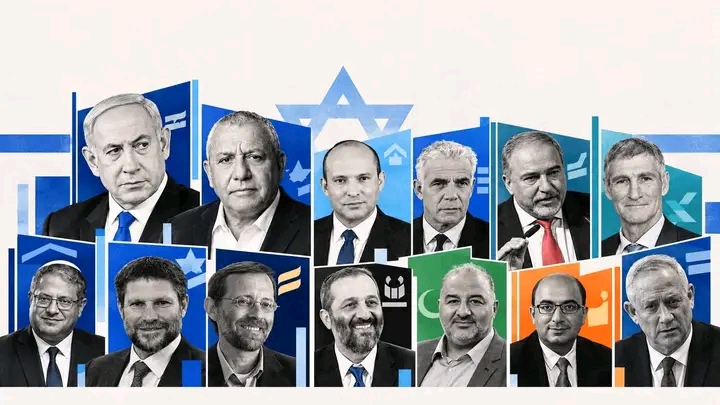
What You Need to Know About Israel’s Election
Israelis are voting today in a new parliamentary election that could determine the political future of Prime Minister Benjamin Netanyahu and influence the direction of the ongoing conflicts in the Middle East.
By 2 p.m., 44.9% of eligible voters had cast their ballots, compared with 38.9% at the same time in the 2022 election. At least three million people had voted. The Times of Israel reported that this was the highest number of voters to cast ballots within an eight-hour period in Israel’s history, highlighting unusually high turnout.
Who is leading in the polls?
The latest opinion polls conducted before the election suggested that the Yashar party led by Gadi Eisenkot, a former Chief of Staff of the Israel Defense Forces, together with other opposition parties, could win more seats than Netanyahu’s coalition.
Some projections gave the opposition 54–56 seats, while Netanyahu’s allies were projected to win around 50 seats. However, the polls varied, and none clearly predicted that either side would reach the 61 seats needed to form a government.
What is putting Netanyahu at risk?
Many Israelis continue to question the security failures surrounding the October 7, 2023 attacks. There is also controversy over the prolonged wars, the pressure placed on Israel’s military, and disputes over military service obligations.
Netanyahu, meanwhile, has focused his campaign heavily on the threat from Iran and Israel’s national security, presenting himself as the leader best able to protect Israel.
How is Trump affecting the election?
Donald Trump has supported Netanyahu. If Netanyahu loses, it could represent a political setback for that relationship, although it would not necessarily mean an immediate change in U.S. policy toward Israel.
When will we know who won?
Polling stations are scheduled to close at 10 p.m. Israel time, which is 11 p.m. in East Africa. Initial exit-poll projections are expected shortly afterward, but these will not constitute the official results.
Even if the opposition wins more seats, it would still need to form alliances with other parties to reach the 61-seat majority required to form a government.
If neither side can secure a majority, negotiations to form a new government could take weeks.
The information available so far points to a very close contest, with some of the latest polls giving the opposition an advantage. However, it is still too early to say who will take power.
Ultimately, the decisive factor will not simply be which side wins the most votes, but which bloc can secure the support of at least 61 members of parliament.