

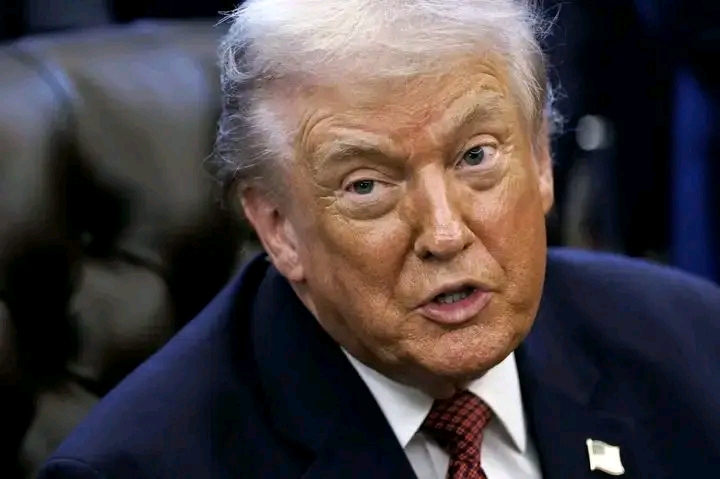
When Donald Trump invokes national security, it’s privilege. When Zambia does, it’s democratic backsliding
By David T. Zyambo
When the Zambian government took decisive action it deemed necessary to safeguard national security—detaining several individuals who now face treason-related charges, and cancelling the passports of six individuals on national security grounds—the international community wasted no time in piling on. The detainees are presumed innocent unless and until proven guilty in a court of law.
On 17 September 2026, the European Parliament passed a resolution condemning Zambia by a staggering 562 votes to one. The United Nations Special Rapporteur expressed “grave concern.” Civil society organisations accused the government of dismantling the constitutional order. Their message was unequivocal—Zambia had crossed a line.
But where is that same energy for Donald Trump?
On 18 September 2026, US President Donald Trump announced that three major US media outlets—CNN, MS NOW (formerly MSNBC), and Politico—would be barred from the White House, effective immediately. Their journalists were turned away at the gates the following day, their press credentials confiscated by the Secret Service. Trump’s justification? The outlets were spreading “fake news” that he described as “a threat to our National Security.”
Let me repeat that. A threat to national security.
This is the exact justification Zambia’s Attorney General, Mulilo Kabesha, invoked when defending the cancellation of passports under Section 12 of the Passports Act, No. 28 of 2016. “The action was provided for under Section 12,” Kabesha said, “which permits the Chief Passports and Citizenship Officer to cancel a passport under warranting circumstances in the interests of national security or public safety.” The government further argued that those affected have avenues for appeal, first to the Minister of Home Affairs and Internal Security and then to the High Court.
But that did not stop the pile-on. The European Parliament’s resolution—titled “Post-electoral repression in Zambia”—called on Zambian authorities to “immediately end arbitrary arrests and politically motivated intimidation”. The UN Special Rapporteur on freedom of assembly and association, Gina Romero, urged the government to “immediately cease the criminalisation of political dissent”.
Now, let’s hear what the EU Parliament, UN Special Rapporteur, and those same international organisations have to say about Donald Trump.
We’re waiting.
In the days following Trump’s ban, CNN, MSNOW, and Politico filed a joint First Amendment lawsuit, arguing that the White House “revoked our journalists’ credentials because it objected to our reporting”. The White House Correspondents’ Association condemned the move, stating that “this is about more than the rights of journalists. It is about the right of the American people to receive a full and independent account of the activities, policies and decisions of whoever occupies the nation’s highest office”.
Trump’s response? A Truth Social post declaring: “The White House is not instituting an assault on the Free Press, something which I cherish. It is instituting an assault on the FAKE NEWS… It is a threat to our National Security, and must be stopped, NOW!”
There it is again. National security.
And three days later, in New York on 21 September 2026, on the eve of the United Nations General Assembly, Trump himself said: “I think I have an obligation not to let fake news, they’re very bad for the country, very bad for national security. So I have that obligation.”
There it is once more. National security.
If President Hakainde Hichilema said those exact words—”fake news is very bad for national security, so I have an obligation to ban certain media outlets”—the European Parliament would convene an emergency session. The UN would issue a statement. Amnesty International would publish a report. The Washington Post would run an editorial about the “crackdown on democracy in Africa.”
But when a Western president does it? The silence is deafening.
The reality is that press freedom is not absolute. Article 19 of the Universal Declaration of Human Rights guarantees the right to “seek, receive and impart information and ideas through any media and regardless of frontiers”. But even the UN acknowledges that this right carries “special duties and responsibilities” and may be subject to restrictions for “the protection of national security or of public order, or of public health or morals.”
The White House has defended President Trump’s ban on the three media outlets by arguing that “access to the White House is a privilege rather than a constitutional right.” Whether that is legally sound is contested. But it is structurally the same argument Zambia has made: that passport issuance is a privilege rather than an absolute right—that cancellation is an administrative power exercised under law, subject to judicial review, and justified by national security imperatives.
So here is the question the international community must answer. When President Trump bars three major US media outlets from the White House in the interest of national security, the EU Parliament passes no resolution, the UN Special Rapporteur voices no concern, and civil society finds no dismantling of the constitutional order. When Zambia takes analogous action under its own legal framework, all three fall silent on the principle—and loud on the country. Why?
When a Western leader invokes national security to silence critics, it is called “executive privilege.” When an African leader invokes it to confront a threat to the state’s own existence—placed on record, gazetted, and subject to his country’s courts—it is called “democratic backsliding.”
President Hakainde Hichilema has the same obligation as President Donald Trump—to protect the nation and its people. Both invoked that constitutional obligation, but only one was dragged before the European Parliament.
Zambia cited its legal ground in the Gazette for cancelling the six passports, and made that decision appealable. Trump turned away reporters from three major media outlets at the gate and called that national security.
Ask why only one of them was condemned.
Kalemba September 23, 2026