

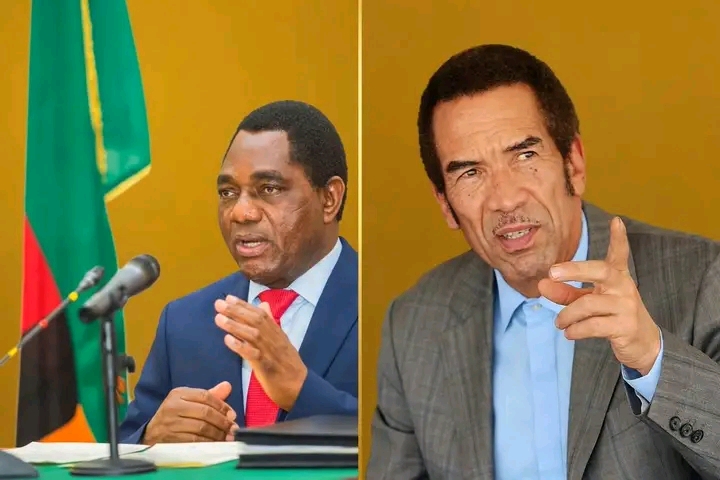
When Elephants Fight, Khama ‘Dates’ Kavindele in Zambia
…post election debate rages on after Botswana handshake
AM | 2 November 2026 | LUSAKA
“As one village elder wisely put it over a gourd of local brew: “When a cooking pot rattles loudly, breaking the pot is not the answer. You first inspect the fire beneath it.” -African Proverb.
—-
Diplomacy is a curious beast. It is less about who holds the moral high ground and more about ensuring tomorrow survives the political bruises of today.
I should know; I’ve studied it, I’ve practiced it, and I’ve watched enough statesmen try their groove around it until they get it right.
For over six decades, Zambia and Botswana have enjoyed a bromance forged through trade, cattle, shared struggles, and liberation history.
We are neighbours, yes, but historically we are family.
Today, however, that honeymoon is experiencing an unseasonably frosty spell.
Following the deeply contested elections of August 13 and a fresh wave of high-profile arrests and detentions—including opposition figures like Brian Mundubile, Makebi Zulu, Bishop Trevor Mwamba, George Chisanga, and Patrick Mwansa over treason allegations the UN has branded “concocted”—the political temperature has boiled over.
Enter President Ian Khama
Never one for diplomatic tiptoeing, H.E Khama openly questioned Zambia’s trajectory, labelling President Hakainde Hichilema Africa’s “newest dictator.” And “Why dd we attend Zambia’s inauguration when it couldn’t meet our International standards?”
Naturally, former Zambian Vice-President Enock Percy Kavindele wasn’t about to watch his country get roasted from across the border without firing back, sparking a heavyweight diplomatic duel.
Yet, Zambia needs a sparring match like a fish needs a bicycle. It needs healing, it needs General Khama.
The Cooking Pot and the Fire
History teaches us a simple, stubborn lesson: societies rarely collapse because they are criticized; they collapse because they stop listening.
Is it really a national emergency that President Khama called his brother, H.E. Hichilema, a Dictator? Whether you agree with H.EbKhama’s spicy vocabulary misses the point entirely.
What matters is that the former Botswana leader is amplifying concerns already echoing from local civil society to international boardrooms.
As one village elder wisely put it over a gourd of local brew: “When a cooking pot rattles loudly, breaking the pot is not the answer. You first inspect the fire beneath it.”
Some government loyalists wail, “Why should Khama concern himself with Zambia at all?”
The answer is wonderfully basic: because neighbours do. When your neighbour’s roof catches fire, you don’t pause to consult Google Maps before grabbing a bucket of water.
Yet the hypocrisy here is almost poetic. When Baroness Patricia Scotland raised governance concerns, or when British and Western voices chime in, we adjust our ties and listen respectfully.
Why is outside advice noble when it flies in from London, but treated like an uninvited mother-in-law
it rolls in from Gaborone?
Two Uncles at a Wedding
Right now, Khama and Kavindele resemble two distinguished Uncles at a family wedding who refuse to dance until the other apologizes first.
• Khama commands the fraternity of Africa’s influential former heads of state.
• Kavindele anchors Zambia’s respected old guard.
Both men carry massive influence. Both men care deeply about the continent. Yet they are locked in a political staring contest while the guests wait impatiently for the music to start.
Across African tradition, feuding families traditionally slaughtered a beast, shared a meal, and rediscovered their shared humanity.
A communal table frequently achieves what a thousand angry press statements cannot. Simply put: diplomacy requires less television and more tea. Less accusation, more conversation.
President Hichilema, as Head of State, ultimately carries the heavy crown of responsibility—because leadership means owning both the triumphs and the grievances.
Pretending dissent doesn’t exist convinces absolutely no one.
As Zambia chases its ambitious “Grow Zambia” agenda, it cannot sustainably cultivate economic growth while simultaneously fertilizing bitterness. Prosperity and reconciliation are twins, not rivals.
Time for Tea, Not Trenches
My proposal is straightforward. Let President Hichilema and General Khama meet.
We should lessen emphasis on the fact that one brother called the other a ‘Dictator’ but encourage what they can do together to find love.
Not through fiery spokespeople. Not through keyboard warriors on social media. Not through screaming newspaper headlines. Face to face.
A quiet, private chat between two heavyweights could accomplish more in one afternoon than months of public shadowboxing. Maybe they’ll agree.
Maybe they’ll agree to politely disagree. Either way, diplomacy isn’t the art of unanimous agreement; it’s the art of remaining friends despite your differences.
As my Lozi-speaking relatives says stop, “Lindwa ni masendeo”—waiting endlessly for miracles is not a winning strategy, stop disputes.
Peace is rarely an accident; someone has to choose it, and someone has to cross the bridge first. Let that someone be Zambia and Botswana.
Hon. Brian Mundubile, Bishop Trevor Mwamba, Makebi Zulu, and their families have a stake in this future, and we all know we have a listening President at the helm.
History, that relentless judge of nations, always remembers peacemakers far more kindly than combatants.
To borrow a timeless Spanish truth:
“La paz no es la ausencia de conflicto, sino la capacidad de manejar el conflicto con respeto y esperanza.”
(“Peace is not the absence of conflict, but the ability to manage conflict with respect and hope.”)
Let’s pour the tea. We need love and free expression.
Daily Nation Zambia HOT FM Zambia Diamond TV Online Daily Revelation Newspaper Zambia Daily Mail Phoenix FM Zambia
Amb. Anthony Mukwita, Author & International Relations Analyst.