

WHEN THE UNITED NATIONS GETS IT WRONG, PEOPLE DIE: RWANDA, SREBRENICA, HUMAN RIGHTS, NATIONAL SECURITY AND ZAMBIA’S DUTY TO DEFEND ITSELF
There are moments when nations must speak frankly even to the most powerful institutions of the international system. This is one of them. I believe in human rights. I believe in international cooperation. I recognise the important role that the United Nations has played in humanitarian assistance, peacekeeping, development and the advancement of human dignity around the world, but the United Nations is not infallible. It has been catastrophically wrong before, and when international institutions get questions of peace, security, ethnicity and national survival wrong, their mistakes are not merely academic. PEOPLE DIE!
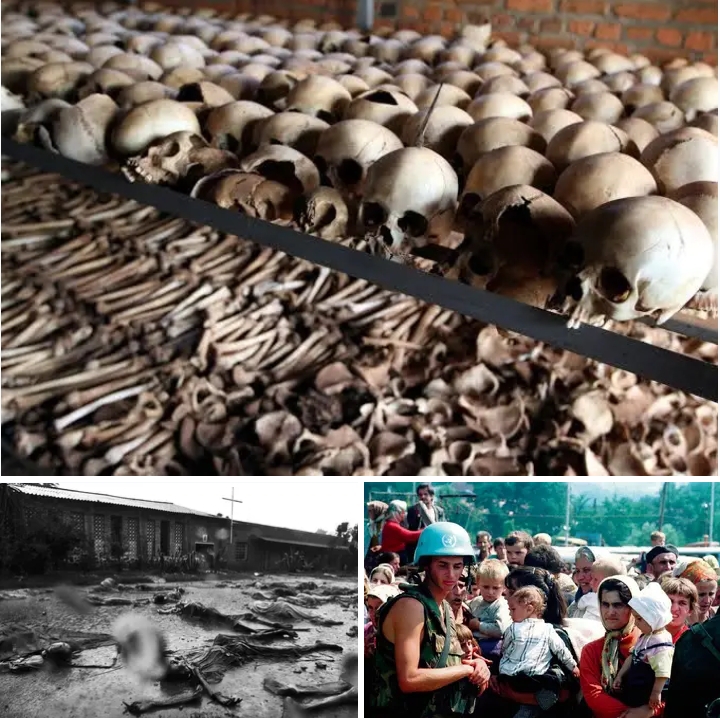
RWANDA: THE FAILURE THAT SHOULD STILL HAUNT THE UNITED NATIONS
In 1994, Rwanda descended into genocide. Approximately 800,000 people were slaughtered in about 100 days. The warning signs existed. United Nations peacekeepers were already in the country. The international community failed and years later, an independent inquiry established by the United Nations examined what happened. Its conclusion was devastating. The failure to prevent and stop the genocide was a failure of the United Nations system as a whole.
That conclusion should never disappear into an archive in New York. It should be remembered whenever an international official discusses ethnic tension, political violence and national security in an African country. Rwanda teaches us that waiting can kill. Indecision can kill. Misreading a developing national crisis can kill. Sometimes the greatest human rights failure is not that a State acted too early. It is that everybody acted too late.
SREBRENICA: A “SAFE AREA” THAT WAS NOT SAFE
Then there was Srebrenica. The United Nations Security Council had declared Srebrenica a “safe area”. People were entitled to believe that those words meant something. In July 1995, the enclave fell. Thousands of Bosniak men and boys were murdered. Once again, the United Nations subsequently examined its own conduct and its own failures. These events should have permanently changed how the international system understands prevention. A press statement cannot stop a bullet. A resolution cannot protect a family unless institutions capable of enforcing peace are prepared to act.
HAITI: WHEN THE UNITED NATIONS ITSELF HAD TO APOLOGISE
The historical record becomes even more uncomfortable. Following the devastating cholera epidemic in Haiti, United Nations Secretary General Ban Ki-moon eventually stood before the General Assembly and apologised to the Haitian people. The epidemic afflicted hundreds of thousands and killed thousands. The Secretary General acknowledged that the United Nations had not done enough regarding the outbreak and its spread and expressed profound sorrow for the UN’s role.
The United Nations has also had to confront serious sexual exploitation and abuse associated with international peacekeeping operations, including allegations involving vulnerable people and children in the Central African Republic.
These facts show that United Nations can be wrong. Its officials can misjudge situations. Its institutions can fail. Its peacekeepers can fail the people they were sent to protect. Its interventions can produce unintended consequences. Therefore, the letters “UN” do not transform every pronouncement made under their authority into unquestionable truth.
NOW LET US TALK ABOUT ZAMBIA
I am deeply concerned by the manner in which aspects of Zambia’s present national security situation are being discussed internationally. I was particularly troubled by the recent intervention of United Nations Special Rapporteur Gina Romero, including her characterisation of serious criminal charges presently before our justice system as “concocted” and her description of accused persons as “political detainees”. I have already addressed the substantive legal problems with that intervention elsewhere.
My concern here is larger. Does the international system properly understand what Zambia has just been through? I ask that question as somebody who was not sitting in Geneva. I was here. I live in Kasama.There were gunshots immediately after someone claimed an electoral victory before counting finished.
An armed incident occurred at the residence of the Acting Permanent Secretary for Northern Province, a senior Government official. Zambia Police subsequently announced that it was investigating an attack on her residence by armed suspected opposition supporters. One of them is a fairly wealthy businessman in Kasama. He is allegedly still in hiding. These are not imaginary circumstances. They are not abstractions. They form part of the environment in which the Zambian State had to make decisions about the security of this Republic.
I therefore ask a question which every serious student of Rwanda should understand. What were Zambia’s security institutions supposed to do? Stand aside? Wait? Watch? Allow armed political incidents to multiply from one town to another until somebody in Geneva finally decided that the situation had become sufficiently catastrophic to justify decisive action? No! No! No!
ZAMBIA MUST DEFEND ZAMBIA
No international official carries the primary responsibility for protecting the lives of the Zambian people. We do. No international official will inherit the consequences if Zambia fractures along ethnic lines. We will. No international institution will raise our children in the Republic we leave behind. We will. That is why Zambia cannot outsource its national survival.
International institutions may scrutinise us. They may raise legitimate human rights concerns. Zambia must honour the international obligations it has freely undertaken. State power must remain subject to law. Accused persons must enjoy due process, the presumption of innocence and the opportunity to defend themselves before independent courts, but none of those principles requires the State to become paralysed.
Human rights are not a suicide pact for the State. Freedom of expression does not mean freedom to incite ethnic hatred. Political freedom does not mean freedom to organise violence. Freedom of association does not confer a right to create armed political formations. Democracy does not require the State to watch passively while the constitutional order is threatened. Rights exist alongside responsibilities, and the exercise of one person’s rights cannot become the instrument through which the rights, security and lives of everybody else are destroyed.
ZAMBIA HAS AN ETHNIC PROBLEM THAT WE MUST CONFRONT
There is another matter about which I refuse to remain silent. Tribal politics is becoming dangerously normalised in Zambia. Spend time on sections of Zambian social media and observe the discourse. Tonga. Tonga. Tonga. Day after day.
Political questions are increasingly being interpreted through tribe. Political disagreement becomes ethnic accusation. Citizens are classified by surname, province and language. This must stop, and I say this with a painful sense of history. During the PF era, particularly between 2015 and 2021, Tonga identity became part of an ugly political discourse surrounding Hakainde Hichilema and the UPND.
I personally saw another dimension of that period. When I was detained in 2017, I encountered Tonga detainees being brought through the police cells. Some arrived bleeding. Some were moved from cell to cell. I spoke to some of them. I asked why they had been arrested. Some told me they had been accused of attending political meetings, spying or participating in political activities. Some described themselves as journalists or reporters. I was there. I spoke to them. I have not forgotten them.
That experience helped teach me something that transcends today’s political alignments. Ethnic hatred is wrong regardless of who is practising it. If Bemba people target Tonga people, it is wrong. If Tonga people target Bemba people, it is wrong. If any tribe mobilises hatred against another tribe, it is wrong. There can be no politically convenient tribalism.
I supported Hakainde Hichilema when he was being subjected to tribal attacks, and I will defend Tonga citizens today against anyone who attacks them merely because they are Tonga, but I will equally defend every other Zambian community if hatred is directed against them. The tribe of the victim must never determine whether we recognise injustice.
SOCIAL MEDIA CANNOT BECOME AN INCUBATOR FOR ETHNIC HATRED
Zambia must now confront the weaponisation of social media firmly, decisively and lawfully. I am not calling for the suppression of political criticism. Criticise President Hichilema. Criticise the Government. Criticise me. Criticise any political party. That is democracy, but when political communication becomes sustained ethnic vilification, incitement, threats or mobilisation of communities against one another, the State has a legitimate responsibility to enforce the law.
We must cleanse our public discourse of tribal hatred, not cleanse it of political disagreement. That distinction is fundamental. Today the target may be Tonga. Tomorrow it may be Bemba. Then Lozi. Then Easterners. Then another community. Once a nation accepts the principle that political grievances may legitimately be transferred onto an entire ethnic community, nobody can predict where the hatred will stop. Zambia must stop it before we discover how far it can go.
THE LESSON THE UNITED NATIONS SHOULD HAVE LEARNED
The great paradox is that the United Nations should understand this argument better than almost anybody. Rwanda happened. Srebrenica happened. The international community has repeatedly promised Never Again. Never Again cannot mean, “Wait until the killing begins.” Prevention means recognising danger before mass graves exist. Prevention means strengthening institutions capable of maintaining constitutional order while simultaneously holding those institutions accountable to law.
Prevention means understanding that human rights and national security are not enemies. A citizen has human rights. So does his neighbour. A political activist has human rights. So does the police officer. An accused person has human rights. So does the potential victim of political violence. A minority community has human rights. So does the entire nation.
LEAVE ZAMBIA ROOM TO PROTECT ZAMBIA
Zambia is not Rwanda in 1994. Zambia is not Bosnia in 1995, and we intend to make certain that we never become either. We are a functioning sovereign constitutional Republic. Our institutions are functioning. Our courts are functioning. Our Government is functioning. Our security and defence institutions are functioning.
When allegations of serious crimes arise, the State must investigate. When sufficient evidence exists, suspects must be brought before the courts. The prosecution must prove its case. The accused must defend themselves, and the courts must determine guilt or innocence. That is constitutional government.
What Zambia will not accept is the proposition that firmness in defence of the constitutional order automatically constitutes repression merely because the persons affected are politicians. Nor will we accept the proposition that an international official, however distinguished, understands the security of Zambia better than the institutions constitutionally responsible for protecting this Republic.
The United Nations has an important place in the international system, but the United Nations is not the Government of Zambia. It does not command our Police Force. It does not command our Defence Force. It does not carry the constitutional burden of keeping ten provinces, more than seventy ethnic communities and twenty million people together as one peaceful Republic. We carry that responsibility.
History will judge us if we abuse that responsibility. History will also judge us if we abandon it. That is why I say this without apology, “ZAMBIA MUST DEFEND ZAMBIA. ZAMBIA MUST STAND UP FOR ZAMBIA. ZAMBIA MUST PRESERVE ZAMBIA.”
We will defend human rights. We will defend democracy. We will defend every tribe. We will defend the constitutional order, and above all, WE WILL DEFEND THE REPUBLIC. 🇿🇲
Zambia Forward, TOGETHER in UNITY 🇿🇲
Saviour Chishimba
President
United Progressive People (UPP)
UPND Alliance Partner