

WHEN WAR CAME TO ZAMBIA: CHIKUMBI, KAVALAMANJA AND THE PRICE WE PAID FOR AFRICAN FREEDOM
There is a danger in living in a peaceful country for too long. Peace begins to look normal.
A child born in Zambia today can grow into adulthood without hearing bombs falling from the sky. He can go to school without wondering whether foreign soldiers will cross the border. She can sleep without listening for military aircraft. Eventually, a generation can begin to believe that this is simply how countries exist. It is not.
Peace must be built. Peace must be nurtured. Peace must be defended. A culture of peace has to grow from within a people. Laws can prohibit violence. Police can enforce public order. Soldiers can defend borders. Courts can punish offenders. However, ultimately, a peaceful Republic survives because its citizens develop a culture that rejects the politics of hatred, tribal supremacy, political violence and national division. That culture must be taught from one generation to another.
OUR FOUNDERS UNDERSTOOD SOMETHING
Zambia was not born without differences. Our freedom fighters had disagreements. There were political rivalries. There were regional and tribal tensions. There were serious struggles over leadership and the direction of the nationalist movement. The generation that brought this Republic into existence nevertheless understood something fundamental. We could be different and still be Zambian. They had a country to birth.
After independence, the challenges did not magically disappear. Zambia still had political disagreements and internal tensions. The Republic survived because, again and again, the national interest was placed above the temptation to reduce Zambia into tribes. That is the inheritance we must protect.
THE POLITICS WE MUST NEVER NORMALISE
I must say something uncomfortable. Never in Zambia’s recent political history did I witness tribal division being converted into political currency on the scale that we witnessed during the Patriotic Front era. I lived through it.
We heard rhetoric about whether a Tonga could become President. President Edgar Lungu himself publicly said that Zambia would one day have a Tonga President, “but not this particular Tonga”, referring to Hakainde Hichilema. We heard senior political figures repeatedly frame national politics through tribe. This was dangerous.
When a Cabinet Minister speaks publicly, we cannot casually dismiss everything as the private opinion of an ordinary citizen. Ministers exercise executive authority. Their words carry the weight of office. I remember from my own time in Parliament how seriously Speaker Amusaa Mwanamwambwa Z”L treated ministerial statements. Ministers were expected to speak with the responsibility of Government because their words could have consequences far beyond themselves. That distinction matters.
A backbencher may express a political opinion. A Minister speaks from the Executive. A President speaks for the Republic. Leadership therefore carries a special responsibility not to turn ethnicity into political ammunition.
TOUCH ONE TRIBE, TOUCH ALL
There is another lesson Zambia must learn. Tribal hatred never stops with one tribe. Today it may be the Tonga. Tomorrow it may be the Lozi. The next day it may be the Bemba. Then somebody else. That is why every Zambian should adopt a simple national principle, “TOUCH ONE TRIBE, TOUCH ALL”. I do not have to be Tonga to defend a Tonga against tribal hatred. I do not have to be Lozi to defend a Lozi. I do not have to be Ngoni to defend a Ngoni. I do not have to be Bemba to defend a Bemba. I only have to be Zambian. Any politics that requires us to hate another Zambian in order to love our political party is dangerous politics.
WE SAW IT ON THE GROUND
Those of us who campaigned in Northern Zambia during the 2026 elections heard things that should concern every patriot. Again and again, we encountered attempts to reduce an election about development, education, health, CDF, social protection, jobs and the economy into a contest between regions and tribes. We were told that this was about one part of Zambia against another.
We went into communities and said, “Look at free education. Look at CDF. Look at social cash transfer. Look at what has happened in your own community. Judge Government on what Government has done”. Some people answered that those things did not matter. Tribe mattered. That should frighten us. A road can be rebuilt. A school can be rebuilt. An economy can recover. A country poisoned by ethnic hatred can take generations to repair.
DEMOCRACY MUST ALSO BE DISCUSSED HONESTLY
I also hear the claim that democratic space has disappeared in Zambia. We must be serious. There is no perfect democracy anywhere. Government must always accept scrutiny. Security agencies must obey the Constitution. Arrested persons have rights. Courts must remain independent. Political opponents must be free to organise peacefully. However, anyone comparing Zambia today with the political environment between 2016 and 2021 must use an honest measurement.
I speak partly as a victim of that period. Opposition politicians were disrupted at radio stations. Political cadres invaded media houses. Opposition activity could attract violence. People were arrested and detained for political activity. I know what that environment felt like.
Have we reached democratic perfection today? No. Have we made substantial progress from that environment? Absolutely. We must be mature enough to criticise what remains wrong without pretending that nothing has changed.
THE STATE WATCHES PATTERNS
This brings me to something I have repeatedly explained in my writings about the State. The State does not look at one speech. It does not necessarily look at one meeting. It does not necessarily look at one person. National security institutions accumulate information. One incident connects with another. One statement is compared with another. One movement is examined alongside another. Intelligence is collected, evaluated, corroborated and placed into context. Eventually, what looked like isolated events may form a pattern.
Citizens may be seeing today’s arrest. The State may be looking at five years of information. This is why I have repeatedly said that the State knows more than any individual citizen can possibly know. I would therefore not be surprised if, in the coming weeks, we see further arrests arising from investigations into matters connected with political violence, alleged militia activity or threats to national security. That is my assessment.
Every arrest must still comply with the law. Every accused person remains entitled to due process. Guilt is determined by courts, not politicians. National security and the rule of law must exist together.
NOW LET ME TAKE YOU BACK TO 1978
To our young people, imagine this. You are living in Zambia. Suddenly foreign military aircraft enter Zambian airspace. Bombs fall. Helicopter gunships appear. Soldiers cross into your country. People die. This is not Ukraine. This is not Gaza. This is not something from a documentary. This happened in Zambia.
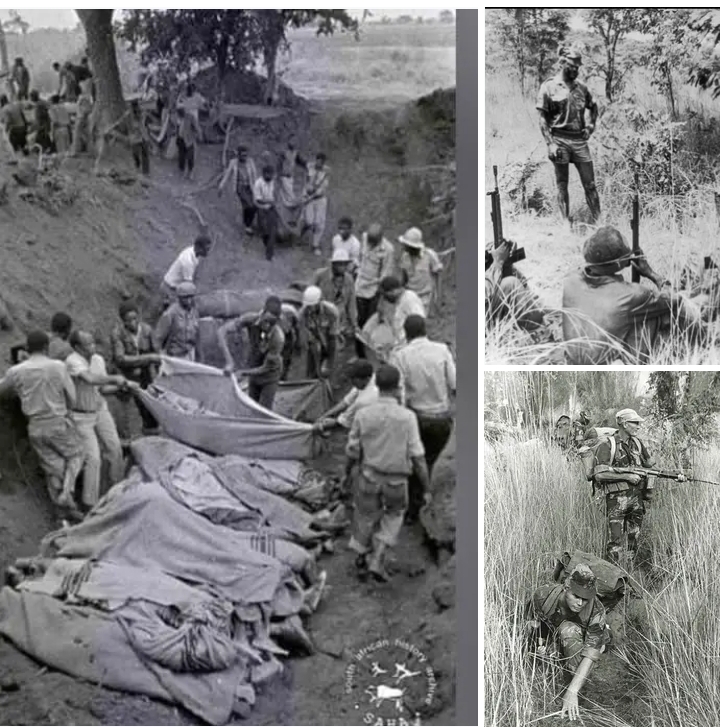
KAVALAMANJA: In March 1978, Rhodesian forces crossed into Zambia and attacked around Kavalamanja in Luangwa District. Aircraft struck. Helicopter gunships followed. Paratroopers came onto Zambian soil. People were killed. Villages were devastated. Zambian soldiers had to move into the area in the aftermath. There are graves at Kavalamanja. Those graves are witnesses. They tell us that Zambia’s contribution to African freedom was not made through speeches alone. We paid in blood.
THEN CAME CHIKUMBI: On 19 October 1978, war came frighteningly close to the capital. Rhodesian aircraft penetrated Zambian airspace and attacked Chikumbi. The scale was horrific. Zambia subsequently reported to the United Nations that the bombardment left 226 people dead and 629 injured. As wounded victims later died in hospital, Zambia reported that the death toll had risen to 337. Think about those numbers. Not statistics. Human beings. Somebody’s daughter. Somebody’s son. Somebody’s brother. Somebody’s mother. Somebody who woke up that morning not knowing that before sunset Zambia would be counting its dead.
The Rhodesian operation did not end at Chikumbi. Other facilities were attacked. At Mkushi, young women associated with Zimbabwe’s liberation struggle were attacked. Zambia later told the United Nations that 100 were killed there, with others missing or injured.
Zambian security personnel also died during this period of attacks. Our soil had become part of the battlefield for the liberation of Southern Africa. WHY? It’s because Zambia had made a choice. We could have turned our backs on Africans fighting colonial and minority rule around us. We could have said, “Not our problem.” We could have protected ourselves by abandoning others. President Kenneth Kaunda and that generation chose differently. Zambia became a frontline state. Liberation movements found refuge here. Freedom fighters organised from here. Refugees came here. That decision carried enormous consequences.
Our infrastructure was threatened. Our economy carried costs. Our citizens lived with insecurity. Our soldiers stood ready. Our intelligence services worked. Our police served. Our young men in uniform went where ordinary civilians could not go. Some never came home. That is part of the price Zambia paid for African freedom.
THE UNIFORM MEANT SOMETHING
This history is also why I become concerned when people speak casually about Zambia’s defence and security services. Our men and women in uniform are not political decorations. They are institutions of the Republic.
During periods when Zambia faced external military threats, the security system had to work as a system. Intelligence had to detect threats. The military had to defend the Republic. Police had responsibilities internally. The Zambia National Service had national responsibilities. Political leadership had to receive information, make decisions and maintain national resolve. Ordinary Zambians depended upon people whose names they would never know. That is how national security works. Much of its greatest work is invisible.
PEACE CAN MAKE A NATION FORGET
Here lies the paradox. When security institutions succeed for long enough, citizens can begin to wonder why they are needed. When soldiers keep war away for generations, war begins to look impossible. When intelligence services quietly disrupt threats, citizens never see the disaster that did not happen. When police maintain order, normal life begins to feel automatic. It is not automatic. Peace is protected. Our present peace should never make us casual about national security.
THE THINGS THAT DESTROY COUNTRIES OFTEN BEGIN SMALL
Civil wars do not always announce themselves with tanks. Sometimes they begin with words. A joke about another tribe. A politician discovering that hatred attracts applause. A radio statement. A slogan. A rumour. A group of young men organised for political purposes. Retaliation. Another group forms. Weapons appear. People begin identifying neighbours by tribe.
Then one morning everybody asks, “How did we get here?” We know how. Countries arrive there one tolerated act at a time. That is why tribal politics must be confronted while it still looks small. Political violence must be confronted while it still looks manageable. Militia culture must be confronted before it becomes normal. Hate speech must be confronted before children inherit it.
Governments change. Political parties rise and fall. Presidents come and go. Zambia remains.
Anyone who promotes tribal hatred today because it benefits his party may discover tomorrow that the same hatred has been turned against his own people. Therefore, this is a national matter. All politicians must themselves reject tribalism. Churches must reject it. Traditional and royal establishments must reject it. Schools must teach against it. Families must teach against it. Media organisations must refuse to monetise it. Every tribe must defend every other tribe
OUR CHILDREN MUST INHERIT A SANE COUNTRY
We have a duty greater than winning elections. We have to hand Zambia to the next generation intact. One Republic. One people. Different languages. Different cultures. Different political opinions. One destiny. Let our young people learn the names. Kavalamanja. Chikumbi. Mkushi. Let them ask what happened there. Let them understand that there was a time when military aircraft violated Zambian airspace and bombs fell on people living on Zambian soil. Let them understand that men and women died. Let them understand that Zambia’s peace has a history. Let them understand why the uniform matters. Let them understand why intelligence matters. Let them understand why national unity matters. Let them understand why reckless political language matters. Let them understand why One Zambia, One Nation is not merely a slogan. It is a national security doctrine.
Our fathers and mothers paid dearly so that Southern Africa could be free. Our soldiers stood in defence of this Republic. Our people endured. Our country survived. The least our generation can do is refuse to destroy through tribal politics the Zambia that others sacrificed to preserve. Peace is not weakness. Unity is not the absence of difference. Patriotism is not blind loyalty to a Government. Patriotism is loyalty to the Republic.
Protect the peace. Respect the uniform. Reject tribal hatred. Defend every Zambian as your fellow citizen, and never forget what it cost for us to be able to sleep peacefully tonight.
ONE ZAMBIA. ONE NATION. ONE FUTURE.
Saviour Chishimba
President
United Progressive People (UPP)