

🇿🇲 EXPLAINER | Why Catholic-State Exchange Matters
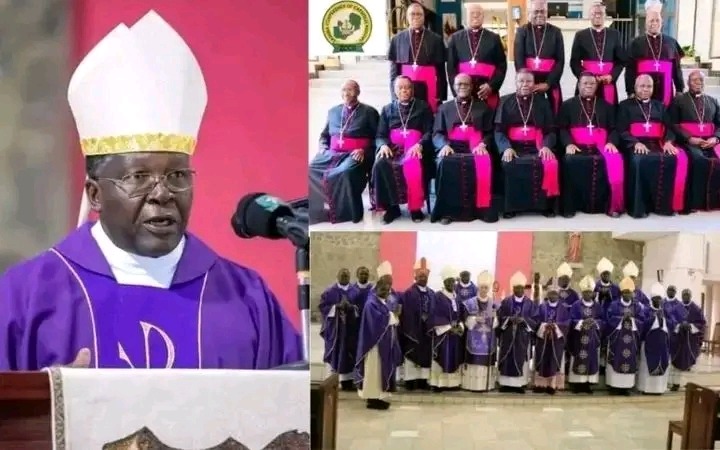
State House has now responded directly to the Zambia Conference of Catholic Bishops, turning what began as a pastoral warning into a wider argument over the condition of Zambia’s democracy after the 2026 elections. The bishops met in an extraordinary session on September 29 and issued their pastoral statement on September 30. In its October 1 response, State House says it respects their pastoral responsibility, but argues parts of the statement “closely resemble opposition narratives” and risk presenting Zambia as being in a national crisis without sufficient evidence.
The bishops raised a broad catalogue of concerns. They cited political polarisation, alleged manipulation of ethnic identities, fear among citizens, restrictions on expression, questions over electoral credibility, difficulties facing opposition parties, political violence and reports of arbitrary arrests and excessive force. They also expressed concern about debate over presidential term limits. “Taken together, these developments call for urgent attention,” they said, arguing the situation risks weakening trust between citizens and institutions.
State House does not simply deny every concern. Its response challenges the scale, evidence and framing of the bishops’ conclusions. On allegations of ethnic manipulation, it asks for “specific evidence and a clear comparative basis.” On claims of widespread fear and shrinking democratic space, it says individual cases deserve attention but should not automatically become a description of the entire country. And on the election, State House argues concerns must identify material failures and their effect rather than broadly casting doubt on the democratic mandate. These are important distinctions because a concern can be legitimate without every conclusion drawn from it being established.
Why can Catholic bishops speak this forcefully about politics in the first place? Because Zambia’s Catholic Church has a long tradition of treating governance as part of its social mission. Catholic teaching does not confine the Church to worship alone. It permits bishops to speak about human dignity, justice, poverty, political authority and the common good. In Zambia, this role predates the current government by decades.
Catholic pastoral letters challenged aspects of one-party rule and economic governance under Kenneth Kaunda, and the bishops were among religious voices scrutinising political power during the transition towards multiparty democracy. Their authority in public affairs therefore comes from both Catholic social teaching and an established Zambian history of civic engagement.
But history does not place the Church beyond scrutiny. The right to speak is not the same as immunity from questions about balance. When bishops make factual claims about arrests, elections, military presence, institutional independence or shrinking democratic space, those claims can be tested against evidence just as Government’s rebuttal can. The Church strengthens its position when it applies the same moral standard to Government and opposition, and when it separates documented violations from perceptions or allegations. State House faces an even heavier institutional burden: where the state possesses coercive power through police, prosecutors and security institutions, assertions of lawful conduct must ultimately withstand independent legal and public scrutiny.
There is also an unavoidable immediate context: Archbishop Alick Banda. He belongs to the same episcopal body now speaking about arrests, intimidation, justice and institutional independence. On September 28, ZCCB issued a separate solidarity statement describing him as a cleric who had spoken with “courage and moral clarity” and demanding fairness, dignity and due process. Banda was subsequently charged over possession of a Toyota Hilux which investigators allege was unlawfully obtained from the Zambia Revenue Authority. He has pleaded not guilty, was granted bail and has since been released.
DEC says the vehicle forms part of a wider investigation involving about 22 ZRA vehicles allegedly disposed of improperly. His guilt or innocence is now a matter for the court.
Such proximity creates a difficult question without providing an automatic answer. Archbishop Banda’s case sits inside the political climate the bishops are criticising, but it cannot simply be used as proof of political persecution. Equally, his prominence in the Catholic hierarchy does not make his prosecution politically neutral by definition.
State House itself makes an important concession: “Timing alone establishes no intention to influence proceedings.” The correct test is evidence. The state must prove the criminal allegation in court. Those alleging persecution must demonstrate why the prosecution is politically motivated rather than merely infer motive from Banda’s public profile.
There is a second question for the Church. Archbishop Banda has been one of Zambia’s most politically visible clerics, and his interventions have sometimes generated arguments about whether the pulpit is maintaining sufficient distance from partisan politics. This makes institutional separation particularly important now. The bishops are entitled to defend his constitutional rights and insist on due process.
But solidarity with a fellow bishop should not be confused with determining the merits of the criminal charge. The collar cannot remove accountability before the law. Neither should the law become a mechanism for punishing the collar.
The sharpest disagreement, therefore, is not really over whether Zambia has problems. Both documents acknowledge the need for justice, peace, dialogue, institutional independence and national reconciliation. They disagree over the diagnosis.
The bishops see a collection of developments serious enough to warrant an extraordinary pastoral intervention. State House says their language combines separate concerns into a picture of national crisis which has not been adequately established. Interestingly, Government nevertheless welcomes their proposals on civic education, institutional accountability and reconciliation as “useful ground for cooperation.”
This is why the exchange deserves more than the usual Government-versus-Church interpretation. Zambia has seen versions of this argument before. Governments tend to welcome religious voices when they preach peace and become less comfortable when they scrutinise power. Churches, meanwhile, are strongest when their moral authority is visibly independent of whichever political camp occupies Government or opposition.
Zambia does not need a silent Church. It needs an independent one. It does not need a Government protected from criticism. It needs one capable of answering criticism with evidence. And where accusations become criminal cases, neither the pulpit nor State House should determine guilt. That belongs to the courts.
The People’s Brief | Ollus R. Ndomu