

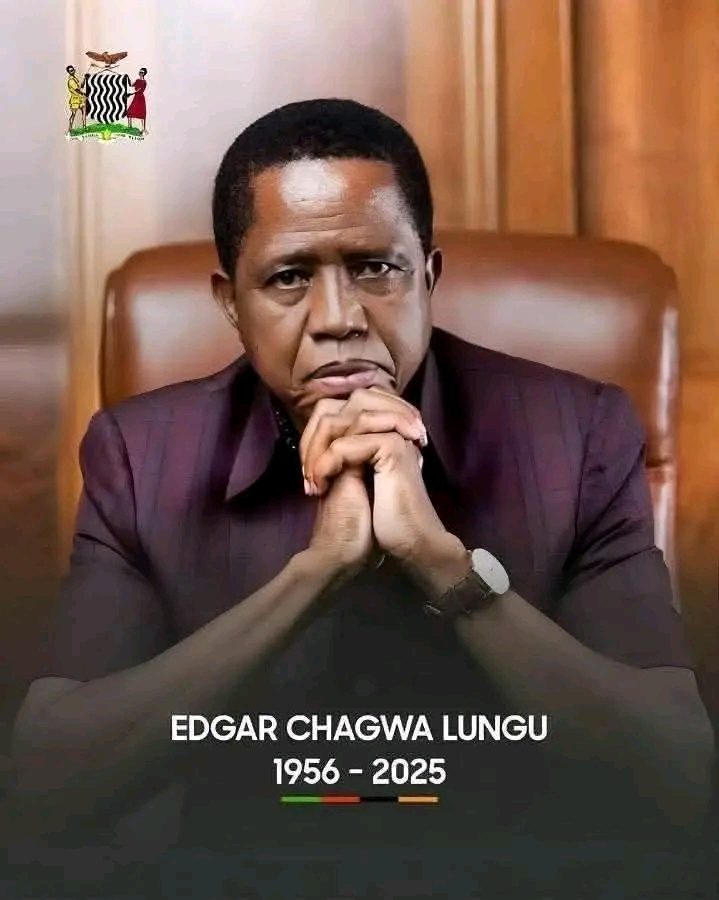
WHY IS ECL’S LEGACY EMBROILED IN CONTROVERSY?
By Chrispine Chambwa
Edgar Chagwa Lungu (ECL) served as President of the Republic of Zambia for approximately seven years. Like every leader, his presidency had both achievements and shortcomings. A fair assessment of his legacy must acknowledge both.
But one question remains: Who has done more damage to ECL’s legacy—ECL himself, the State, his political allies, or his family?
In my view, the role of his political allies and family cannot be ignored. Those closest to a leader can either protect his legacy or become the very people who undermine it.
THE POLITICAL BATTLES THAT FOLLOWED HIS PRESIDENCY
There was a time when ECL was reportedly invited to State House for Independence Day celebrations, but his seat remained empty after he did not attend. Questions also arose about his continued involvement in political contestation rather than enjoying a quieter retirement.
Controversies involving his family further complicated his public image. His wife faced scrutiny over alleged financial and property matters, while his son, Dalitso Lungu, faced questions over a fleet of more than 70 vehicles he reportedly described as birthday gifts from his father. His daughter, Tasila Lungu, also faced questions over land ownership, while allegations circulated about the acquisition of a bank.
These matters must be considered in light of available evidence, distinguishing allegations from proven wrongdoing. Nevertheless, they contributed to public debate about ECL’s presidency, his family and those around him.
The question is whether his political allies and family fully appreciated how these controversies could affect his historical reputation.
THE UNPRECEDENTED CONTROVERSY SURROUNDING HIS BURIAL
Perhaps the most troubling chapter in ECL’s legacy is unfolding after his death.
More than a year after his demise, ECL remains unburied, with his body still lying in a mortuary in South Africa. For a man who once occupied the highest office in the land, this is an extraordinary and deeply troubling situation.
The announcement of his death by his daughter, rather than the sitting President, raised questions about the relationship between the family and the State. The subsequent disagreement over funeral arrangements escalated into a prolonged political and legal confrontation.
The family reportedly insisted that President Hakainde Hichilema should not attend ECL’s burial in Zambia. Meanwhile, the government pursued legal avenues to facilitate his burial at home. Court proceedings and subsequent appeals prolonged the dispute, with the family eventually obtaining authorisation to proceed with the burial.
Yet, the controversy has persisted.
The reported decision to retain the body until after the elections raised further questions about whether political considerations were taking precedence over the dignity of the deceased.
How does a former Republican President remain unburied for more than a year while political actors continue to disagree over his final resting place?
Whatever the disagreements between ECL and President Hichilema, or between the family and the government, surely there should have been room for dialogue, compromise and respect for the deceased.
A funeral should not become an extension of political warfare. Nor should a departed leader’s body become entangled in political calculations.
The crucial question is whether those who claimed to be protecting ECL’s interests fully considered the consequences of this prolonged dispute for his dignity and legacy.
DID HIS ALLIES PROTECT HIM OR FAIL HIM?
Political loyalty is not always demonstrated by defending everything a leader does or keeping him at the centre of political battles. Sometimes, genuine loyalty means allowing a leader to retire peacefully, protecting his dignity and preserving his historical standing.
Could ECL’s allies have handled his political retirement differently? Could the family and the government have resolved the burial dispute through dialogue? Could those around him have done more to prevent his final chapter from becoming a prolonged controversy?
These are uncomfortable questions, but they deserve honest answers.
It would, however, be unfair to attribute every controversy surrounding ECL to his family or political allies alone. His own decisions, the conduct of the State and the wider political environment must also form part of the assessment.
CONCLUSION: WHO WILL WRITE ECL’S HISTORY?
ECL’s legacy should not be reduced to allegations involving his family, political disagreements or the circumstances surrounding his burial. His presidency deserves a balanced assessment of its achievements, failures, policies and impact on Zambia.
Nevertheless, those who surrounded him during his presidency, political retirement and final chapter inevitably form part of the story.
The tragedy is that a man who once served as Republican President has been dead for more than a year, yet his body remains in a South African mortuary while the controversy over his burial continues.
That alone should prompt serious reflection among his family, political allies and the government.
History will judge ECL for the decisions he made as President. But it will also examine the decisions made in his name after he left office and after his death.
The most difficult question is this: Did those who claimed to love and protect ECL preserve his legacy, or did their actions expose him to controversies that may ultimately overshadow his presidency?
Sometimes, the greatest disservice to a departed leader is not what his opponents say about him, but what those closest to him do in his name
—
ABOUT THE AUTHOR
Chrispine Chambwa is a Public Administrator, Chilanga District UPND IPS In-Charge of Media, and Editor-in-Chief of Chilanga News Agency, The Truth Newspaper and The Zambian Taciturn.