

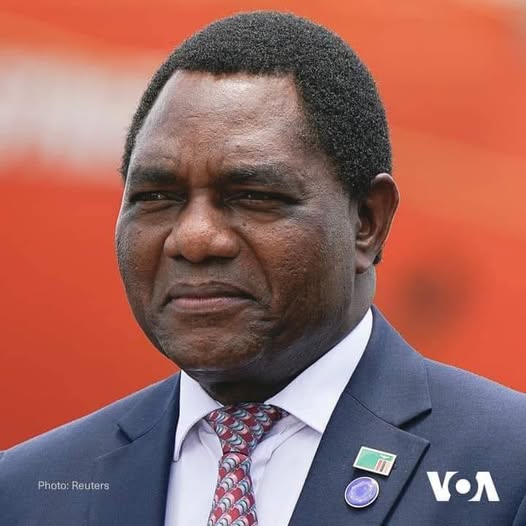
WHY PRESIDENT HAKAINDE HICHILEMA IS CAUTIOUS IN CONSTITUTING A FULL CABINET.
IN MY OWN OPINION I FEEL THERE IS TRUST DEFICIT.
By Chadrin Nseemani
There is a legitimate question being asked by many Zambians today. Why is President Hakainde Hichilema finding it difficult to constitute a full Cabinet? The answer does not lie in indecisiveness. It lies in trust. Most of the political class that surrounds power in Zambia today is simply not trustworthy.
When President Hakainde Hichilema declared a total and uncompromising war on corruption, he disrupted a deeply entrenched ecosystem. That decision had two immediate consequences that have continued to shape the politics of hate and betrayal against him.
Firstly, it directly affected those who exited government after the 2021 general elections. Many of them are now entangled in protracted court cases relating to corruption, abuse of office and unexplained wealth. Their antagonism towards President Hichilema is therefore not ideological. It is personal and existential. They resent a President who refused to institutionalize impunity and protect the old order.
Secondly, and more critically, the anti-corruption crusade has unsettled elements within the current establishment itself. There are individuals within government who thrived under the old culture of patronage and rent seeking. They view public office not as service, but as an opportunity for accumulation. A President who is determined to run a clean and accountable government cannot, in good conscience, run that government with individuals whose primary motivation is corrupt enrichment.
This, in my considered view, is the genesis of the hate, the leaks, and the betrayal that the President has endured. It is corruption fighting back. A corrupt network never concedes defeat quietly. When threatened, it sabotages, it steals, and it delegitimizes.
That sabotage is evident in the manner in which some ministries continue to experience theft, and in the worrying pattern of leaking sensitive and classified government information to the public domain. Such acts cannot be dismissed as mere indiscipline. They are calculated. They involve collaboration between some former government officials who want to prove that all governments are the same, and some serving civil servants who are resisting reform. No country can be effectively governed under such conditions of internal subversion.
It is for this reason that the conversation about sourcing ministerial appointments from outside Parliament must be taken seriously. Article 116 of the Constitution of Zambia provides for this. Zambia has an abundance of competent, ethical and professionally accomplished citizens in the private sector, academia, the diaspora and civil society who have no history of plunder and no allegiance to corrupt cartels. Tapping into that pool would not only bring competence, but it would restore integrity to Cabinet.
Ultimately, what is required is more than a reshuffle. What is required is a total overhaul of the system closest to the Presidency and of those managing strategic state institutions. The inner circle, the permanent secretary level, procurement wings, and boards of key parastatals must be subjected to a rigorous integrity test. You cannot implement a transformative agenda using personnel who are invested in the status quo.
President Hichilema was elected on a promise to fix the economy, restore the rule of law, and dismantle corruption. If caution delays the announcement of a full Cabinet, then that caution is justified. It is far better to take time to identify trustworthy and competent individuals than to hastily appoint individuals who will undermine the President’s vision from within.
By Chadrin Nseemani
Governance Expert | Political Analyst
100% correct