

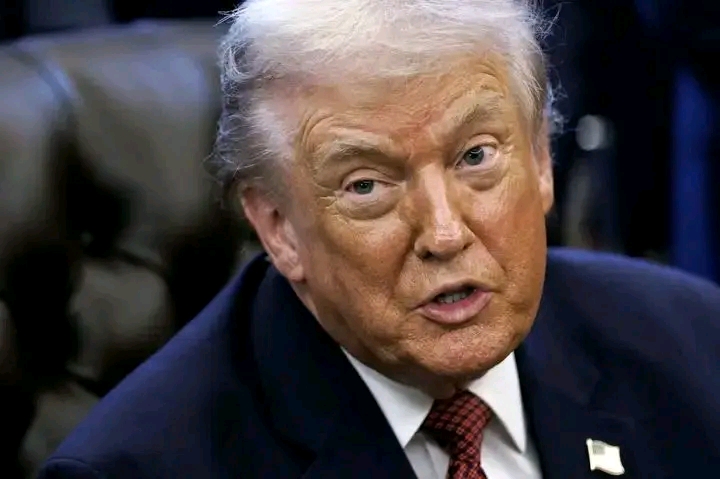
Brazilian President Luiz Inácio Lula da Silva has criticised US President Donald Trump’s approach to international affairs, saying the American leader has the right to govern the United States but not to impose his will on other countries
Lula made the remarks during an interview with CNN’s Christiane Amanpour in New York ahead of the 81st United Nations General Assembly.
“President Trump was elected to be the US president. He has the right to govern. But he doesn’t have the right to govern other countries,” Lula said. “He doesn’t have the right to impose his will,” he added, stressing that countries should respect one another’s sovereignty and resolve disagreements through negotiations.
Lula said Brazil was not seeking confrontation with Washington but wanted its sovereignty and national interests to be respected. “We don’t want to challenge the US; we just want to say that every country has their own sovereignty,” he said, adding that the United States should not impose its rules on other nations.
The Brazilian leader also criticised what he described as Trump’s preference for conducting international relations through strength and economic power. “He has a way of governing — that I’m stronger, I’m the mightiest, I’m the richest, I can do everything, and that all the others have to obey,” Lula said. He described that approach as the “law of the strongest” and said he disagreed with it.
Lula instead called for stronger multilateral cooperation, arguing that countries should work collectively to address international disputes rather than allowing powerful nations to dictate outcomes. His comments come amid trade tensions between Brazil and the United States. Lula said Brazil remains willing to negotiate with Washington and has refrained from invoking its reciprocity law against US tariffs while negotiations continue.
The Brazilian president also reiterated his opposition to foreign involvement in Brazil’s domestic politics ahead of the country’s 2026 presidential election. Lula said Brazilian voters should determine the country’s political future without interference from the United States or any other foreign government.
“The Brazilian elections [are] the interest of the Brazilian people and the US elections [are] the interest of the American people,” he said. Lula acknowledged concerns about possible interference but said there was, at that point, “nothing concrete” establishing that such interference had occurred.
Despite the disagreements, Lula said Brazil does not consider itself anti-American and emphasised the importance of the longstanding diplomatic relationship between the two countries. He said Brazil wants dialogue, negotiations and partnerships with the United States and other countries, but would resist attempts to impose decisions on it from abroad.