

ZAMBIA IS A DICTATORSHIP BY CONSTITUTIONAL DESIGN, NOT BY PRESIDENTIAL PERSONALITY: WHY CALLING PRESIDENT HAKAINDE HICHILEMA MISSES THE REAL CONSTITUTIONAL PROBLEM {THE PEOPLE’S POLITICAL SCIENCE}
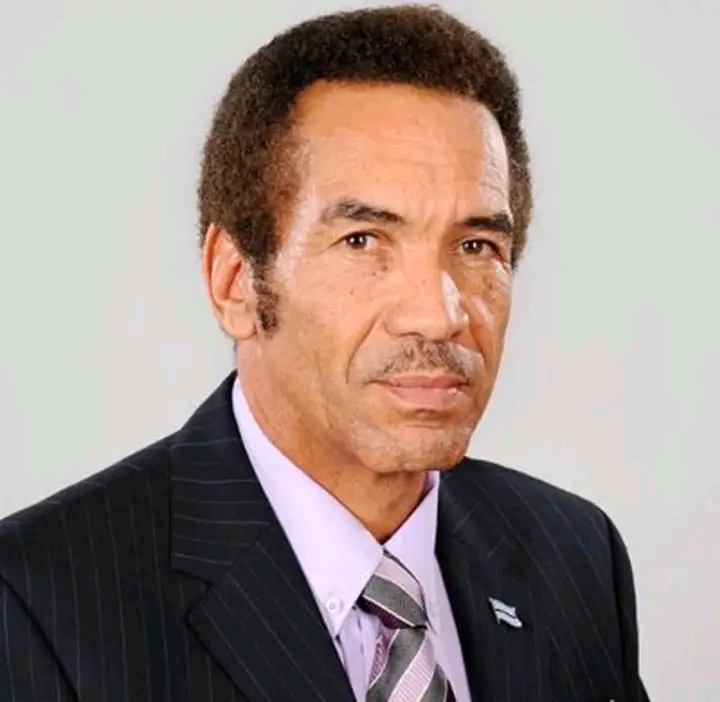
Former Botswana President Ian Khama’s criticism of President Hakainde Hichilema brings into focus a central issue far more consequential than the political character of the incumbent President. Is Zambia’s democratic predicament attributable to the person occupying State House, or have we constructed a republic in which the presidency possesses powers that no individual should ever be entrusted to exercise?
I have argued since 1996, when I was a member of ZADECO, that Zambia’s constitutional independence remains unfinished business. We have changed Presidents, political parties and constitutional provisions without adequately confronting the concentration of authority at the summit of our republic. I am referring to the authoritarian possibilities inherent in excessive presidential power, notwithstanding the existence of elections, courts, Parliament and constitutional liberties. This is neither an indictment of President Hichilema nor an exoneration of any administration including the UPND Alliance. It is an indictment of a constitutional inheritance that successive generations have failed to reconstruct.
1. The Constitution that arrived from London
On 31 July 1964, the British Parliament enacted the Zambia Independence Act. Subsequently, on 15 October 1964, the British Crown promulgated the Zambia Independence Order, 1964. Our independence Constitution was not enacted by a sovereign Zambian Constituent Assembly. It appeared as Schedule 2 to a British Order in Council, a form of delegated legislation comparable, for explanatory purposes, to a statutory instrument. Section 3 of that Order brought the Constitution into operation. Section 32(1) of the constitutional schedule expressly identified Kenneth David Kaunda as Zambia’s first President. This confirms that schedule 2 was never meant to be a durable constitution for our country.
Simply put, the founding legal instrument of our independent republic was promulgated under British authority. The people of Zambia did not assemble, in their sovereign capacity, to deliberate upon and adopt the fundamental charter by which their country would thereafter be governed. The independence negotiations among our founding political leaders and a colonial government are not equivalent to a sovereign constituent process embracing the people themselves.
At independence, Zambia had approximately 3.5 million inhabitants. The constitutional settlement emerged from negotiations involving a small political delegation, not a representative constituent assembly of that population. We inherited the machinery of government before the sovereign people had collectively determined what that machinery ought to be. That distinction is the beginning of our constitutional predicament.
2. Sixty two years of unfinished constitutional independence
The 1964 schedule 2 wrongly referred to as the “Constitution” was subsequently amended, and Zambia enacted new constitutional texts in 1973 and 1991. We have also undertaken numerous constitutional reviews. The constitutional ancestry of our country lies in that colonial settlement. The 1969 referendum, the introduction of the one party Constitution in 1973, the restoration of multiparty constitutional government in 1991, the amendments of 1996, the reforms of 2016 and the latest amendments of 2025 all belong to this history.
We have never established a fully sovereign, people led Constituent Assembly with a decisive mandate to design and adopt an entirely new constitutional order. We have reviewed, revised, repealed, replaced and amended constitutional provisions. What we have not accomplished is the comprehensive exercise of constituent sovereignty that I have advocated for three decades. A constitutional review commission is not necessarily a Constituent Assembly. Neither is a conference whose recommendations remain subject to the political discretion of the government and Parliament.
3. The presidency is constitutionally overendowed with power
Article 91 of the Constitution provides that the President is Head of State, Head of Government and Commander in Chief of the Defence Force. More significantly, executive authority vests in the President. Article 92 confers extensive executive functions, including appointments, the organisation of government ministries subject to parliamentary approval, and the initiation of legislation.
The President appoints Ministers. The President appoints judges through constitutionally prescribed procedures involving the Judicial Service Commission and parliamentary ratification. Presidential appointment powers also extend to numerous constitutional and statutory offices. The sheer accumulation of appointment authority in one office raises an elementary constitutional issue. How independent can institutions become when their leadership, career progression or continued tenure may be influenced by the very executive authority they are expected to scrutinise?
Parliament has legislative authority and constitutional oversight functions. The judiciary possesses constitutionally protected judicial authority. Nevertheless, the existence of institutions does not, by itself, establish an effective separation of powers. What matters is whether those institutions can exercise their authority without apprehension, inducement or political subordination. The central constitutional question is not whether Zambia has institutions. It is whether those institutions have sufficient independence to restrain presidential power. No individual is infallible. No constitutional democracy should be constructed on the assumption that its President will always be virtuous, judicious or restrained.
4. What Botswana, India, Ghana and South Africa understood
There are instructive lessons in the constitutional founding processes of other countries. Botswana held local constitutional conferences and consultations before independence. The Lobatse Constitutional Conference contributed to its transition towards self government. Traditional leadership, political representatives and public consultation, including the kgotla tradition, formed part of the country’s constitutional development. Its subsequent independence negotiations included representatives of government, opposition and traditional authority.
India established a Constituent Assembly before adopting the Constitution in November 1949. South Africa, emerging from apartheid, established an elected Constitutional Assembly. Its work involved extensive public participation, multiparty deliberations and certification by the Constitutional Court. Namibia also adopted its independence Constitution through an elected Constituent Assembly. The common significance in all these progressive countries lies in the deliberate attempt to establish a national constitutional settlement through broader participation than ordinary executive decision making.
These experiences should trouble our national conscience. Countries confronting colonialism, apartheid and institutional fragmentation recognised that the foundations of a country required deliberate constitutional settlement.
5. We are treating a sacred national covenant as ordinary political legislation
A Constitution is not merely another statute. It is the foundational covenant between the people and the state. It establishes public authority, limits governmental power, protects liberties and determines how political disagreements are resolved. Its legitimacy must transcend the fortunes of political parties and the ambitions of successive administrations. Instead, Zambia has developed an unfortunate constitutional habit.
Almost every political generation returns to constitutional reconstruction. Governments initiate amendments, political parties dispute the proposals, and the country becomes absorbed in controversies over provisions affecting the distribution of political authority. The issue is not whether particular reforms may be necessary or beneficial. The issue is whether Zambia has established a sufficiently durable constitutional settlement to command enduring national confidence.
Constitutional instability also has economic consequences. Investors assess more than mineral deposits, tax incentives and exchange rates. They examine the predictability of institutions, the enforceability of contracts, judicial independence and the durability of the rules governing economic activity. A country in which fundamental political arrangements appear perpetually vulnerable to the preferences of successive administrations creates avoidable uncertainty.
No serious investor should have to speculate about whether the next political administration will fundamentally rearrange the institutional rules of the republic. Constitutional predictability is an economic asset. We must stop treating the supreme law of the land as an instrument of political convenience.
6. The constitutional failure belongs to our generation
I am ashamed that, sixty two years after independence, we are still struggling to establish a constitutional order in which the sovereignty of the people is institutionally paramount. This is not the failure of one President, one political party or one administration. It is our collective failure. Political leaders have too often regarded constitutional power as something to inherit and exercise rather than something to distribute and restrain.
Parliamentarians have participated in processes that preserve the pre eminence of the executive. Professional bodies, civic organisations, traditional institutions and ordinary citizens have not always insisted upon the constitutional settlement that our country deserves. We have been remarkably industrious in debating who should govern us and insufficiently resolute in determining how we should be governed.
We have allowed the identity of whoever is President at a time to overshadow the design of the presidency. We have mistaken changes of government for the reconstruction of government. We have celebrated electoral victories while leaving the deeper constitutional settlement unresolved. History will not absolve our generation merely because we inherited these arrangements. We inherited the responsibility to improve them. The greatest constitutional failure is not that our founding generation left unfinished work. It is that subsequent generations have repeatedly failed to finish it. Enough is enough!
7. The sovereign people must reclaim the constituent authority
Article 5 of the Constitution recognises that sovereign authority vests in the people of Zambia. The Presidency derives authority from the Constitution. Parliament derives authority from the Constitution. The judiciary derives authority from the Constitution. These institutions are indispensable to constitutional government, but none possesses sovereignty independently of the people.
Zambia needs a genuinely national Constituent Assembly, established through a legitimate and popular process, with a clear mandate to prepare a new constitutional settlement. Its composition must embrace the provinces, traditional authorities, workers, farmers, professional institutions, civil society, religious communities, young people, business organisations, political parties and citizens from every part of the Republic. Its proceedings must be transparent. Its deliberations must be substantive. Its independence must be guaranteed.
The presidency, Parliament, the judiciary, local government, public finance, electoral administration, constitutional commissions and the distribution of governmental authority must all be examined. Most importantly, its conclusions must not be surrendered to the discretionary preferences of the executive or rewritten according to the immediate political interests of Parliament.
A legally effective process, including appropriate transitional legislation and direct popular ratification, must be agreed in advance. The sovereign people must exercise decisive authority over the resulting constitutional settlement. That is how constitutional legitimacy is secured.
8. President Hichilema is not the constitutional problem
It would be intellectually inadequate to attribute Zambia’s constitutional predicament to President Hakainde Hichilema. He inherited a presidency shaped by decades of constitutional development, political practice and institutional centralisation. The same structural concerns existed under Presidents Kenneth Kaunda, Frederick Chiluba, Levy Mwanawasa, Rupiah Banda, Michael Sata and Edgar Lungu.
Each administration must be assessed on its own constitutional conduct. None should be relieved of responsibility for its decisions. The criticism of any President must therefore distinguish between the misuse of existing authority and the deeper question of whether that authority should have been concentrated in one office in the first place. This is why I consider the constitutional debate far more important than the exchange of political accusations between former President Ian Khama and President Hichilema.
We can defend the dignity of the Zambian presidency without defending every feature of the constitutional system. We can support an administration’s legitimate national objectives while advocating fundamental institutional reform. A President who facilitates a genuinely sovereign constitutional settlement would perform a service to our country extending far beyond the duration of his administration. The highest achievement of constitutional leadership is not the accumulation of power. It is the establishment of institutions that remain effective when the leader has departed.
9. The Republic must outlive the ambitions of its leaders
I have maintained this position since 1996, and I consider it more urgent today than at any previous point in our constitutional history. Zambia does not need another constitutional exercise whose principal outcome is the rearrangement of political authority among existing institutions. We need to settle the fundamental question of how the sovereign people wish to constitute their republic. We need institutions whose integrity does not depend upon presidential patronage.
We need a Parliament capable of exercising its authority without executive intimidation or political dependency. We need a judiciary whose independence is secured by institutional design rather than the benevolence of those exercising appointment powers. We need constitutional watchdogs with sufficient autonomy to scrutinise every administration.
Above all, we need a presidency whose authority is formidable enough to govern effectively, but sufficiently circumscribed to prevent arbitrary government. That is not a campaign against any individual. It is a national obligation that should unite citizens across political affiliations. I do not want a weaker Zambia. I want a stronger country. I do not want a presidency incapable of governing. I want a presidency constitutionally incapable of governing without accountability. We owe future generations something better than an endless succession of powerful Presidents operating within institutions too dependent upon their discretion.
Saviour Chishimba
(Yehudah Ben David)
Principal & Founder
THE PEOPLE’S ACADEMY