

ZAMBIA’S 2027 NATIONAL BUDGET: HOW THE SAME K284.8 BILLION COULD HAVE CREATED MASS EMPLOYMENT AND LIFTED UP WORKING FAMILIES
Countrymen and women, workers, peasants, youths and marketeers across our beloved Republic,
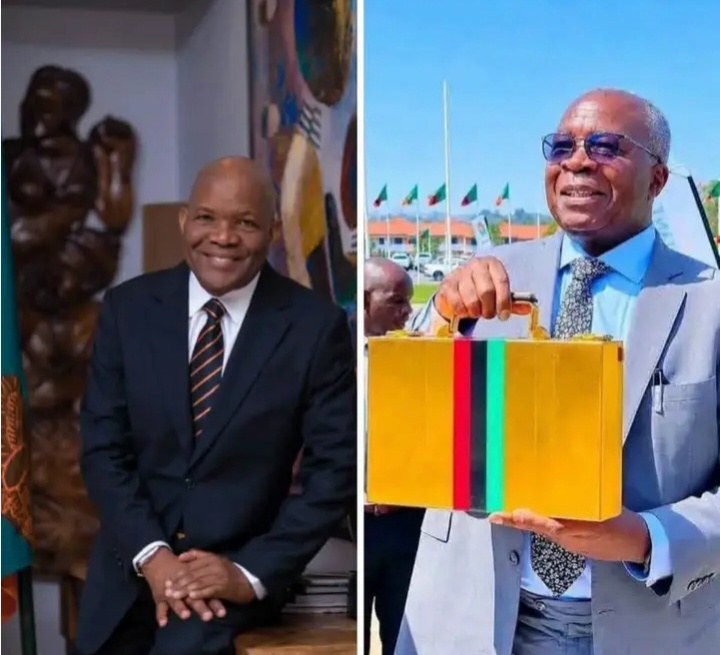
On 6 November 2026 the Minister of Finance and National Planning presented a K284.8 billion budget for 2027 under the theme “Grow Zambia: From Stabilisation to Unlocking Opportunities, Creating Jobs and Improving Livelihoods for All.”
We have said what is wrong with it. Today I want to set out what the same money could have done.
Zambia does not lack national resources. Zambia suffers from the wrong priorities: a budget that serves the lenders and a heavy political structure while it squeezes ordinary households. Built on socialist equity, transparency and production, the same K284.8 billion could have changed the lives of millions of Zambians.
1. PRICES, DEBT AND WHO GETS PAID FIRST
The government celebrates inflation slowing to 6.3 percent in October. But slower inflation does not mean lower prices. The basic needs basket for a family of five in Lusaka is about K12,000 a month, and this budget adds to it: VAT up to 16.5 percent, the mobile money levy doubled in every band, and a new sugar tax of K1 per kilogram.
Debt service will take K67.6 billion in 2027, one kwacha in every four. K50.8 billion of it goes to domestic lenders, while banks earn around 15 percent on government bonds instead of lending to farmers and small businesses. And the government still owes nearly K112 billion in unpaid bills to suppliers and VAT refunds to businesses.
A people’s budget would have removed VAT from all basic necessities, abolished the mobile money levy and the sugar tax, and paid every local supplier and farmer in turn, through a public, time stamped, first in, first out system, without favouritism and without a bribe.
2. ENDING FOREIGN DOMINANCE IN TOURISM
The budget suspends customs duty in full on safari vehicles and hospitality equipment, in a sector dominated by foreign owned lodges. Much of what tourists pay is booked and paid abroad, in dollars, while Zambians are left with the low wage jobs
A Socialist Party government would reserve safari game drive operations in Livingstone, Mfuwe, Chirundu, Itezhi-Tezhi, Siavonga and every park corridor for Zambian citizens and youth cooperatives. Instead of a tax break for foreign companies, the state would give a 50 percent capital grant on each safari vehicle and a loan at a fixed 10 percent for the rest, repaid weekly through an escrow account fed from lodge bookings. Because the repayment comes off the top, the risk of default falls sharply. Zambian youth would own their vehicles outright, and local mechanics, fuel stations and spare parts dealers would share in the business.
3. A LEAN STATE, TO FREE MONEY FOR YOUTHS AND MARKETEERS
The budget gives K90.5 billion to General Public Services. Most of it, K67.6 billion, is debt. What remains also carries a Parliament enlarged to about 280 members, a large Cabinet, 10 Provincial Ministers and 116 District Commissioners: upamwamba political appointees who duplicate the work of career civil servants and elected council leaders.
By our estimates, three reforms would free K22.36 billion over five years:
• A digital Parliament of 116 district MPs, one for each district, sitting through secure digital chambers from their home districts, with no Lusaka sitting allowances or hotel bills: K6.90 billion.
• No more Provincial Ministers or District Commissioners: K2.21 billion.
• A Cabinet of 10 ministries, led by people chosen from outside Parliament for their competence, with an end to ribbon cutting ceremonies, ghost workers and unaccounted discretionary spending: K13.25 billion.
Instead of feeding about 290 political positions, that money would go to work:
• K19.20 billion to settle 200,000 unemployed young people on 400,000 hectares of cleared and irrigated land, in cooperative blocks that share boreholes, tools and inputs, with a stipend of K2,500 a month until the first harvest.
• K2.50 billion to build 100,000 market stalls of brick and steel, clean and solar lit, across all 116 districts, built by local artisans, with K660 million held in reserve.
Two hundred thousand young farmers and 100,000 marketeers in dignified stalls could produce K15 billion to K20 billion a year. That would bring down food prices and create many thousands of jobs beyond the farm and the market.
4. FAIR TAXES IN PLACE OF TAXES ON THE POOR
The 2027 Budget gives the ordinary worker no PAYE relief at all, while many of the allowances and gratuities paid to politicians are not taxed the way a worker’s salary is.
We would replace PAYE, income tax on individuals and companies, excise duties and the mobile money levy with two taxes that are simple and hard to avoid:
• A turnover tax on every business sale, with no exemptions, set by sector from 3 percent to 60 percent according to published profit margins, with local councils receiving a fair share of our mineral wealth to pay for clean water, housing and sanitation in our compounds.
• A VAT with three rates: 0 percent on all the necessities of life (mealie meal, sugar, cooking oil, food, water, electricity, medicines, school books and low cost building materials), 15 percent on standard goods, and 50 percent on luxury vehicles, luxury alcohol, cigarettes and gambling.
The worker would keep the whole of the wage.
5. TAKING THE QUESTION TO THE PEOPLE
Much of this can be done at once. Paying suppliers in turn, citizen ownership of safari operations and the end of District Commissioners need no change to the Constitution. Tax reform needs only ordinary laws. But the size of Parliament, the office of Provincial Minister and the rule that Cabinet Ministers come from Parliament are all set by the Constitution, and sitting MPs will never willingly vote away their own seats and allowances.
So on assuming office I will use the President’s power under the Referendum Act to put one clear question to the Zambian people:
“Shall the Constitution of Zambia be amended to reduce the National Assembly to 116 District Members of Parliament, one for each district, sitting digitally from district council chambers with no Lusaka sitting allowances or hotel expenses; to abolish the office of Provincial Minister; to allow Cabinet Ministers to be appointed from outside Parliament; and to ring fence every kwacha saved for youth farm settlement and local markets?”
A clear YES would give a mandate that no Parliament could ignore when the amendment Bill comes before it. It would end allowance politics and send billions to the farms, markets and jobs of every district in Zambia.
The wealth of Zambia belongs to the people of Zambia, not to a privileged few. Together we can build a just, productive and socialist future for all.
Fred M’membe
SP President