

ZAMBIA’S FOREIGN EXCHANGE RESERVES UNDER EACH PRESIDENT
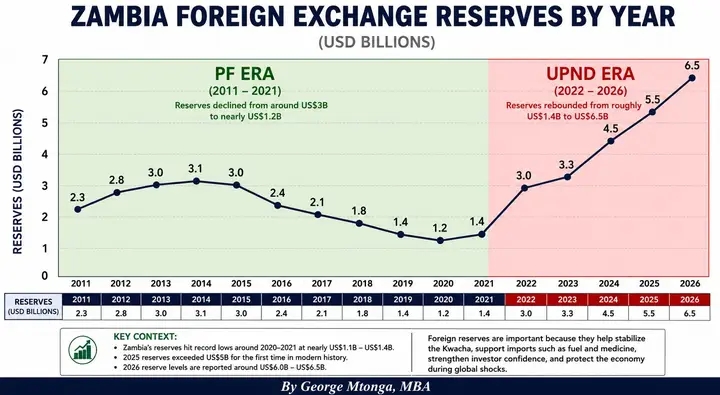
Kenneth Kaunda (1964–1991) left office in 1991 with less than US$100 million in foreign exchange reserves. Zambia was experiencing the effects of declining copper prices, economic challenges, and a heavy external debt burden.
Frederick Chiluba (1991–2002) left office with approximately US$180–190 million in reserves. Despite implementing economic liberalization and privatizing the mines, low copper prices and debt-servicing obligations limited reserve growth.
Levy Mwanawasa (2002–2008) left office with approximately US$1.1 billion in foreign exchange reserves. Fiscal discipline, increased mining revenues, and debt relief under the HIPC Initiative helped Zambia build its first substantial reserve cushion.
Rupiah Banda (2008–2011) left office with approximately US$1.9 billion in net reserves or US$2.32 billion in gross reserves. His administration benefited from high global copper prices during the commodity boom.
Michael Sata (2011–2014) left office with reserves estimated at between US$2.4 billion and US$2.7 billion. During his tenure, Zambia raised funds through Eurobonds, which contributed to higher reserve levels.
Edgar Lungu (2015–2021) left office with approximately US$2.6 billion to US$2.9 billion in reserves. Earlier in 2021, reserves had fallen to around US$1.2 billion amid rising debt-servicing costs and Zambia’s sovereign default. However, an IMF allocation of US$1.33 billion in Special Drawing Rights (SDRs) boosted reserve levels before the August 2021 elections.
Hakainde Hichilema (2021–Present) has overseen an increase in foreign exchange reserves to approximately US$6.47 billion, the highest level in Zambia’s history. This has been achieved through debt restructuring, fiscal discipline, and an IMF-supported economic reform programme.
They will never appreciate but just making noise these folks.Numbers dont lie.Today they are talking of coming back to destroy.Ikona man