

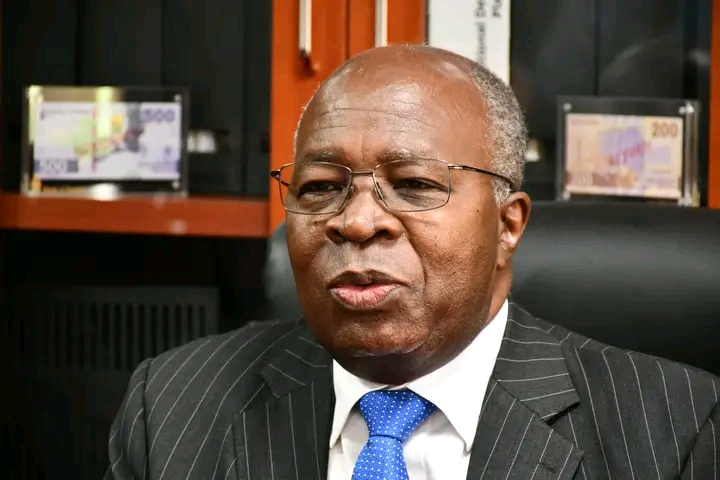
ZAMBIA’S MINERAL WEALTH NO REASON TO DISMISS IMF PARTNERSHIP – MUSOKOTWANE
Finance and National Planning Minister Dr. SITUMBEKO MUSOKOTWANE, MP, has defended Zambia’s continued engagement with the International Monetary Fund (IMF), saying the country’s substantial mineral wealth does not diminish the importance of international financial cooperation, sound economic management and credible development partnerships
Dr. MUSOKOTWANE said arguments that Zambia should distance itself from the #IMF because of its copper, cobalt, gold and other mineral resources overlook the role such institutions play in supporting monetary stability, economic resilience and international financial cooperation.
The Minister noted that the IMF’s 191 member countries include some of the world’s largest economies and leading producers of petroleum and other natural resources, demonstrating that membership is not confined to countries experiencing financial difficulties.
He cited Saudi Arabia, whose Finance Minister, MOHAMMED ALJADAAN, chairs the International Monetary and Financial Committee (IMFC), as an example of a resource-rich country actively participating in the Fund’s governance and policy processes.
Advanced economies including the United States, France, Germany, Canada and Japan, alongside emerging economies such as China, Brazil, South Africa, Thailand and India, also maintain IMF membership despite their differing economic strengths and resource endowments.
Dr. MUSOKOTWANE said the participation of these countries demonstrates that economic strength, natural resource wealth and international financial cooperation are complementary rather than contradictory.
Turning to Zambia’s economic circumstances, the Minister said cooperation with the IMF has contributed to efforts to address debt distress, restore macroeconomic stability, strengthen fiscal management and rebuild confidence in the economy.
Zambia completed the final review of its Extended #CreditFacility arrangement in January 2026, bringing cumulative disbursements under the program to approximately US$1.7 billion.
In October 2026, the Government subsequently reached a staff-level agreement with the IMF on a proposed new 36-month arrangement involving approximately US$1.472 billion, subject to the Fund’s established approval requirements.
The proposed successor program is intended to consolidate economic stability, strengthen debt sustainability and support more inclusive, private-sector-led growth.
Dr. MUSOKOTWANE emphasized that IMF cooperation does not replace national economic responsibility or guarantee prosperity, adding that citizens have a legitimate right to scrutinize the costs, benefits and distributional consequences of #economicreforms.
He said the Government’s responsibility remains to negotiate arrangements that protect Zambia’s national interests, preserve fiscal discipline, strengthen domestic production and improve living standards, particularly for vulnerable households.
The Minister linked this approach to the 2027 National Budget and the Grow Zambia Agenda, which prioritize the transition from economic stabilization to productive investment, job creation and improved livelihoods.
He said Zambia’s mineral resources present considerable economic opportunities, but their contribution to national development depends on investment, technology, infrastructure, skilled labor, competitive industries, effective taxation and responsible resource management.
Increased mineral production must therefore translate into greater domestic value addition, stronger export earnings, sustainable public revenues, employment opportunities and wider participation by Zambian businesses in the economy.
Dr. MUSOKOTWANE said economic sovereignty should be measured by Zambia’s ability to determine national priorities, negotiate international partnerships responsibly and convert its resources into tangible development benefits, rather than by rejecting cooperation with international institutions.
He maintained that the IMF should neither be treated as an adversary nor regarded as an institution whose recommendations are beyond scrutiny, stressing that effective partnerships require national ownership, informed negotiation and mutual accountability.
The Minister said Zambia’s longer-term objective is to build a diversified, productive and resilient economy capable of generating sufficient domestic resources to finance its development while maintaining constructive international relationships.
He reiterated that the IMF remains an important development partner whose contribution must ultimately be assessed against Zambia’s economic priorities and the benefits delivered to citizens.
“Partnerships where necessary, national ownership always, and development benefits for all,” Dr. MUSOKOTWANE said, reaffirming the Government’s commitment to advancing the #GrowZambia Agenda.
ENDs.