Zanu PF Drops Bombshell 2017 Letter That Called Mnangagwa a “Disloyal, Deceitful Snake and Unreliable”
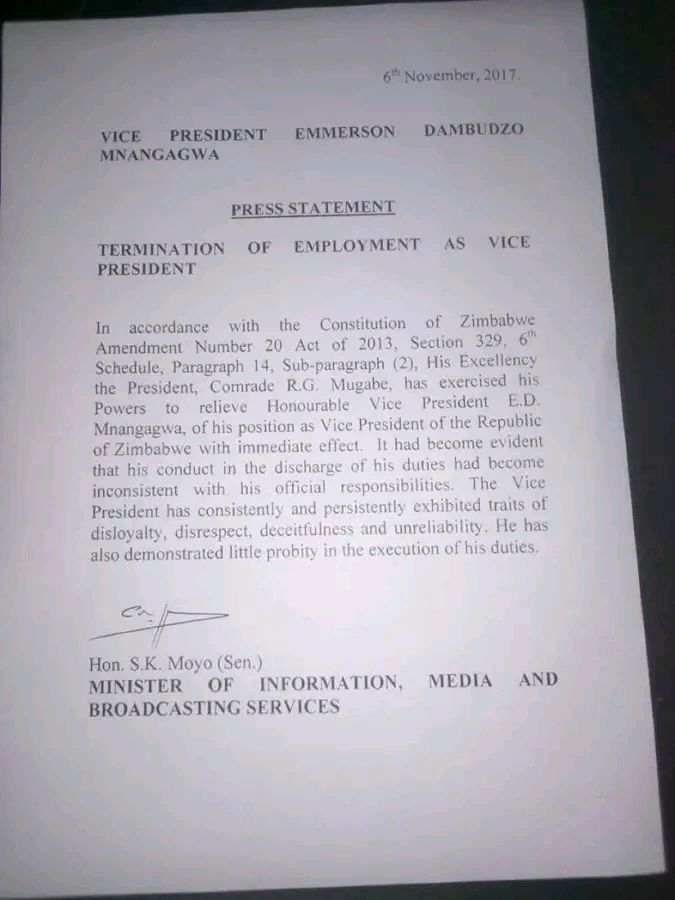
HARARE — The ruling Zanu PF party on Friday shared a 2017 press statement announcing the dismissal of then-Vice President Emmerson Mnangagwa as part of a “Today in History” post, resurfacing a document that accused him of disloyalty, disrespect, deceitfulness and a lack of integrity.
The statement, dated 6 November 2017 and signed by then Information Minister S.K. Moyo, declared that President Robert Mugabe had exercised his constitutional powers to relieve Mnangagwa of the vice presidency with immediate effect
It stated that Mnangagwa’s conduct had become “inconsistent with his official responsibilities” and that he had “consistently and persistently exhibited traits of disloyalty, disrespect, deceitfulness and unreliability,” while also showing “little probity in the execution of his duties.”
The post, which circulated widely on social media and party channels, marked the ninth anniversary of the events that triggered the military intervention leading to Mugabe’s resignation later that month and Mnangagwa’s eventual ascent to the presidency.
Political analysts said the decision to highlight the sharply worded letter — which framed Mnangagwa as unfit for high office — carries layered significance amid intensifying succession manoeuvres within Zanu PF.
Observers noted that recirculating the 2017 attack on Mnangagwa could serve multiple purposes in the succession matrix.
Some interpreted it as a reminder of the personal and factional costs of internal challenges, reinforcing loyalty to the incumbent.
Others suggested it might signal residual sensitivities or serve as subtle messaging in the ongoing contest between Mnangagwa’s camp and those aligned with Chiwenga.
“The letter was designed to destroy Mnangagwa’s political standing at the time. Posting it now, when succession debates are raw, is unlikely to be accidental,” one Harare-based political commentator said. “It either underscores that the current leadership has overcome such attacks, or it keeps the narrative of past disloyalty alive as a cautionary note.”
The 2017 dismissal and subsequent military-backed transition remain a defining episode in Zimbabwean politics. Mnangagwa fled the country briefly after his firing before returning to power.
The decision to revisit the original attack letter arrives as the ruling party navigates questions over who will eventually succeed him, with no clear consensus emerging between military-linked figures, business allies and long-serving party cadres.