

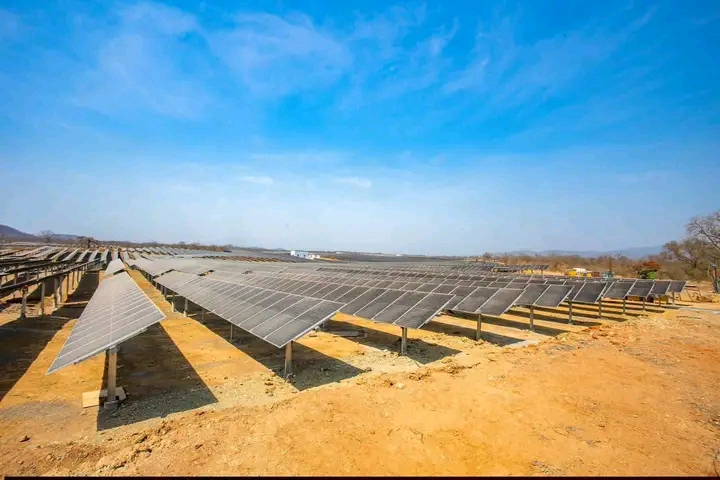
Zesco leaves no room for loadshedding amidst El niño, banks on solar, thermal
ZESCO Limited says it is pursuing a major shift in Zambia’s electricity generation mix, with solar and thermal power expected to play a bigger role in reducing the country’s vulnerability to drought-related electricity shortages.
This comes as Zambia faces the risk of prolonged dry spells during the 2026/2027 rainy season due to the El niño, raising concerns about potential impact on hydropower generation and the reliability of electricity supply.
The country, grappled with severe power blackout starting an 8-hour daily load management schedule in March 2024, with challenge graduating to 12 hours in May that year and eventually between 19 to 20 hours without electricity per day.
Power supply began stabilising in late 2025 as new solar, thermal, and independent power projects came online, with ZESCO officially concluding nationwide load shedding in December 2025.
Thankfully the latest statistics by Zesco give Zambians hope that they shall not go back to dark ages even if the rain is shy to bring forth its showers.
ZESCO Director of Transmission Operations and Trade, Lioko Sitali shared through a presentation that the utility is targeting to increase the country’s installed electricity generation capacity from the current 5,220 megawatts to 11,630 megawatts by 2030.
This is more than the 10,000 megawatts target that President Hakainde Hichilema has set on his path to grow the economy.
Presenting the utility’s generation expansion projections, Sitali said solar power is expected to contribute 4,126 megawatts by 2030, compared to 88 megawatts in the 2021 baseline.
He said thermal generation is projected to increase from 515 megawatts to 3,234 megawatts, while hydro is expected to grow from approximately 2,700 megawatts to 3,970 megawatts.
“For Wind, we currently have no wind [power generation], but we will have 200 megawatts by 2030. And others [energy sources] which include biomass, will have 100 megawatts,” he said.
Sitali said the planned diversification will change the country’s electricity generation mix, with hydropower’s contribution projected to decline from 82 percent in 2021 to 34 percent by 2030, while solar is expected to account for approximately 35 percent.
He added that the expansion will be supported by transmission infrastructure projects aimed at evacuating additional power from new generation plants and strengthening electricity distribution across the country.
Meanwhile, ZESCO Managing Director Justin Loongo said the utility was assessing renewable energy technologies and exploring partnerships and financing models to accelerate the development of new electricity generation projects.
Loongo said expanding generation capacity must go hand in hand with strengthening transmission and distribution networks to ensure that additional electricity reaches consumers.
“Greater private sector participation and regional power trading will also help us with growing demand and improve security of supply,” he said.
“Reliable electricity is central to the goals on the [Grow Zambia] agenda.”
Electricity Minister Peter Kapala welcomed the projections, expressing optimism that Zambia could surpass the Government’s 10,000 megawatt electricity generation target and reach 11,630 megawatts by 2030.
Kapala also emphasised the need to expand electricity access, saying the country was targeting universal electricity access by 2030, including in rural communities.
“I would encourage Zesco to continue this trajectory, because this is what we want to see,” Kapala said while highlighting that reliable electricity was critical to economic growth and improving the livelihoods of citizens.
Chi Kondi November 11, 2026