

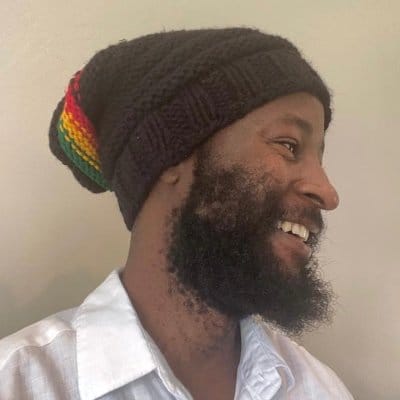
By Dr. Sishuwa Sishuwa
All I do is trying to open people’s eyes to what is happening around them. One day, even those who are today opposed to my efforts may see and understand.
Dr. Sishuwa Sishuwa
If Hichilema wins the August election, he will remove or extend presidential term limits, or change the way the president is elected.
Last year, Hichilema removed the two five-year term limits from Zambia’s constitution for mayors and councillors on the argument that “good leaders” should “continue if the people want you.” It is not difficult to see how the same argument could be extended to the presidency.
Before the constitutional change, three (president, mayor, councillor) of the five elective public offices had term limits. Instead of addressing the anomaly on the other two offices that had no term limits (council chairperson and member of parliament), he removed term limits from two of the three offices that had them so that after the election, he can argue for consistency in the law, that it is discriminatory to have term limits on only one elective public office! A few days ago, Attorney General Mulilo Kabesha announced that there will be major constitutional changes after the election, accusing Zambians of being the ones behind such demands. That is how Bill 7 started.
Hear me out: Hichilema, who is not a democrat and never ran his party in a democratic manner when he was in opposition for 15 years, is likely to be a wamuyaya president. I have repeatedly raised alarm about this plan from as far back as 2023. See the article on the link below, for instance.
africanarguments.org/2023/06/zambia…
I warned then and I am warning now that the man is going nowhere. His intentions to stay in power for a very long time were made clear when he set out to destroy the opposition, pack the courts, capture the electoral commission, contain the Catholic Church, and weaken civil society. There are three main reasons behind Hichilema’s desperation to remain in power at all costs.
The first is the fear of what might happen to his extensive businesses were he to lose power. The president has to date refused to publish his assets and liabilities, which makes it difficult to work out to what extent his policies are benefiting companies in which he has an interest. Once he leaves office, however, a new government can revisit the subject and could seek to charge him with corruption. As we have seen with the previous regime, the corruption of any president or administration only becomes clear when they are out of office.
The second is that Hichilema wishes to avoid the embarrassment of losing power after just one term for both his own sake and that of his backers. During his decade-and-a-half in opposition, he cultivated close ties with private supporters – local and multinational corporations – who backed his election bid and wish to recoup their investments. This includes prominent domestic and foreign businessmen who aligned with the UPND for financial reasons. They bankrolled Hichilema’s election campaigns and now seek a return on their investment. One five-year term is insufficient to recoup their investment, so they are pushing to keep him in power for as long as possible.
Another set of local businessmen is made up of Hichilema’s close allies from the 1990s when major state enterprises were dismantled for privatisation. Their reference point is former President Frederick Chiluba (1991-2002), who opened the door of accumulation for them but got side-tracked by a life of fancy suits and shoes. The nationalistic impulses of Chiluba’s successors adversely affected this cohort’s aspirations, but the election of a privatisation-minded leader has thrust the country back into their hands. One can easily find these people, who are working closely with Hichilema under beneficial ownership, in nearly all the economic sectors of the country including energy and insurance.
Then there are foreign mining and fertiliser companies that helped finance the recent constitutional changes that saw MPs being taken to the Lower Zambezi during the weekend that preceded the voting on the Bill in parliament for “safe keeping”. No wonder Hichilema was to later publicly boast in Choma that he had “dribbled” them in reference to some of the MPs who had thought that they could get the lucrative financial inducements and stay away from parliament on 15 December when the vote on Bill 7 was set to take place. The MPs were only returned to Lusaka on the morning of the vote in parliament and were transported directly to parliament from the airport, which explains why they arrived late on the day.
I get sad when I hear government officials singing about how they wish to raise mining production to 3 million metric tonnes. For a country that has little stake in the ownership of the mines, this singing is ridiculous. What they should be telling the public is how much revenue they are collecting from the mines compared to those who came before them. But our elected officials can’t do this because they are captured. They are a shameless set of corruptible leaders, who have betrayed Zambia to foreign commercial interests, who pawn off the country for a few trinkets, who accumulate through brazen theft of public resources and massive sale of Zambian land to so-called investors, and who strut around with self-importance when they are nothing but disposable playthings of even bigger global kleptocrats.
Even the foreign actors who are pushing the Lobito project, which largely remains a paper tiger for now, would rather have “a stable leadership” in place for a long time, like the case is in Angola and Congo, rather than changes in government, as Zambia tends to peacefully do.
Third, Hichilema appears to see himself as the leader of Zambians from one half of the country. Many people from Southern, Northwestern, and Western provinces believe they have been historically marginalised by their counterparts from the Eastern and the Bemba-speaking provinces of Northern, Luapula, and Muchinga. As was the case under Lungu, the binary between us and them has been sharply drawn under Hichilema. Zambians from the president’s region head the executive, legislative, and judicial branches, and dominate the key ministries, the security services, electoral commission, foreign service, and most posts in the civil service and parastatal bodies.
Hichilema – the first president from his region since independence in 1964 – does not see anything wrong with this, believing he is simply addressing historical imbalances. Fearful that a leader from the other region would reverse the trend were he to lose, the solution is to remain in power for as long as possible and then organise a successor from his region who can consolidate its hold on power. I repeated this point in yesterday’s article, but the eyes of many remain closed.
x.com/ssishuwa/statu…
I conclude with how I began: All I do is trying to open people’s eyes to what is happening around them. One day, even those who are today opposed to my efforts may see and understand. They may learn that my political commentaries are not motivated by personal, financial or political interest of any kind, and that I am fighting for them, even if they cannot see it. Many of them may not have the freedom, courage or will to fight along or render a helping hand but it saddens me greatly when they try to undermine my little individual efforts because doing so only succeeds in enabling the undemocratic conduct of our elected public leaders and derailing the very progress that we need to secure, for our common good.
A keen reader of my articles who has followed my political commentary since 2009 sent me the messsge below this morning: “Sometimes it takes change of govt for people to realise that people that we hated actually meant well. There’s a friend of mine who was a very senior police officer under ECL who now doesn’t miss reading your articles. He was among the first people to be fired by HH. And now he’s full of praises for you. This is a person who would never have read anything coming from you prior to 2021. But it shouldn’t take people this to see sense in their perceived enemies.”
I received similar messages from MMD supporters starting around 2012 when my criticism of Michael Sata’s leadership increased. Many who had falsely assumed that I was critical of Rupiah Banda’s leadership because I supported the opposition turned around and became some of my biggest supporters. Even MMD leaders and former ministers who had stopped talking to me in the run-up to the September 2011 election came back and suddenly started seeing sense in nearly everything I was writing. Like now, I had not changed in any way. What changed was their perception of me after they or the president they supported lost power.
The lesson from this experience is clear: What we know about people is only what we think we know about them. It is rarely the truth. If we knew the truth, our relationship with them would dramatically be different. The other lesson is that when people are eating from a system, anyone with a contrary view is considered an enemy. For many, it is all about self-interest/preservation. It should not be this way. There must be honour, principles, and convictions in life.
Fyafula,can’t read this
Guesswork and speculation just to demonise HH.
FYI HH is a millionaire cattle rancher who does not depend on government salary. He is in politics as a service, not as a livelihood. He is operating at an entirely different level compared to you Dokota Shuwa Shuwa.
Ba Malikopo, even dollar billionaires still want to grow their businesses. The fact that the President is an established businessman doesnot make him an angel. Greed is no respector of persons. He may not depend on a government salary but he definitely can grow his businesses by leaps and bounds using his office of President. What is his salary if he can grow his businesses ten fold while in office? We saw how his predecessor abused the presidency to acquire enormous amounts of wealth.
Trust is good but control is better. For the sake of transparency and building trust, Mr. Hichilema should have made his declaration of his assets and liabilities with the Electoral Commision of Zambia (ECZ) public. Instead he has deliberately chosen to keep it out of the public eye like his predecessor, Mr. Lungu, intended.
Can’t Dr. Sishuwa and opposition party leaders force the said declarations to be made public through the Freedom of Information act for both the President and his immediate predecessor, Mr. Lungu? This is a matter of public interest but I have wondered why someone with the legal and financial capacity has not taken up this issue. Where are you Mr. Sangwa, News Diggers?
Or is it that people are afraid of opening a Pandora’s box?
HH is …HH that …Hh Is going.Too much speculation from your write up. I have no problem voting HH nafuti nafuti. We have peace now now. PF destroyed this country. The unity that we used to have went out through the widow. Cabinet 98% percent ati from one region?. PF go away never comeback.
At times the so called learned people can be the most useless. This man is always full of assumptions and speculations and has had them for the past four and half years. Totally wasted years. You wanted to block Bill 7 purely on assumptions and speculations but thank God that you failed, forces of progress prevailed.
As for HH, it’s not if he wins but it’s just a matter of time, come August, 2026, sunshine or raining, he is winning with a landslide even more than the 2021 one. This time it will be a Tsunami win, the mother of all wins. You can continue speculating and making assumptions as much as you can but that will not change anything.
Indeed this Sishua Sishua is just speculating or behaving like a witchdoctor. No facts whatsoever. What kind of behaviour is this if not from a psychopath? Where does he get the knowledge of what the future holds for this country?
Already the noise has started… Listen carefully and you will hear.
One Traditional leader here, another one there, the wamuyaya noises for the Great Leader.
One seemingly remote comment from Senga Hill , another from chadiza, Yet another from Zambezi looking uncoordinated, it’s the wamuyaya songs phase 1. That’s how they have started.
And immediately Hakainde Hichilema wins the August 13th Presidential Elections,
then the noises will become louder… Endorsements and Endorsements for the Great Leader to rule forever.
The illegitimate and Unconstitutional Bill 7 was for this purpose… Eternal Rule for the Great Leader.
We know who he is.
You think you can fool a Corleone?
But it won’t happen.
And it starts on 13th August,2026.
EMPERORS will Fall.
References
. UPND member Cosmas Chileshe calls for constititutional Amendments to extend Presidential Term limits…8/4/2026
. Senior Chief Shakumbila of Central Province suggests that HH should serve for 15 – 20 years to fully implement his development Agenda.
. A Chief in North Western Province suggests Mr Hakainde Hichilema should rule for 40 years.
. Chilufya Tayali – Hakainde Hichilema deserves Continuity without Term limits.
( The Wamuyaya songs have started)
Guess this man is high again on his own supply…
Everytime he writes an article he runs his mouth making unsubstantiated claims supposedly backed by his waterdown credentials …