

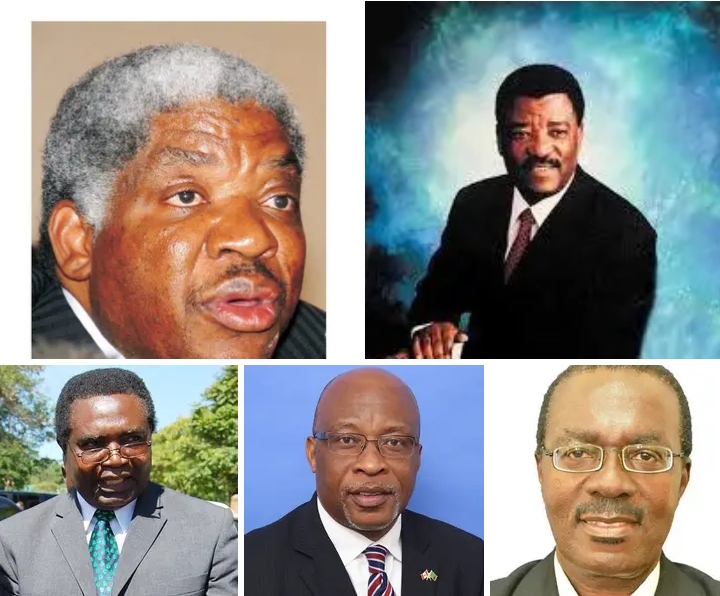
A President by Minority! Will History Repeat Itself?
In the 2001 presidential elections, Levy Mwanawasa of the MMD won with 29.15% of the votes.
His closest rival was Anderson Mazoka of the UPND, who got 27.2%. Third was Christon Tembo (FDD) with about 13.2%, fourth was Tilyenji Kaunda (UNIP) with around 10.1%, and fifth was Godfrey Miyanda (Heritage Party) with about 8.1%.
President Levy Mwanawasa became president with a minority of the votes under the first-past-the-post electoral system. This means that over 70% of those who voted did not choose him.
Before the elections, Anderson Mazoka asked Pastor Nevers Mumba and others to join forces with him. Mumba refused. If they had united, together with other opposition candidates, they would likely have gained far more than 29% and easily beaten Mwanawasa. Analysts believed a united opposition could have won comfortably. Today, we face a similar situation.
Although it is now difficult for history to repeat itself entirely because Zambia changed to a 50% + 1 system. However, various presidential aspirants have been urged to work together. If they join forces, they can avoid the 2001 mistake. If they do not, they risk repeating history by splitting votes and letting a candidate win with a minority.
Interestingly, out of the 11 presidential candidates who contested the 2001 elections, only three appeared in 2006 presidential elections, Levy Mwanawasa, Michael Sata, and Godfrey Miyanda..
What we can learn from this, is that working together can help extend your political career, while untamed ambitions and divisions can quickly end it. Out of those 11 candidates, only one eventually became President.
This should serve as a strong lesson today. Out of the many presidential aspirants who have paid their filing fees, only a few will remain politically relevant in the coming years and probably only one will ever become President.
Michael M Mulusa
The Voice
The key question is, what does the unified opposition have for Zambians beyond winning the August 2026 elections? Nothing!
It will be a nightmare five years if the united opposition was to win the elections. Apart from removing HH, they have not specified how they will improve the lot for the ordinary Zambians. Do they have a manifasto? Of course not since they are still roaming in the wilderness. Now imagine such an outfit running the state machinery. We would see worse confusion than we witnessed under the anarchist PF. There would be a perpetual power struggle for five years.
We can’t afford such a misadventure.