

EDITORIAL | Grief Cannot Become a Manifesto
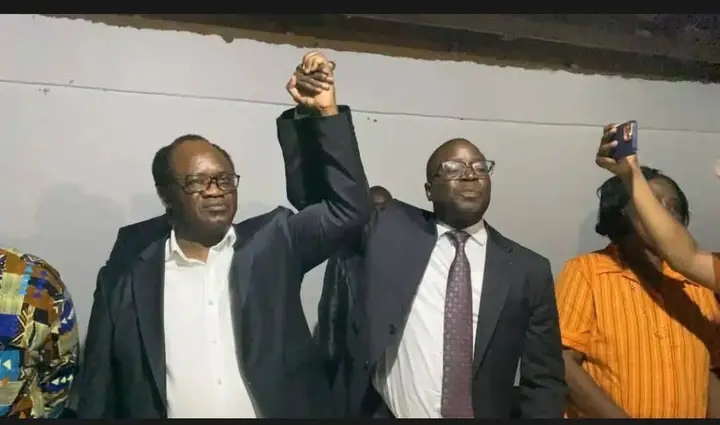
The official entry of Brian Mundubile and Makebi Zulu into the presidential race should have marked a turning point for the opposition. For months, many within the broader opposition space argued that fragmentation was weakening their ability to mount a serious challenge against the ruling United Party for National Development. Their decision to work together therefore carries political significance. It signals an attempt to consolidate influence within parts of the opposition bloc and preserve the legacy of the late Edgar Chagwa Lungu within active electoral politics.
But there is a growing strategic problem.
The campaign message promise emerging around the Mundubile-Makebi project appears overwhelmingly anchored on grief, emotion, and the unresolved burial dispute surrounding former president Lungu. While emotionally powerful within sections of the Patriotic Front support base, body politics alone has historically shown limited electoral conversion beyond mobilising existing loyalists.
This is not speculation. Zambia has already tested this terrain through a series of by-elections over the last few months. In constituency after constituency, the PF attempted to weaponise outrage surrounding Lungu’s treatment, legal disputes, and political tensions. The emotional energy was visible online and within rallies. But on the ground, the results consistently exposed a difficult reality: sympathy does not automatically become votes.
The problem is structural.
Elections are ultimately won through a combination of emotion, organisation, and a believable economic proposition. Right now, the opposition’s emotional messaging is louder than its policy messaging. Voters may sympathise with Lungu. They may even disagree with aspects of how events unfolded around his burial dispute. But sympathy alone does not answer questions about jobs, mealie meal prices, debt, mining policy, healthcare, agriculture, or youth unemployment.
A campaign cannot survive indefinitely on memorial language.
When Mundubile reportedly dedicates “the entire campaign period” to Lungu, the risk is political narrowing. Instead of broadening the coalition, the campaign may end up speaking primarily to already converted PF loyalists while failing to attract undecided voters, urban independents, young first-time voters, and economically frustrated citizens looking for practical alternatives.
This is where the opposition continues to struggle against Hakainde Hichilema politically. The UPND may be vulnerable on some unmet expectations in some sectors, but it still possesses visible policy anchors it can repeatedly point to: free education, debt restructuring, CDF, currency stabilization, teacher recruitment, and energy projects. Whether voters are fully satisfied is another matter. But the ruling party can at least frame its campaign around tangible governance programmes.
The opposition, by contrast, risks appearing emotionally reactive rather than programmatically prepared.
Even within the PF’s traditional green corridor — Muchinga, Northern, Luapula, and parts of Eastern Province, political loyalty is no longer as automatic as it once was. Recent by-election trends have shown shifting ground, internal fractures, and gradual UPND penetration into areas once considered untouchable opposition strongholds. This means the opposition cannot afford a nostalgic campaign. It requires expansion, persuasion, and a forward-looking economic message.
Makebi Zulu himself brings intellectual sharpness, legal visibility, and media appeal. Mundubile brings parliamentary experience and organisational recognition. But neither attribute automatically translates into electoral momentum without a coherent national proposition. Zambia’s electorate has become increasingly transactional. Citizens are asking harder questions: “What exactly changes if you win?”
That answer still feels underdeveloped.
There is also a danger in over-personalising elections around departed leaders. History shows that nostalgia has emotional lifespan limits unless tied to a living governance agenda. Even powerful historical memories eventually lose electoral efficiency when not connected to current economic realities.
The opposition therefore faces a critical strategic choice.
It can continue centering the campaign around emotional mobilisation and unresolved grief, hoping outrage hardens into national momentum. Or it can pivot toward a disciplined manifesto-driven campaign capable of attracting citizens beyond the PF emotional base.
Because elections are not won by mourning alone.
They are won by convincing citizens that tomorrow will function better than today.
© The People’s Brief | Editor-in-Chief