

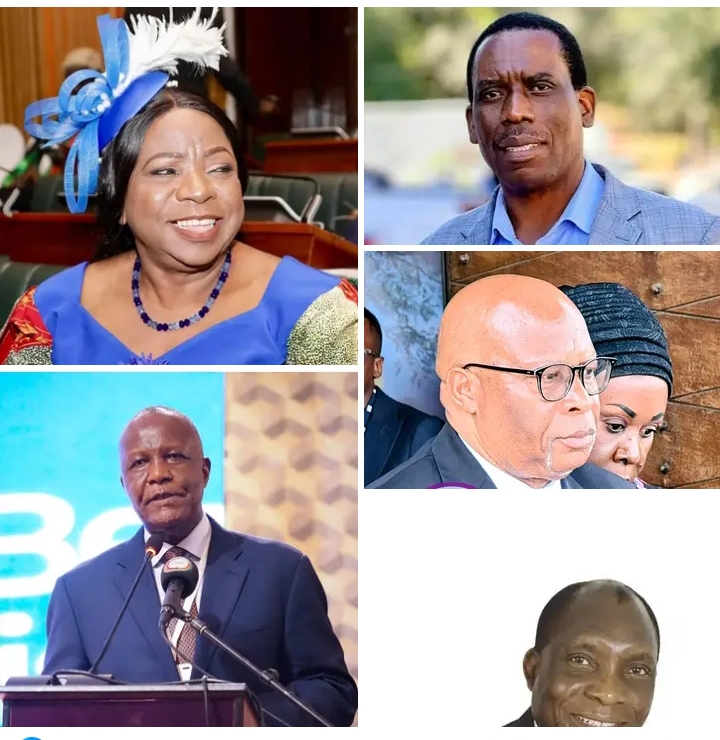
PRESIDENT HICHILEMA’S RUNNING MATE
The political arena is currently abuzz with anticipation as incumbent President Hakainde Hichilema prepares to file his nomination papers for a second term in office.
This pivotal moment, scheduled for today at the Mulungushi International Conference Centre, signifies not only his formal bid for re-election but also the culmination of weeks of intense speculation regarding his choice of running mate.
As the presidential candidate for the UPND Alliance, President Hichilema’s decision will undoubtedly shape the narrative of the upcoming August 13 general elections and carry significant weight in his campaign strategy.
The nation and its political observers are keenly awaiting the unveiling, expected at 13:00 hours, the same time he is set to submit his nomination.
Speculation is rife regarding President Hichilema’s likely choice for his running mate.
One prominent consideration is the retention of Vice President Mutale Nalumango.
This option offers the benefit of continuity and stability.
Furthermore, her appeal to the northern bloc vote is a significant factor. In a diverse nation like Zambia, ensuring representation and appealing to different regional interests is crucial for electoral success.
Retaining Nalumango might be perceived as an effort to solidify support in that region.
An additional argument for her retention, as suggested by some analyses, is that she is perceived as less ambitious and less likely to challenge President Hichilema’s authority, thus allowing him to govern with a degree of autonomy.
This aspect highlights a common strategic consideration for incumbents: choosing a running mate who complements rather than competes with their leadership style.
Choosing her will reduce internal dissent, particularly as 2031 approaches and the incumbent is expected to leave office if he wins the 2026 election.
Conversely, selecting a running mate from an alliance partner party could serve multiple strategic objectives.
It could demonstrate inclusivity and a commitment to strengthening the broader UPND Alliance coalition, appealing to the distinct constituencies represented by parties such as the Party of National Unity and Progress led by Highvie Hamududu, the Movement for Democratic Change headed by Felix Mutati, the New Nation Party under Nevers Mumba, and the Alliance for Democracy and Development led by Charles Milupi.
Such a move might broaden the alliance’s appeal, drawing in voters who might otherwise be hesitant to support the UPND solely.
It could also signal a willingness to embrace new perspectives and leadership within the alliance, potentially energizing different segments of the electorate.
By Given Mutinta
VP Nalumango remains as running still, period . Foolish to even think otherwise
…running mate