

Could Xaviour Save Zambia’s Future With His Story?
By Gregory Mofu
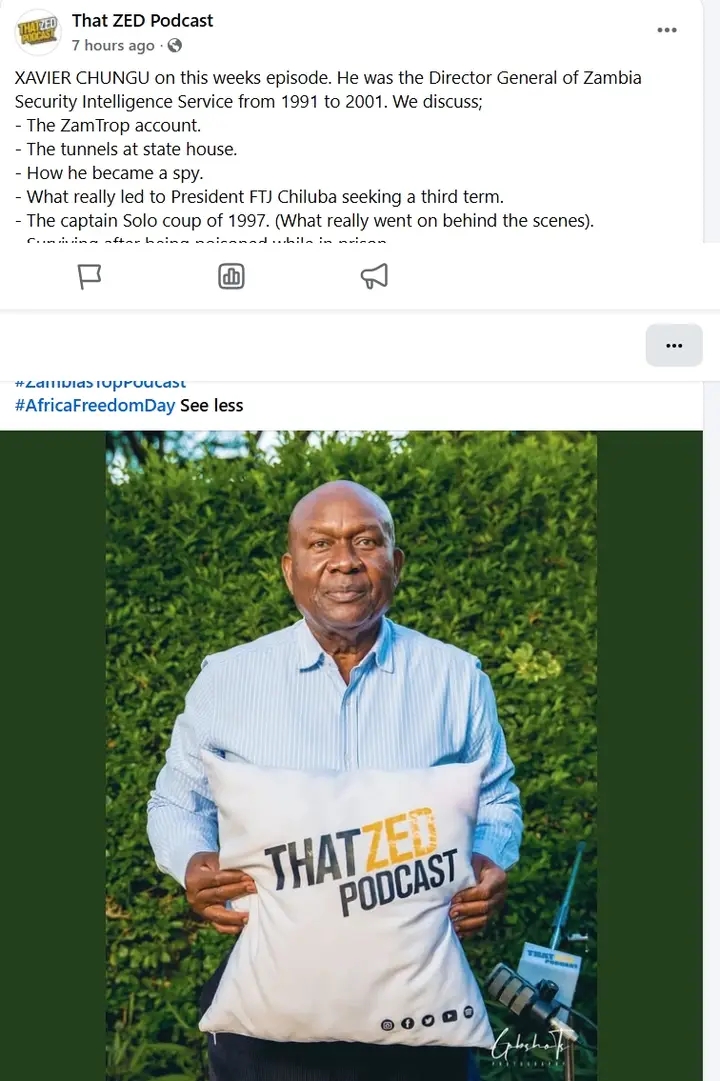
The announcements by Millennium TV and later The Zed Podcast that they would not air interviews featuring former intelligence chief Xavier Chungu have sparked debate across the country. For many Zambians, the issue is bigger than one interview. It touches on history, freedom of discussion and whether the country is comfortable confronting parts of its own past.
Xavier Chungu is not just another politician looking for airtime. He was head of Zambia’s intelligence services from 1991 to 2001 during the administration of former President Frederick Chiluba. Today, he is the presidential candidate of the Liberal Democratic Party. Because of the sensitive office he once held, some people argue that he should remain silent on matters connected to state security.
That argument is understandable to some extent.
People who work around the presidency, intelligence institutions and national security structures usually swear an oath of secrecy because of the kind of information they handle. Every country protects certain classified information, and Zambia is no exception.
But there is also another side to this conversation.
Many of the topics Xavier Chungu was reportedly expected to discuss are not classified secrets hidden somewhere in government vaults. Most of them are already in the public domain and were made public years ago by the very governments he served under or through court proceedings.
Take the famous State House tunnels. These were publicly revealed during President Chiluba’s administration itself. Zambians even watched footage and tours of the tunnels on ZNBC. Once a sitting government publicly discloses such information to the nation, it stops being some hidden mystery.
The same applies to the infamous Zamtrop account. Former President Levy Mwanawasa openly addressed the issue during anti-corruption press briefings, and details later emerged in court proceedings both in Zambia and abroad. For years, newspapers, court records and public discussions have covered the matter extensively.
Even the 1997 attempted coup is not a hidden state secret. Information surrounding the failed coup was presented in open court during treason cases involving military officers and civilians accused of participating in the plot. Witness testimonies, investigations and details of what transpired became part of public record through the judicial process.
So the real question becomes: what exactly is dangerous about allowing a former intelligence chief to give his own account of events that Zambians already know about?
In many countries around the world, former intelligence officials eventually speak about historical events after leaving office. Not necessarily to expose ongoing security operations, but to help nations understand what happened, what mistakes were made and what lessons future generations can learn.
In the United States and the United Kingdom, several former intelligence figures later admitted there were serious doubts about the existence of weapons of mass destruction in Iraq before the 2003 invasion. Some even revealed that concerns had been raised internally but political leaders chose another path. Those discussions became important because societies learn from honest reflections, especially on matters that once shaped national policy.
Zambia should not be afraid of similar conversations.
Allowing Xavier Chungu to speak would not automatically make him right. It would simply allow citizens to hear another perspective from someone who was directly involved in major historical events. People can listen, analyse and make their own conclusions.
In fact, one of Zambia’s biggest problems is that too much of its political history survives through rumours, half-truths and whispered stories. Many key figures either die without speaking or are discouraged from speaking altogether. As a result, future generations inherit confusion instead of clarity.
What many people wanted from those interviews was not classified intelligence. They wanted historical context. They wanted to hear Chungu’s side on issues such as Zamtrop, the State House tunnels, the 1997 coup attempt, his departure from Zambia, his imprisonment and the political atmosphere of that era.
There is a difference between protecting national security and suppressing historical conversation.
If Zambia truly wants to avoid repeating the mistakes of the past, then it must be willing to listen to those who lived through its most controversial moments even when their stories make people uncomfortable. Nations do not grow by burying history. They grow by confronting it honestly.
Perhaps that is where the irony lies. Maybe “Saviour” is not about saving Zambia through politics alone.
Maybe Xavier Chungu could help save Zambia’s future simply by telling his story so that future generations can learn from the triumphs, failures, excesses and mistakes of the past rather than repeat them.