

🇿🇲 ANALYSIS | UPND’s Path to 5 Million Votes
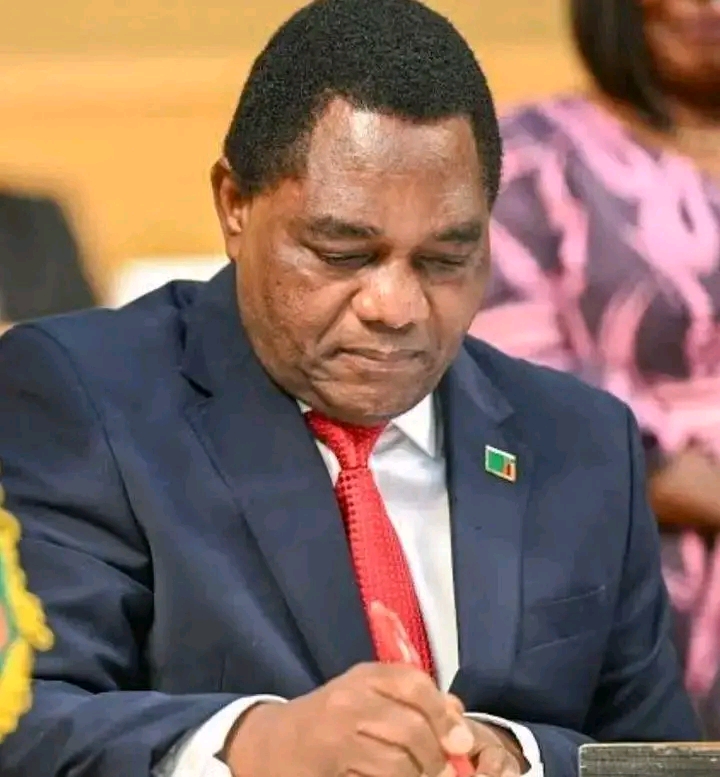
President Hakainde Hichilema enters the final two days of campaigning with an itinerary which says something important about the UPND’s electoral strategy. On Tuesday, he is scheduled to campaign across Chawama and Kabwata, Munali, Lusaka Central and Roma, before moving to Lima and Matero. Wednesday takes him into Mandevu, Kanyama and Makeni. These are not ceremonial closing rallies. They place the presidential candidate inside some of the most densely populated and electorally competitive parts of Lusaka immediately before Zambia votes on Thursday.
To understand what the UPND appears to be doing, it helps to move away from rally crowds and social media predictions and return to electoral arithmetic. The governing party has repeatedly spoken about a target of five million votes. Such a number cannot come from traditional red bases alone. It requires the UPND to defend its strongest margins, remain competitive in Lusaka and the Copperbelt, consolidate Central, expand substantially in Eastern and extract more votes from Northern, Luapula and Muchinga than it managed five years ago.
This is why the final Lusaka push matters.
There is a popular argument in opposition circles suggesting Lusaka and the Copperbelt could deliver a 70 percent or larger anti-incumbent vote on Thursday. It is possible for voting behaviour to change, and no historical pattern makes a future result impossible. But the available electoral record does not establish such an outcome as inevitable. The burden of proof remains with Thursday’s ballot.
Consider 2021, an election which produced an unmistakable change of government. Hichilema defeated Edgar Lungu nationally with 2,852,348 votes against 1,870,780. The European Union’s review records the corresponding valid-vote shares at 59.02 percent and 38.71 percent.
But the urban battlegrounds did not produce the kind of 70-30 split now frequently predicted online.
In Lusaka Province, Hichilema received 442,253 votes against Lungu’s 357,674. That translated into roughly 53 percent against 43 percent. The difference was about 84,600 votes. On the Copperbelt, Hichilema collected 420,443 against Lungu’s 300,413, approximately 56 percent against 40 percent. The difference was roughly 120,000 votes.
Those numbers are instructive because 2021 was not an ordinary election. Hichilema was a veteran opposition candidate contesting the presidency for the sixth time. The PF was defending ten years in government. Zambia had defaulted on its sovereign debt, economic pressures were severe and the demand for political change was visible. Hichilema still did not take 70 percent of either Lusaka or the Copperbelt.
The Copperbelt provides an even better illustration of how competitive provinces move. In 2016, Lungu defeated Hichilema there by 345,275 votes to 189,562, approximately 63.6 percent against 34.9 percent. Five years later, the province flipped. Hichilema rose to 420,443 while Lungu fell to 300,413.
That was a major swing. It was not annihilation.
Lusaka contains the same internal complexity. Even during Hichilema’s national landslide in 2021, constituencies moved differently. He won Kanyama with 61,892 votes against Lungu’s 39,994 and Kabwata with 45,363 against 29,095. But Lungu remained ahead in Matero, taking 51,832 against Hichilema’s 40,612, and in Chawama, where he received 31,967 against Hichilema’s 23,938.
Now look at Tuesday’s programme: Chawama. Kabwata. Munali. Lusaka Central. Roma. Lima. Matero. Then Wednesday: Mandevu. Kanyama. Makeni.
The electoral logic becomes clearer. The UPND is not behaving like a party which assumes Lusaka is secured. It is treating the capital as competitive ground where turnout and margins must be managed constituency by constituency.
There is another layer to the strategy. Hichilema does not necessarily need to reproduce his 2021 margins everywhere to remain competitive nationally. What matters is the interaction between losses and gains across the map
Take the old PF northern belt.
In 2021, Lungu received about 233,129 votes in Luapula against Hichilema’s 119,550. In Muchinga, Lungu recorded 172,601 against Hichilema’s 86,581. Northern Province gave Lungu 231,831 against Hichilema’s 151,389. Put differently, Hichilema was already receiving significant minorities inside provinces considered PF territory.
This appears to explain the UPND’s repeated incursions into the Northern Circuit. Its strategic requirement is not necessarily to turn Luapula, Northern and Muchinga red overnight. Moving from roughly 31 percent towards 35 or 40 percent in parts of this territory could be politically valuable even where the opposition ultimately wins the province.
Elections are not won by colouring the greatest number of provinces on a map. They are won by accumulating votes.
This is the principle sometimes described as losing intelligently.
Central Province illustrates the other side of the equation. In 2021, Hichilema collected 276,674 votes there against Lungu’s 158,598, roughly 60 percent against 34 percent. The UPND therefore has an existing base to defend. Continued deployment of Vice-President Mutale Nalumango and other senior campaign figures into Central suggests the governing party understands consolidation is as important as expansion.
Eastern Province presents a different problem. The UPND lost the province in 2021, but it established a meaningful foothold. Since then, the party has invested heavily in organisation, defections, local structures and repeated presidential campaigning. Whether this converts into a provincial victory on Thursday is unknown. Strategically, however, the requirement is easier to understand: Hichilema does not necessarily need every former PF voter. He needs enough movement to reduce the old deficit substantially.
This is where the UPND’s national footprint becomes important.
Its strongest provinces give it a large electoral floor. In 2021, Hichilema received about 602,000 votes in Southern Province, 276,000 in Western and 263,000 in North-Western. His winning margins there were far larger than Lungu’s margins in Northern, Luapula and Muchinga.
The opposition therefore faces a different arithmetic. It must not merely inherit former PF territory. It needs to maximise those territories while penetrating UPND strongholds sufficiently to prevent enormous deficits from accumulating there.
This is why the Tonse Alliance’s decision to conduct its Southern Province engagement virtually deserves electoral scrutiny independent of its stated security concerns. A campaign can lose Southern Province and still remain nationally competitive. What becomes dangerous is losing it overwhelmingly while failing to physically campaign for the minority of votes available there.
Hichilema demonstrated the opposite strategy before becoming President. He did not need to win Luapula, Muchinga or Northern in 2021. He needed to stop losing them by the devastating margins which had constrained earlier UPND presidential campaigns.
The numbers show what happened. In Luapula he still obtained roughly 31 percent. Muchinga gave him roughly 31 percent. Northern delivered about 36 percent. He lost all three provinces, but those votes still entered his national column.
This is the deeper logic behind the UPND’s 2026 campaign
Defend Southern, Western and North-Western. Consolidate Central. Fight for every available vote in Eastern. Remain competitive in Lusaka and the Copperbelt. Improve the 2021 floor across Northern, Luapula and Muchinga.
No single part of this strategy guarantees five million votes. Nor does campaign organisation guarantee victory. Economic conditions, turnout, candidate appeal, local parliamentary contests and late voter movement can disrupt historical patterns. Hichilema also enters Thursday carrying an incumbent’s record rather than an opposition candidate’s promise, with cost-of-living pressures remaining an important vulnerability despite improvements in several macroeconomic indicators. Reuters identifies precisely this tension in the 2026 contest.
But there is a difference between predicting an election and identifying a strategy. The UPND’s strategy is increasingly visible.
It is not relying exclusively on its strongholds. It is trying to build a national accumulation of votes. Where it expects to win, it wants large margins. Where the contest is close, it wants to remain competitive. Where it expects to lose, it wants enough votes to prevent the opponent from building an insurmountable national advantage.
And this brings us back to Lusaka.
The capital is not merely another stop before polling day. It is one of the places where the UPND’s entire theory of the election will be tested. In 2021, Hichilema won Lusaka without dominating it. He won the Copperbelt without crushing his opponent. His national victory came because those urban victories were added to overwhelming stronghold margins and increasingly competitive performances elsewhere.
The claim of a 70 percent opposition sweep across Lusaka and the Copperbelt may prove correct on Thursday. It may also prove wrong. There is presently no result from the 2026 election capable of settling the argument.
History, however, offers a warning against treating social media confidence as electoral arithmetic.
The UPND appears to understand this. It is not campaigning as though Thursday has already been won. It is campaigning for the last vote.
And ultimately, the five-million strategy depends on precisely that principle: win heavily where you are strongest, compete where the country is divided, and lose intelligently where you remain weak.
Whether the arithmetic works will no longer be a matter of analysis after Thursday.
It will be a matter of votes.
© The People’s Brief | Ollus R. Ndomu
An interesting analysis. Well researched and nourishing.