

🇿🇲 MONITOR | Crowd Wars, AI Images and the Battle for Perception
As the 2026 election campaign gathers pace, the contest is no longer taking place only on rally grounds. It is increasingly unfolding online, where photographs, videos and viral graphics are becoming political weapons in their own right.
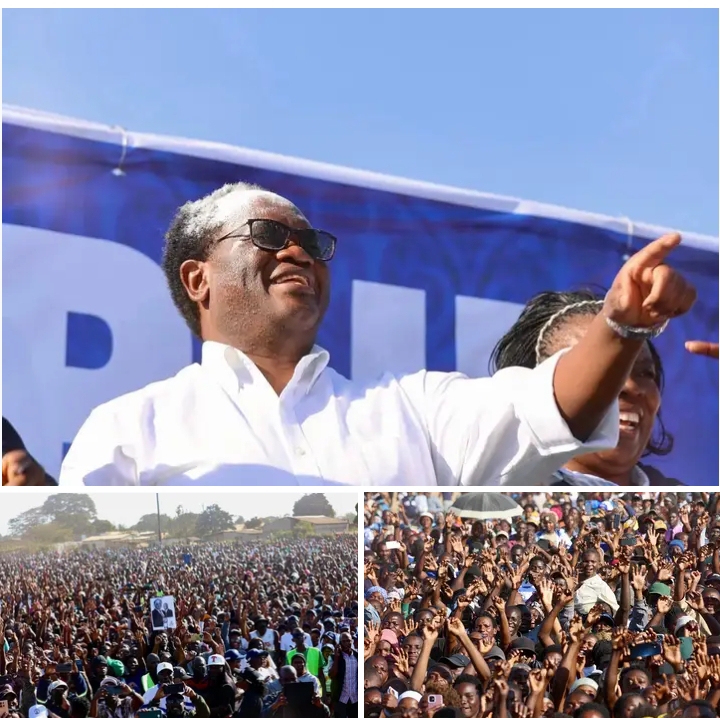
Over the weekend, attention shifted to images emerging from Tonse Alliance presidential candidate Brian Mundubile’s engagements in Kitwe and later today in Kabwe. While supporters celebrated what they described as growing momentum behind the opposition campaign, a parallel debate erupted across Facebook, X, TikTok and WhatsApp groups over the authenticity of some crowd photographs circulating online.
Several social media users questioned whether certain images had been digitally enhanced to make gatherings appear larger than they were. Others claimed some photographs shared by opposition-aligned pages bore visual characteristics commonly associated with artificial intelligence image generation tools, including duplicated faces, distorted background details and unusual crowd patterns.
The controversy mirrors a similar debate that followed the Tonse Alliance launch rally in Kitwe, where competing versions of crowd photographs circulated online. Supporters pointed to packed sections of KPF Grounds as evidence of a resurgent opposition movement on the Copperbelt.
Critics responded by highlighting images they argued appeared manipulated or sourced from unrelated events.
At the centre of the debate is a reality shaping modern elections worldwide: perception matters almost as much as attendance. Political campaigns understand that a powerful image can travel further than a speech. A photograph suggesting momentum can energise supporters, attract undecided voters and dominate media coverage long after a rally ends.
What remains difficult to establish, however, is where enthusiasm ends and digital enhancement begins.
The People’s Brief has observed significant differences between images being shared by various political actors, independent attendees and partisan online pages. Some photographs show modest but energetic gatherings. Others portray crowds stretching far beyond what appears visible in alternative angles from the same events.
Social media users have also circulated side-by-side comparisons alleging that some images originated outside Zambia, though many of those claims remain independently unverified.
Importantly, the existence of disputed images does not automatically mean a rally was poorly attended. Nor does a large crowd necessarily confirm the authenticity of every image shared online. Both realities can exist simultaneously. A campaign may attract genuine support while some supporters or affiliated pages exaggerate visuals in an attempt to amplify momentum.
The issue extends beyond one political party. Across the political spectrum, campaigns are increasingly operating in an environment where artificial intelligence, photo editing tools and algorithm-driven content can blur the line between documentation and propaganda.
The challenge for voters is not simply deciding which candidate to support. It is determining which information to trust.
Politics has always involved the battle for votes.
In 2026, it is also becoming a battle for pixels.
📩 The Monitor tracks political narratives, public sentiment, misinformation trends and emerging conversations shaping Zambia’s election season.
For corrections, evidence submissions, partnerships, advertising inquiries, opinion pieces and story tips, contact editor.peoplesbrief@gmail.com. We welcome verifiable information, competing viewpoints and contributions that strengthen public understanding of national affairs.
© The People’s Brief | Ollus R. Ndomu