

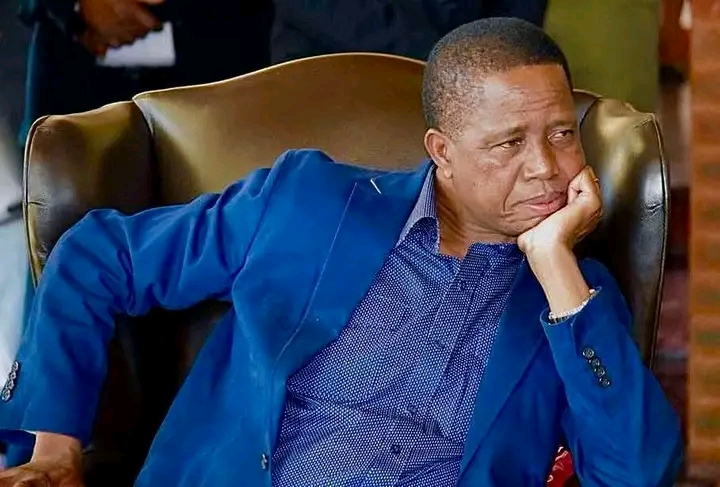
KUMWESU ANALYSIS: ECL, TRUST, AND THE POLITICS OF BETRAYAL
The ongoing turmoil within the Patriotic Front (PF) has once again pulled the late former President Edgar Chagwa Lungu (ECL) into the centre of Zambia’s political conversation. But this time, the discussion is not about elections or power it is about trust, loyalty, and betrayal, and how these forces shaped the final chapter of ECL’s political life.
ECL governed differently from many of his contemporaries. His leadership style was built on accommodation, reconciliation and faith. He welcomed back rebels, tolerated critics within his own ranks and consistently chose unity over confrontation. In a political environment that often rewards ruthlessness, ECL opted for generosity. This approach earned him respect across divides, but it also planted the seeds of vulnerability.
From a political analysis standpoint, ECL’s greatest strength his trust in people became his greatest weakness. Power attracts loyalty, but its absence reveals conviction. After the 2021 general elections, when PF lost state power, many of the party’s most influential figures went silent. Structures weakened, mobilisation collapsed and those who once stood closest to ECL began to drift away, either into political hibernation or quiet repositioning.
The Chawama by-election stands out as a symbolic moment. It was not merely an electoral contest; it was a test of loyalty. The visible absence of senior PF figures was widely interpreted by supporters as abandonment not just of the party, but of ECL himself. In politics, presence is power, and absence sends a message. For many within PF, that message was unmistakable.
Kumwesu’s analysis suggests that this betrayal was not sudden it was systemic. In the build-up to 2021, internal discipline within PF had already weakened. Adoption processes became transactional, ideology took a back seat, and loyalty was increasingly tied to convenience rather than conviction. When defeat came, those whose commitment was conditional exited first.
Yet it is important to note that ECL never publicly lashed out. True to his character, he absorbed the blows quietly. His belief system placed judgment beyond politics, trusting that time and truth would expose motives. This restraint, while noble, left a leadership vacuum in moments when decisive internal reform was needed.
Today, various PF factions continue to invoke ECL’s name to legitimise their claims. This, in itself, underscores his enduring political weight. However, Kumwesu observes a troubling pattern: a man abandoned in life is now being claimed in death. Legacy, in this case, risks being turned into a political currency rather than a moral lesson.
The lesson from ECL’s story is not that kindness fails in politics, but that kindness without institutional strength is fragile. Trust must be balanced with accountability, and unity must be anchored in clear structures. ECL led with his heart; the system around him did not always protect that heart.
As Zambia’s opposition reconfigures itself, ECL’s experience offers a sobering reminder: political movements do not collapse only because of external pressure they often erode from within. Betrayal rarely announces itself loudly; it shows up quietly, in absence, silence and abandonment.
For PF and the broader opposition, the real honour to ECL’s legacy will not be in speeches or factional claims, but in rebuilding politics around principle, loyalty and responsibility the very values that ECL believed in, even when they were not returned to him.
©️ KUMWESU | January 28, 2026
He is in fact the reason why PF is in tatters. If he had retired truthfully and allowed PF to go to a convention and choose a leader, under his watch, the situation was definitely going to be very different today.
Mr. Lungu’s leadership was built on kleptocracy.