

HUNT FOR SUCCESSOR FOUR
GARBAGE-IN, GARBAGE-OUT
By Dr. Field C. Ruwe
Hichilema, intellectuals and Grade 12s
For the past sixty years, the concept of garbage-in, garbage-out (GIGO) has been clearly observable. Zambia has been ruled by autocrats and some individuals devoid of qualifications, ethics, or integrity (the “garbage-in”), which has resulted in coup attempts, scandals, corruption, and subpar governance (the “garbage-out”). These conditions have led to ineffective policies, ideological bias, lackluster governance, and poor economic outcomes that have hindered Zambia’s progress.
From Kaunda to Hichilema, all presidents, with the exception of Mwanawasa, have failed to foster a robust intellectual community capable of effectively bridging the gap between ignorance and knowledge. Mwanawasa is distinguished as the only leader who shifted from a predominantly populist leadership style to a technocratic one that prioritized intellectualism. Kaunda, known for launching free education and founding the University of Zambia, ultimately fell prey to autocratic rule.
The lack of an intellectual community is the primary reason why Zambia, despite its rich natural and mineral resources, remains trapped in a vicious cycle marked by disease, poverty, debt distress, and external exploitation. This predicament stems from a flawed “honorary degree” presidential model that emphasizes personal pride, wealth accumulation, common sense, ideological dominance, tribalism, and cultural attractiveness rather than fostering intellectual curiosity and adaptability.
PhD Intellectual Capital is the Bedrock of a Nation
The observation made by the philosopher Ayn Rand that “a country without intellectuals is like a body without a head,” holds significant relevance for Zambia. In the absence of the head (intellectuals), the body (society) finds it challenging to assess elaborate global issues and formulate sophisticated strategic responses.
In order for developed countries to achieve their current status, they have had to depend significantly on local PhD intellectual capital, such as scientists, engineers, and various academics, to sustain economic development, foster innovation, and oversee intricate social systems. This dependence has rendered education an essential catalyst for national wealth. Consequently, education remains the vital component that converts a labor force into a global powerhouse.
In Zambia, as in developed nations, the dissemination of knowledge should rest with PhD intellectuals, who are meant to serve as intermediaries among government entities, investors, and the public. They should act as moral guides, challenging authority, exposing hypocrisy, and expressing the views of the populace. Most importantly, they ought to prevent the uncritical acceptance of government policies and empower citizens to recognize cases of power, inconsistencies, or violations of trust. Without their presence, Zambia remains a cult of ignorance.
Grade 12s and the Cult of Ignorance
The current UNESCO data reveal that Zambia does not have the capacity to create a robust PhD intellectual community to act as the spine of the nation. The early 2026 UNESCO report on Zambia’s completed education shows that approximately 88.8% young Zambians completed primary education. Of these, 75.9% did not advance to tertiary education, 10.1% earned a two-year college diploma, 2.8% a Bachelor’s degree, and 0.4% a Master’s degree.
UNESCO was unable to confirm the total number of individuals holding PhDs. The most recent recorded statistic was from 2022, which indicated there were 321 professors, a stark contrast to the 10,000 PhD holders in Kenya.
It is important to note that until 2016, the UNZA PhD program was structured as a research-based, non-formal curriculum. The absence of conventional epistemic rigor resulted in its discontinuation and the introduction of a competency-based doctoral program. During the 54th graduation ceremony for the 2024/2025 academic year, the university announced the graduation of 117 PhD candidates.
The overwhelming 75.9% of Grade 12 GCE failures who lack tertiary qualifications indicate that the average Zambian educational knowledge is rudimentary (basic literacy, numeracy, and civic understanding) reminiscent of medieval times. This situation exemplifies the “garbage-in is equal to garbage-out” principle, as inadequate input directly leads to subpar outcomes.
Zambian presidents have neglected the 75.9% failures, most of whom live in extreme poverty, surviving on less than $2.15 per day. Without an intellectual community, presidents have overlooked the considerable loss of productive human capital and, consequently, failed to implement a strategic intellectual framework for the reintegration of Grade 12s through tailored alternative educational pathways, designed to lower the current rate of 75.9% to more acceptable levels.
Wisdom vs. Knowledge in a Cult of Ignorance
Left to their own devices, Grade 12 failures have conformed to traditional beliefs and adopted widely accepted notions of “common sense” that obscure empirical understanding. They have shown a societal tendency toward their lifestyle, often asking “What” questions about circumstances that wisemen contemplate, such as “What is the nature of my existence?” This stands in contrast to the “How” questions that scholars raise to bridge the gap between the known and the unknown, such as “How should approaches be employed to assess the hypothesis?”
The responses Grade 12s receive lead them to assume that their viewpoints are as valid as those of the educated. Philosopher Isaac Asimov refers to this as a “cult of ignorance.” He notes that individuals like those who have failed Grade 12 often possess a skewed understanding of equality, erroneously claiming that “my ignorance is just as valuable as your knowledge.” This trend is particularly evident on social media platforms, where many influencers and bloggers with a Grade 12 education believe that their opinions are on par with those of scholars.
The preceding paragraph presents an opportunity for autocratic figures such as Hichilema, who exhibit anti-intellectual tendencies, to manipulate impressionable young Zambians for their own personal political advantage.
Hichilema, The Arrogance of Ignorance and Status of UNZA
The “arrogance of ignorance” also referred to as “confident incorrectness” is the dangerous paradox in which individuals with low expertise overestimate their competence, leading to the dismissal of expert advice. This phenomenon is often linked to the Dunning-Kruger effect, which causes people to be “too ignorant to know they are ignorant.”
Hichilema, who governs from his private residence, has failed to cultivate a robust intellectual community. A typical autocratic narcissist, he relies on his inner circle for decision-making processes. His style of governance has failed to deliver on its 2021 campaign promises, and his slogan “Bally Will FIX It” has come to symbolize a garbage-in, garbage-out outcome.
Academics acquainted with Hichilema argue that he largely lacks awareness of his own knowledge shortcomings, seemingly believing that possessing an MBA and multiple honorary degrees exempts him from the obligation to interact with the academic community. He seems to view himself as the sole genius capable of guiding the nation toward significant advancement. A quest that has lamentably failed.
Narcissistic leaders, like Hichilema, frequently exhibit hostility toward intellectuals. Yale professor John Haltiwanger notes that this hostility is evident in actions such as cutting funding for universities, seizing control of administrative roles, and exerting ideological pressure, as these leaders view higher education institutions as strongholds of dissent, critical thinking, and liberal ideology. Such strategies are employed to reinforce their grip on power.
This may explain why UNZA’s dependence on government funding is acknowledged as the central problem contributing to the insufficient number of PhD graduates and the absence of a strong intellectual community in Zambia. The university has encountered difficulties arising from irregular funding and reduced educational resources.
Rather than dedicating substantial resources to improve the university’s academic performance, Hichilema is focused on an “appeasement versus achievement”strategy, which is realized through the pacification of students by means of non-academic incentives, including complimentary meals and facility renovations.
The Silent Capitulation of Zambian Intellectuals
The quiet capitulation of intellectuals in Zambia signifies a dangerous withdrawal of the country’s intellectual community. Instead of serving as a robust counterweight to the state government, a troubling portion of the intelligentsia has shifted into a mode of acquiescence, self-preservation, or utter silence.
Usimov states that an intellectual guides the direction of the nation by communicating from his elevated position to the president, the university professor, the writer, the artist, the journalist, and the average citizen. This occurs in all developed nations and should apply to Zambia.
The silence of PhD scholars indicates a lack of a structural framework necessary to bridge the significant critical voids in governance, economic innovation, and institutional stability. Most importantly, it signifies that there is an insufficient number of intellectuals to serve as the “conscience” of society: to analyze intricate issues, ensure accountability, and provide evidence-based recommendations for national development.
I assert that Zambians possess remarkable knowledge in their own capacity. They emerge from a profound resolve to survive and achieve success despite external challenges. With a president who champions intellectual pursuits and allocates resources to nurture a vibrant intellectual community capable of supporting and elevating Grade 12 students, Zambia can join the ranks of successful nations, fostering sustained innovation and economic stability. Find Him.
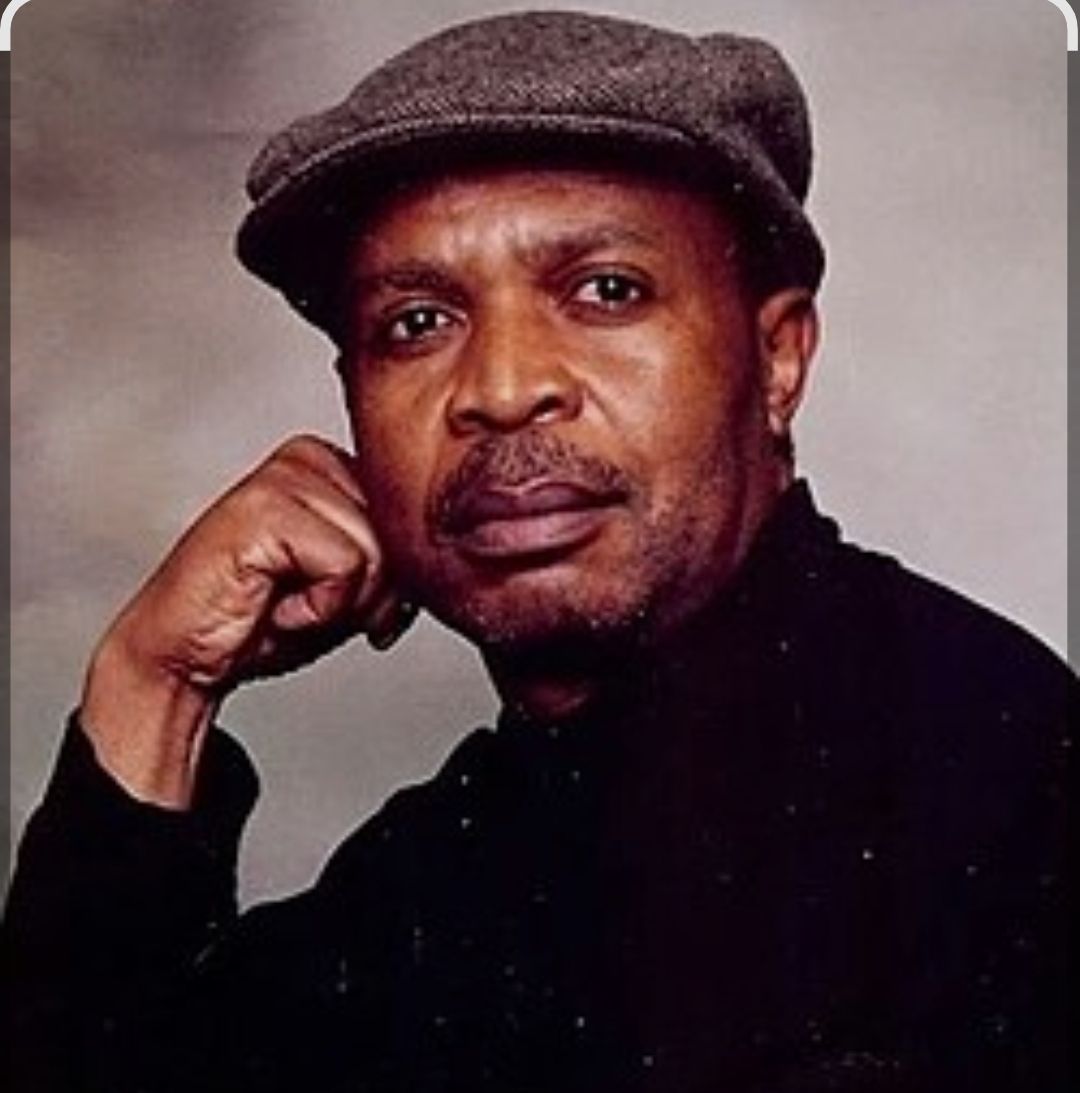
Author is a Doctor of Education and a scholar-practitioner, affiliated with Northeastern University, Boston, Massachusetts, USA
Field Ruwe, there are many educated people in Zambia and intellectuals for that matter. Just because you are a doctor of sorts does not make you an intellectual and arrogate to yourself to be a clever judge.
Education is really and truly important.Though too much knowledge sometimes puffs up.
Humility and servitude are requirements which must be combined with intellectual capacity to effectively communicate a necessary change to an uninformed society.
In short there is need to come down from the mountain and mingle with the people in the valley with a humble attitude of uplighting them to the place of knowledge.It takes sacrifice. Not insulting them.
Others are born leaders to lead nations while others are gifted to run institutions.What differentiates them is the ability to be heard and understood by those they lead.
One thinks too highly of themselves because of knowledge which if not carefully appropriated just puffs up, while the other see people of all class are equal partners of development and a necessary team player.
What I can say is you are a great academician to deal with policy academic matters. At best you your level is an employee of an organisation or institution at the highest level.
Lastly, hatred spoils every thing spoken chill man. Ran your race or at least come down and show us your leadership skill by running for Presidency.
PhDmania
What a proud for nothing distractor this Ruwe is. Zambia doesn’t need such puffed-up characters for its development.
Does Ruwe even has any history knowledge? There was once a government in Uganda which was made up of PHD holders and guess what? It a was a car crash government. Just think about it Ruwe. Having a PHD in journalism is not genius at all. Bwana just sit down with your night school education!
Dr. Field Ruwe fails to differentiate between academic intelligence and emotional intelligence. Having academic intelligence doesnot necessarily make for good leadership. Hitler for all his sins accomplished a lot and yet he didnot even have a doploma but he had extremely high emotional intelligence. He literally supervised rocket scientists and made them do his bidding. He took on the whole world during the second world war and put up a solid performance.
Academic intelligence has to do with book knowledge whereas emotional intelligence deals with understanding people’s emotions. He who understands people’s emotions is more likely to inspire them to greater heights and achieve more as a leader of a country than someone with a string of PhDs. If academic accomplishments were the ultimate determinant of leadership success, then Albert Einstein would have made an excellent political leader. And would have made Robert Openheimer, the leader of the Manhattan project which made the first atomic bomb, a perfect President of the US. But both these academic giants reported to people who didnot even have a degree.
Our biggest problem in Zambia is that having a degree is an end in itself. You can have a degree and even a PhD and still be totally inept as a leader. I am just wondering what Mr. Mwanawasa did l to deserve a special mention from Dr. Ruwe.
And why should the dissemination of knowledge be the preserve of PhD holders as Dr. Ruwe would have us believe? To me it appears like Dr. Ruwe is desperately seeking recognition just because he has a PhD. Well, he has to do more than just have that piece of paper. He has to win our respect by showing us how he has contributed to the advancement of Zambia. As it is, the people he is condemning have had a more positive impact on the country than he has had inspite of his PhD.