🇿🇲 VIEWPOINT | Kasama is Shifting, and PF Knows It
Kasama has become one of the most politically contested spaces of Zambia’s election year.
For decades, the Northern region was treated as natural opposition territory, a zone where the Patriotic Front could speak with inherited confidence while ruling parties often struggled to penetrate meaningfully. That assumption is now under strain.
The recent mayoral breakthrough by the ruling UPND in Kasama was not a routine local upset. It signalled something deeper: the old regional certainties are weakening. Kasama is no longer guaranteed ground. It is now competitive ground.
This is the backdrop to why PF figures and alliance actors are suddenly frequenting the area with urgency.
Makebi Zulu’s engagements in Kasama this week are not accidental. They reflect a party aware that if the North becomes contested, PF risks losing the last psychological idea of a fortress. Zulu has been meeting clergy, traditional voices, and party structures, positioning himself as a unifier at a moment when the former ruling party remains fractured and exposed.
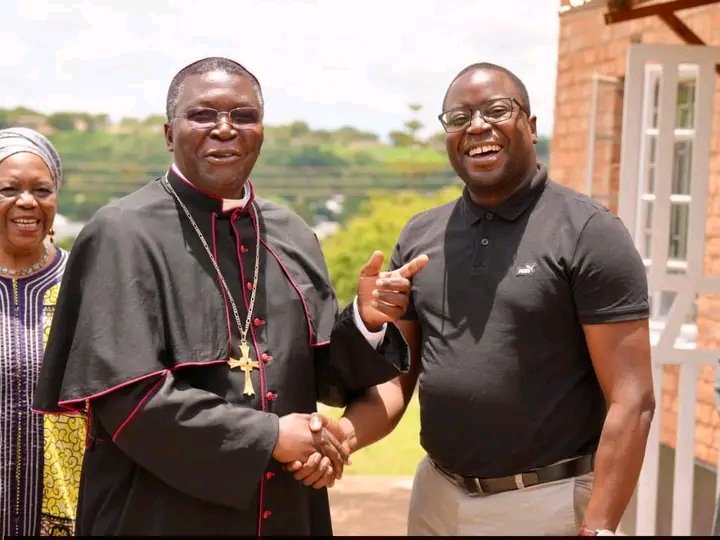
It was in this context that Archbishop Ignatius Chama, the Catholic Archbishop of Kasama and one of the most influential church voices in the Northern Province, delivered a blunt political warning: “Time is not on your side. The Patriotic Front must put its house in order by uniting and electing a substantive leader.”
That was more than pastoral counsel. It was a diagnosis of opposition drift.
Because PF’s crisis is no longer only internal. It is geographic.
A party can survive leadership disputes. It struggles to survive when its presumed base begins to shift. The Kasama result suggests Zambia is entering a phase where voting patterns are becoming more fluid, less tied to historical loyalties, and more open to competitive mobilisation.
That changes the opposition arithmetic entirely.
PF is fragmented across competing factions, alliance boutiques, and multiple presidential ambitions. If that division persists while UPND expands into former opposition bedrooms, the 2026 contest becomes structurally tilted before campaigns even peak.
A divided opposition does not simply lose votes. It loses terrain.
The clergy factor matters, but it has limits. Catholic civic spaces have historically provided moral pressure points in moments of national tension, including recent church-state frictions around constitutional debates such as Bill 7 and the wider unease involving senior figures like Archbishop Alick Banda.
But Kasama’s electoral shift is the reminder: moral influence cannot substitute for electoral machinery. The pulpit can warn. It cannot organise a national coalition.
Zulu has promised that PF will elect a substantive leader before month-end. He speaks of external destabilisation and frames himself as positioned to unify the party. But PF’s deeper problem is institutional. It remains trapped in succession mythology.
After Sata’s death, legitimacy became a contest of “anointment.” After Lungu’s death, the same narrative has returned, with multiple camps claiming inheritance of a legacy never formally assigned. Politics cannot be built on funeral symbolism.
Kasama has exposed that sharply.
And there is another strategic danger PF has not answered. While it concentrates energy in Northern spaces it once assumed were safe, it has not demonstrated serious ground-breaking capacity in regions where UPND remains dominant: the South, Western Province, parts of North-Western, and key stretches of Central Province.
Elections are not won by defending shrinking bedrooms. They are won by expanding maps.
If PF is now forced to fight even in areas it once treated as automatic, then the opposition enters 2026 with no guaranteed stronghold, only contested space and divided command.
Kasama is shifting. PF knows it. That is why they are there.
The question is whether organisation can arrive faster than erosion.
© The People’s Brief | Editors