

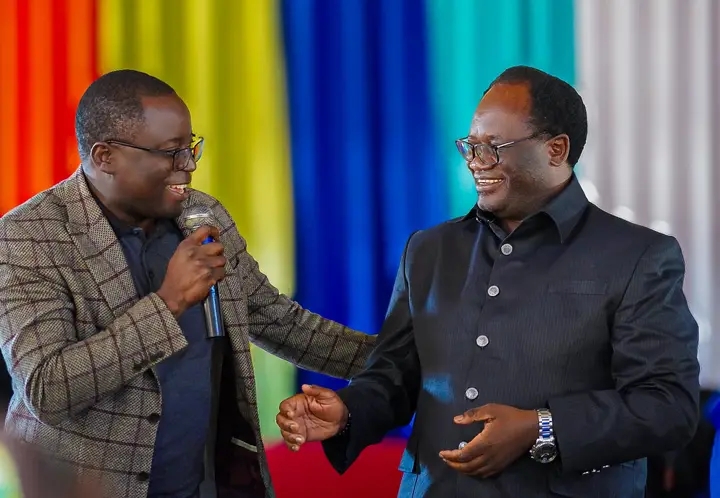
Makebi Zulu and the Corruption Question: What Does His Record Tell Us?
By George Mtonga
Every lawyer has a right to represent any client. That is a cornerstone of justice. Even those accused of the most serious crimes deserve competent legal representation.
But when a lawyer repeatedly emerges as the public face of the defense of individuals accused of corruption, money laundering, possession of property suspected to be proceeds of crime, and abuse of public office, it becomes fair for the public to ask a simple question:
Where does that lawyer stand morally on the fight against corruption?
I am not questioning Makebi Zulu’s right to represent clients. I am questioning the message that his public record sends.
When Zambia’s anti-corruption campaign intensified after 2021, many expected prominent legal minds to help strengthen public confidence in accountability. Instead, one of the most recognizable legal figures in the country became associated with defending some of the most high-profile individuals facing corruption-related allegations.
The list is well known.
There was Faith Musonda, whose case involved millions of kwacha and foreign currency suspected to be proceeds of crime.
There was Bowman Lusambo, who faced charges including corrupt acquisition of public property, tax-related allegations, and possession of property suspected to be proceeds of crime.
There was Nancy Lusambo, who was also caught up in the same proceedings.
There was Joseph Malanji, a former minister facing proceedings related to suspected proceeds of crime and unexplained wealth.
There was Milingo Lungu, who faced allegations involving theft and money laundering connected to KCM transactions.
And beyond criminal matters, Makebi Zulu became one of the most visible defenders of former President Edgar Lungu and the political establishment that presided over a period now widely associated with allegations of corruption and financial misconduct.
Taken individually, any one of these cases can be explained away as professional duty.
Taken together, however, a pattern emerges.
The question is not whether these people deserved legal representation. They absolutely did.
The question is why Makebi Zulu is so consistently found on one side of the corruption debate.
How many major corruption prosecutions has he publicly supported?
How many anti-corruption investigations has he publicly praised?
How many times has he used his considerable legal influence to advocate for stronger accountability mechanisms?
Those are fair questions.
Because leadership is not merely about what one says. It is about where one chooses to stand.
Lawyers reveal their professional priorities through the causes they embrace. Politicians reveal their priorities through the policies they champion. Activists reveal their priorities through the battles they fight.
Likewise, public perception of Makebi Zulu is shaped by the battles he repeatedly chooses to enter.
His defenders will argue that he is simply protecting constitutional rights. That is true. Due process matters.
But corruption victims also have rights.
The taxpayer whose money was stolen has rights.
The child who sits in an overcrowded classroom because public resources were diverted has rights.
The patient who cannot find medicine in a hospital because funds disappeared has rights.
The unemployed graduate whose future was diminished by corruption has rights.
Who speaks for them?
That is the moral question that follows Makebi Zulu wherever he goes.
No one should be condemned for representing accused persons.
But neither should they be surprised when the public begins to ask whether their professional choices reveal a deeper political and moral alignment.
If you spend years defending individuals accused of corruption while rarely being seen standing with those fighting corruption, people will inevitably draw conclusions.
And that is the challenge facing Makebi Zulu today.
Not a legal challenge.
A moral one.
The court of law may determine guilt or innocence.
But the court of public opinion asks a different question:
When Zambia was fighting corruption, which side were you seen standing on?
Makebi Zulu goes for those corrupt thieves because they have big money which they never worked for to throw around. It is as simple as that.
Makebi must love corruption,probably has no morals,Makebi probably has no conscious,Makebi probably feels nothing at all,He may be hollow.Mundubile too,lawyers are not good people I feel.