

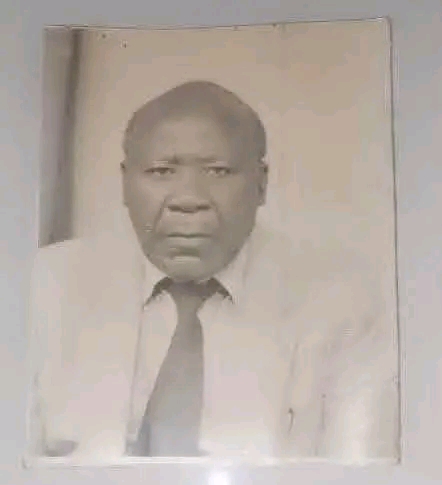
MUSHOTA CHAMA CHAKOMBOKA — THE MAN ZAMBIA LAUGHED AT UNTIL HIS IDEAS STARTED MAKING SENSE.
===================================
There are politicians who enter Zambia’s political history because they won elections. Then there are those who enter it because they made the establishment uncomfortable. Mushota Chama Chakomboka belonged to the second category.
Born on November 27, 1930 in Kawambwa, Chakomboka was a businessman, political activist, opposition leader and certified political eccentric whose ideas were sometimes so far ahead of the national conversation that Zambians concluded the easiest explanation was that he was mad. In hindsight, perhaps the country should have listened more carefully.
In July 1981, President Kenneth Kaunda detained Chakomboka alongside four prominent trade union leaders — Frederick Chiluba, Newstead Zimba, Chitalu Sampa and Timothy Walamba — following major strikes in the copper and cobalt industries. The government accused them of instigating industrial unrest and plotting to overthrow the government. One day he was a businessman worried about the economy; the next, he was declared part of a national conspiracy. The episode was significant because some of those detained would later lead the movement that ended UNIP’s one-party rule.
Chakomboka was a successful entrepreneur from Luanshya who became one of Zambia’s most colourful opposition politicians. While others offered the standard menu of jobs, roads, schools and hospitals, his sales pitch was different. He insisted Zambia possessed enormous untapped deposits of gold, oil, diamonds, cobalt and coltan, particularly in North-Western Province.
Then came the part that made the nation laugh. He claimed he knew where these deposits were and would reveal the maps once he became President. To many voters, it sounded less like a manifesto and more like a treasure hunt. The establishment essentially told him, “Ba Chakomboka, please sit down.”
He was ridiculed and his style became the subject of jokes. Contemporary accounts of the 1990s describe him as a maverick whose ideas were treated more as entertainment than serious policy. In Zambian politics, once people decide you are funny, it is hard to convince them you are serious. Perhaps only Michael Sata managed to overcome that comic tag.
Yet underneath the eccentricity was a businessman who thought deeply about Zambia’s economy and who should benefit from its natural wealth. His core philosophy was consistent: Zambia’s resources should benefit ordinary Zambians, local entrepreneurs should have greater access to government contracts, and mineral wealth must translate into jobs and better lives.
The irony is that Zambia has since discovered and developed gold and other minerals in North-Western Province. Suddenly the man with the treasure map does not look as ridiculous as he did in the 1990s. It does not prove every specific claim he made, but it makes his broader argument — that Zambia was richer underground than politicians above ground realized — far more interesting. History has a wicked sense of humour. Sometimes the political clown is simply the man who arrived ten years too early.
When multiparty politics returned, Chakomboka was initially associated with the MMD before leading the Movement for Democratic Process (MDP). By the 1996 elections the field was crowded. With UNIP boycotting, Frederick Chiluba was the favourite, alongside Dean Mung’omba, Humphrey Mulemba and Akashambatwa Mbikusita-Lewanika.
The Electoral Commission of Zambia records show Chiluba won with 913,770 votes, while Chakomboka received 41,471 votes, or 3.16%, finishing fifth. The presidency did not land on his doorstep. He was never running the conventional race.
Chakomboka died at his home in Luanshya on December 5, 1998, two years after that election. He never became the President who would hold the press conference to say, “Here is the gold. Here is the oil. Here is where you will find the diamonds.” That moment never came.
But his name survived, and so did the questions he raised about mineral wealth, local ownership and who truly benefits from Zambia’s resources. He belongs to that fascinating category of politicians who are easy to dismiss when alive and difficult to ignore after they are gone.
He was a businessman, a detainee, an opposition leader, and depending on whom you ask, Zambia’s original political treasure hunter. He may have been the butt of jokes in the 1990s, but there is something poetic about the man who kept insisting that Zambia was richer than its leaders understood.
Perhaps Chakomboka wasn’t crazy. Perhaps he was simply campaigning in a country that had not yet caught up with his imagination.