

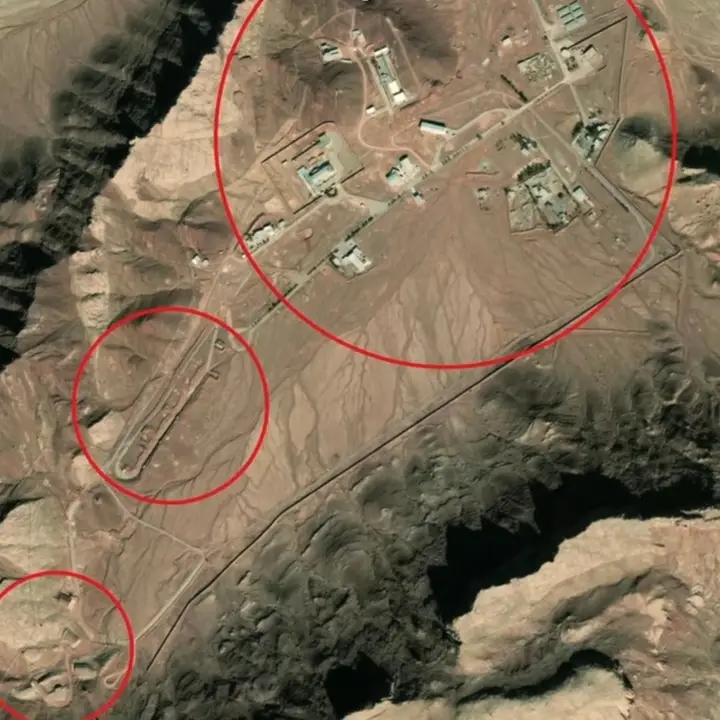
New satellite images reveal heavy damage at Iran’s Yazd missile complex — but the underground network may remain intact
New satellite imagery shows extensive damage to surface facilities at Iran’s Yazd military complex following recent strikes, with multiple structures appearing destroyed or heavily damaged.
However, military analysts note that the visible destruction may represent only part of the facility’s overall capability. Yazd has long been associated with one of Iran’s most heavily fortified underground missile networks, reportedly built deep inside mountainous terrain and designed to withstand conventional airstrikes. Reports and previous assessments have described an extensive system of tunnels, storage areas, assembly sections, and launch infrastructure concealed beneath the surface.
Recent intelligence assessments indicate that while strikes have damaged above-ground facilities and tunnel access points at several Iranian missile sites, many underground elements of Iran’s missile infrastructure may remain operational or recoverable after repairs. Analysts caution that assessing the true extent of damage to deeply buried facilities remains extremely difficult using satellite imagery alone.
Satellite images can clearly show fires, destroyed buildings, crater impacts, and damaged entrances, but they generally cannot independently confirm the condition of facilities located hundreds of meters underground. Claims regarding the depth, scale, or survivability of underground networks therefore remain difficult to verify publicly.
The latest imagery nevertheless highlights a growing reality of the conflict: even when surface infrastructure is visibly damaged, the strategic contest increasingly centers on hardened underground military facilities designed to survive sustained bombardment and rapidly restore operations.