

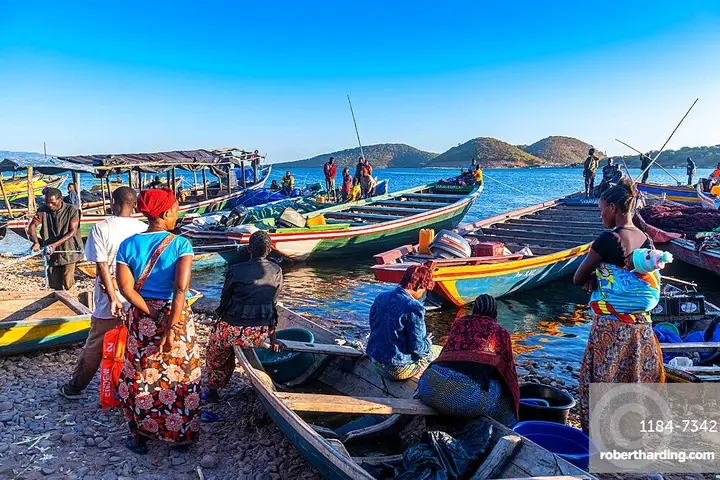
Origins of Lungu people
The Tafuna Dynasty together with that of Mukupa Kaoma and the Tabwa chiefly dynasties belong to the matrilineal Zimba (leopard) clan. The commoners under Tafuna, however, are patrilineal and have close affinities with the Mambwe, whereas the Malaila Lungu of Mukupa Kaoma are all matrilineal and have far more in common with the Bemba.
The two main groups of Lungu have been distinct and separate throughout their brief remembered histories and there is no record of their collaborating in any common effort against the Bemba. An early British official once remarked “the Malaila Alungu are for all practical purposes Awemba, Tafuna’s Lungu are sometimes referred to as Mambwe or Mambwe-Lungu”.
According to Sinyangwe, family the Lungu royal line of Chief Tafuna came from a land called Uzao, on the west of Lake Tanganyika in what is now eastern DR Congo.
The people of this land were known as the Azao, led by a Chief Tandwe Lesa. They came as a group led by three royal women of the Azimba clan.[3] Mukulu Kalwa married a Tabwa man to establish their chieftaincy of Nsama while Mukulu Munakile also known as Mukulu Lyanse married among the Malaila to establish the chieftaincy of Mukupa Kaoma and Chitoshi.
The oldest of the sisters, Mukulu Mwenya, settled at Mbete along Lake Tanganyika in the present day Mpulungu District. She went on to marry into the Sinyangwe family, which it seems was the most dominant clan among the Lungu. She had a daughter called Chilombo, who married a man called Chitimbiti (Sikazwe), the two had a son called Ngolwe.
In the late 1800s the Sinyangwe clan experienced a lot of unexplained deaths of which they accused their nephew Ngolwe of bewitching them. They also suspected him of having a sexual relationship with his aunt, the wife of one of his uncles, who was the head of the clan. As custom demanded, he drunk umwavi a deadly poison, so that if he died then he was deemed guilty but if he vomited and survived then he was innocent.
After it was established that they wrongly accused him as he had vomited the poison and survived, as per custom he was to be given anything he demanded. After consulting with his father, he demanded the leadership of the clan and so became the first Chief Tafuna (Tafuna, from the word ukutafuna, to chew or to devour).
In the late 19th century, there was much conflict among the Lungu who nominally accepted Tafuna’s paramountcy. In the 1860s the minor Chief Chungu I, became Tafuna III, but he had difficulty maintaining his position at Isoko, the royal capital and by 1867 he had moved west to settle on the Lifubu river.
Other Lungu Chiefs such as Kasonso, Chitimbwa and Chibwe seem to have been independent of Tafuna III. Soon afterwards, Tafuna III died, but his successor as holder of the Chungu title was more concerned to protect his country in the west against Bemba raiders than to move east and claim the Tafuna title.
Instead in about 1870, another Lungu royal Kakungu, obtained help from Tippu Tip and in the face of local opposition set himself up at Isoko as Tafuna IV.