

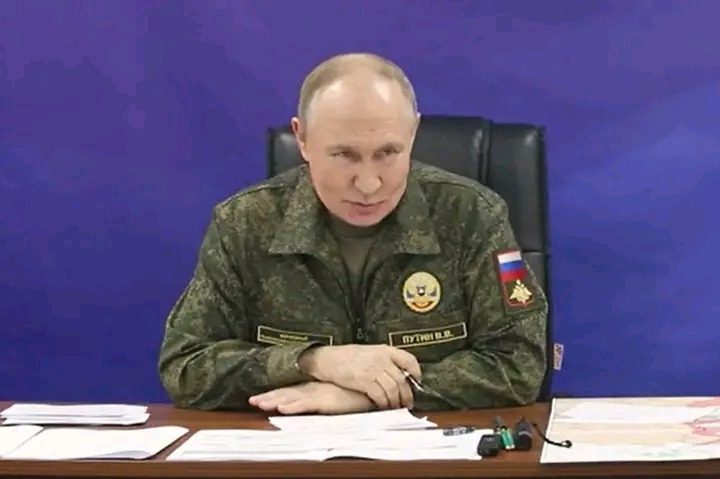
PUTIN AT BRICS 2026: “MORE THAN 30,000 SANCTIONS” RUSSIA REMAINS STANDING
Russian President Vladimir Putin has highlighted the scale of Western sanctions against Moscow, claiming that more than 30,000 restrictive measures have been imposed on Russia nearly twice as many as those imposed on all other countries worldwide combined.
Speaking at the BRICS Business Forum in New Delhi, Putin argued that the extensive sanctions campaign has failed to bring about the collapse of the Russian economy or isolate Moscow from the global economic system.
For years, Western governments have imposed trade restrictions, financial sanctions, asset freezes, technology controls and measures targeting Russia’s energy sector in an effort to weaken its economy and limit its international influence. The European Union has also continued expanding its sanctions regime, including the 21st package adopted in July 2026.
Despite these pressures, Russia has redirected significant portions of its trade toward non-Western markets, strengthened economic ties with China, India and other emerging economies, and continued exporting major commodities to international buyers.
However, sanctions have not been without consequences. Russia has faced significant economic costs, restrictions on access to advanced technologies, disruptions to financial transactions and challenges in key industrial sectors.
The broader geopolitical significance of Putin’s remarks lies in the growing difficulty of achieving comprehensive economic isolation in an increasingly interconnected and multipolar world.
The BRICS grouping represents a substantial share of the global population and economy. Its members have also explored alternative payment mechanisms, local-currency trade and ways to reduce dependence on Western-dominated financial infrastructure.
The message from Moscow is clear: Russia’s ability to adapt, develop new markets and deepen ties with non-Western partners has helped it withstand extensive economic pressure.
The developments raise a broader question: Is the world moving toward an economic system in which no single bloc can easily isolate another country?