

Should the Church Deny Funer@l Services to Those Who Commit Su!c!de
By Martin Simwaba
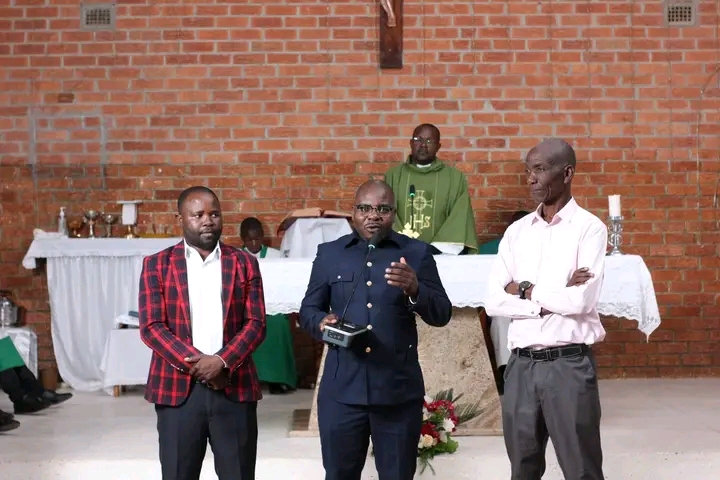
Yesterday at Chingola Central Cemetery, we laid to rest our beloved brother, Maposa Nkhuwa. It was a painful and emotional moment for family, friends, and the entire community. What made the grief even heavier was the visible frustration and disappointment of his father, Hon. Matthew Nkhuwa, following the decision by United Church of Zambia St Mark’s Congregation not to allow a church service for his son on the grounds that he had committed su!c!de.
This incident has sparked a serious moral and spiritual question: Should the church deny funeral services to people who commit su!c!de?
De@th is de@th. Pain is pain. Grief is grief.
When a family loses a loved one, especially under tragic circumstances, what they need most is comfort, prayer, and spiritual support not judgment. Su!c!de is often linked to deep emotional distress, depression, or mental health struggles. In such moments, the church should be a place of compassion and healing, not exclusion.
If we begin to categorize de@ths, where do we draw the line? Do we deny church services to those who d!e from HIV/AIDS? To those who d!efrom lifestyle-related illnesses? To those who may have made mistakes in life? The church has never been a home for the perfect it has always been a refuge for the broken.
Christianity is founded on grace, mercy, and forgiveness. Jesus Christ reached out to the rejected, the condemned, and the misunderstood. Shouldn’t His church do the same?
Refusing a funeral service does not undo the de@th. It does not correct the act. Instead, it risks deepening the wounds of a grieving family and sending a message that some sins are beyond compassion. Yet no human being knows the full mental, emotional, or spiritual battle another person was facing.
This is not about endorsing su!c!de. It is about standing with families in their darkest hour. It is about recognizing that mental health is real. It is about remembering that judgment belongs to God alone.
The church plays a critical role in society especially in times of sorrow. Perhaps it is time for churches to reconsider rigid positions that may unintentionally cause more harm than healing. Funerals are not celebrations of how someone d!ed; they are moments to honor life, comfort the living, and entrust the departed to God’s mercy.
As a community, we must promote hope, counseling, and open conversations about mental health. And as faith institutions, churches must lead with compassion.
Because in the end, love must be greater than law.
May the soul of Maposa Nkhuwa rest in peace, and may God comfort the Nkhuwa family during this difficult time.
Maybe this has become a club with rules and regulations to abide by. Membership may be admitted after signing and agreeing to same rules that apply.
A religious organisation would act with compassion and take into consideration the preaching pf the gospel to the living who can still make a decision for their destiny.
The one who wrote this article is clueless about the bible. The 10 commandments is cleart when it says in one of it states thta ” though shalll not murder” he murdered in himself. These are not to temba church run by thieves after the people’s money. Judgement occurs while you are alive. You need to walk with God ( Christ in you). If the late walked with Christ he would not have committed suicide.
The moral live as a christian while you are alive. Your judgement ends when you die not after.
Have heard about investigative judgement?