

ZAMBIA’S DEBT BUYBACK A GLOBAL FINANCE MASTERCLASS – KAWANA
LUSAKA, June 13, 2026 – Government has hailed Zambia’s recent liability management exercise as a landmark achievement in global finance, describing it as a model that could be replicated by other developing countries seeking to manage debt while advancing national development.
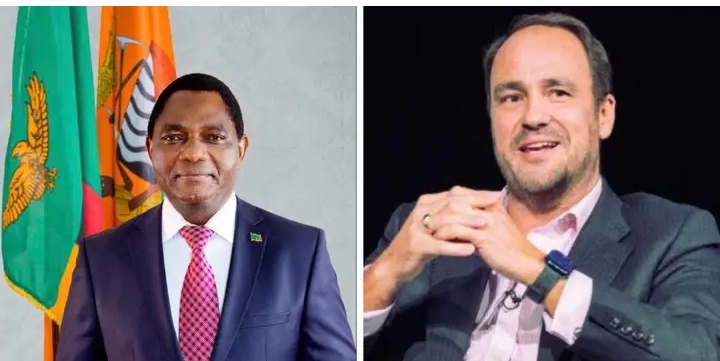
Ministry of Information and Media Permanent Secretary Thabo Kawana said the government welcomed comments by London-based financial executive Dean Tyler, Chief Executive Officer of GenXtoZ LTD, who praised Zambia’s debt restructuring strategy.
In a statement, Mr. Kawana said Mr. Tyler had correctly described Zambia’s recent liability management exercise as “a masterclass in global finance,” following the successful buyback of $1.36 billion worth of the country’s 2053 Eurobonds.
He noted that the operation secured a near-unanimous 97.85 percent approval from bondholders, a development he said represented more than a fiscal achievement.
Mr. Kawana said the transaction marked “a profound paradigm shift in how developing nations can navigate inherited post-pandemic debt burdens” while safeguarding national development priorities.
He explained that the government had acted before the Eurobond interest rate increased sharply to 7.5 percent, thereby avoiding significant future costs and reducing pressure on public finances.
According to Mr. Kawana, the UPND administration under President Hakainde Hichilema had successfully neutralized what he termed a looming fiscal threat through strategic debt management and innovative financial planning.
He said the operation was supported by a highly concessional $600 million loan from the African Development Bank Group, combined with domestic resources, enabling the country to generate substantial long-term savings.
Mr. Kawana disclosed that approximately $275 million in savings realized over the next 15 years would be invested in the newly launched Grid Resilience Programme.
“Rather than allowing precious national revenue to be consumed by aggressive external interest payments, we are recycling that capital back into domestic infrastructure,” he said.
He added that the initiative would help address Zambia’s energy challenges by extending electricity access to millions of citizens currently living off the national grid.
Mr. Kawana said the debt-for-development arrangement was transforming future debt obligations into tangible investments, including power lines, substations and a modernized electricity network.
“Zambia has confidently rewritten the financial playbook, establishing a replicable global blueprint for other emerging economies balancing heavy fiscal strains with urgent development gaps,” he said.
Time and again political parties usually have villains under their ranks, under Kaunda there was Alexander Kamalondo, then In MMD there was a district commissioner who used to apply ambi or some lightening skin of some sort and he looked red, this guy has a personal parking space at ShopRite where it was an offence for anyone to park, he would buy a many items using a chain of trolleys in shopRite and finish an entire tally roll for his receipt which tally roll he would give one of his children to go and play with at school. In PF we had Kampyoz now we have one who if he was described by Museveni, Museveni would say if you look at him he is not black he is grey