

Zambia’s economy is not booming. The University of Zambia’s failure to pay its debt is proof
By Sishuwa Sishuwa
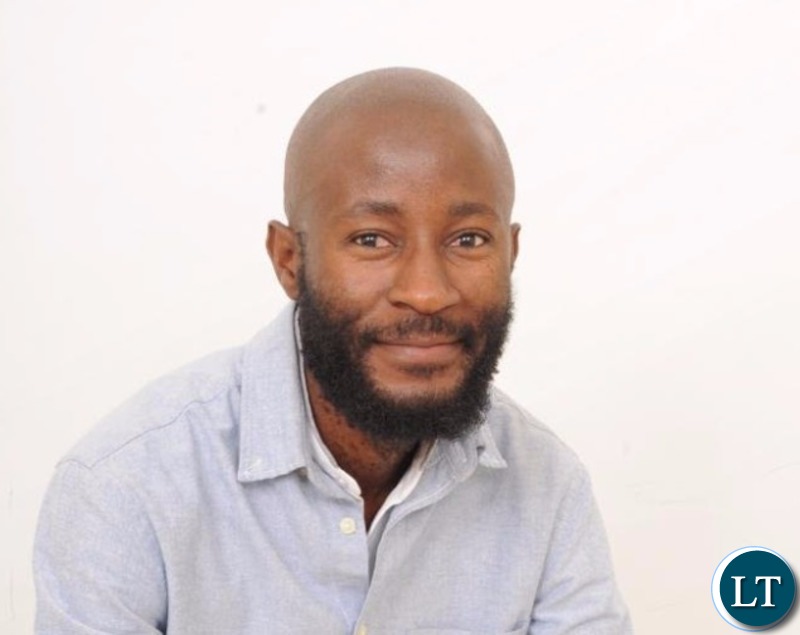
Ordinarily, I do not like talking about myself in public commentaries. I prefer drawing wider attention to governance concerns that affect the country or many people. However, I am moved to discuss my personal experience because it is difficult to stomach the mockery when government officials and supporters of the ruling party keep singing the praises of how well Zambia’s economy is doing, while public institutions remain so chronically underfunded that they cannot fulfil their basic financial obligations. A case in point is the University of Zambia (UNZA), the country’s oldest and most prestigious higher education institution, which is owed billions of Kwacha in unpaid debt by the government. The institution’s failure to pay its debt disapproves the myth that the economy is doing well. I know better about this matter because of my personal experience with Zambia’s foremost public university.
I worked for UNZA for seven years until early 2023, when I resigned. The university offered me a job in October 2015, which I took up in early 2016 after completing my doctoral studies at the University of Oxford. My decision to return home, which was then experiencing severe economic difficulties following the end of the commodity supercycle in late 2014, was motivated in part by Lucy Sichone, the first female Rhodes Scholar from Zambia, who arrived in Oxford in 1978. Thirty-two years later and twelve years after her death in 1998 at the age of 44, I arrived in Oxford on the same scholarship that had taken Lucy to the institution. Welcoming the class of 2010, to which I belonged, Don Markwell, the then Warden of Rhodes House, remarked that winning a Rhodes Scholarship is not a confirmation that one possesses the core values on which Rhodes Scholars are chosen – outstanding intellect, character, leadership, and commitment to service – but a lifelong challenge that emboldens the recipient to develop, express, and uphold them.
As I carefully thought about Rhodes Scholars from Zambia, the person who immediately came to mind as a great example of someone who had met the challenge that Don had spoken of was Lucy Sichone. She left Oxford armed with one of its most coveted qualifications, the degree of Philosophy, Politics and Economics, to return home in 1981. Earlier, she had earned a Bachelor of Laws from UNZA. Her decision to overlook the lures of the developed world and return to a country whose economy was in serious decline distinguished her as a patriot. It demonstrated her conviction that the acquisition of specialist knowledge should result in its application to causes and communities that need it most. In the service of this belief, Lucy, once in Zambia, became a fierce advocate for social justice, human rights, and institutional reform, driving the country’s policy direction. But it was her courage in an environment (1991-2001) that witnessed several state-linked assassinations of political adversaries that set her apart.
Facing a real threat to her life, Lucy refused to be paralysed into inaction by fear and fiercely criticised the Zambian government. She became a notable and influential voice in Zambian public life, finding expression in regular newspaper commentaries that addressed wide-ranging issues affecting the country, including government excesses, corruption, state brutality, injustice, and the abuse of power. A thorn in the side of the authorities, her public writings inspired Zambians to take a critical stance on the country’s leadership. Lucy’s activism established her as a tireless advocate for human dignity while her professional work as a lawyer saw her take on high-profile cases, defending citizens charged with treason and espionage. I concluded that she embodied the very essence of both the Rhodes Scholarship and public life: selfless service, capacity for effective leadership and moral force of character. It seemed to me that for Lucy, an Oxford education was not prestige or a pathway to the accumulation of personal wealth, but a call to the practical expression of the ethical values on which the Rhodes Scholarship rests.
I had seen several of my fellow Rhodes Scholars from Zambia and Africa remaining in the United Kingdom and Europe, or leaving for the United States, Canada, or Australia after receiving a first-class education. Inspired by Lucy’s example, I decided there and then that at the conclusion of my studies, I would return home, as Lucy did, and seek to respond in a practical way to two questions that Don’s speech had triggered in my mind: what do I need to do to be ultimately satisfied that I have lived a good life, and how can I make the greatest difference in areas that matter most? I believed, as Lucy did, that it is incumbent upon those of us who have received a good education to share the fruits of such education as far as we can with others. For me, one way of doing so was undertaking a job that gives me a sense of satisfaction and makes the world a better place to live in – teaching and shaping minds. Another was embracing the social responsibility of intellectuals by advocating for civil liberties, the public’s right to have expectations beyond mediocrity or the bare minimum, and holding elected leaders to account so that they could provide a range of basic services, such as jobs, expanded educational opportunities, and improved healthcare.
That is how I returned – in a different capacity and full of hope, patriotism, and determination to help make Zambia a better place – to the university where I had graduated with a BA in History in August 2009. However, it took less than a decade before I realised the limits of patriotism. A combination of heavy teaching loads (some of my classes had as many as 500 students), lack of support for research, poor conditions of service, and an outdated library that has no active subscription to major African Studies journals, alongside the severe restrictions on academic freedom and the general lip service that the government paid to the university and higher education sector, stalled my career progression. For instance, I did not publish a single peer reviewed article in a credible international journal until 2019 when I had some breathing room to focus on research. And when I tried to fulfil the social responsibility of the intellectual, the university leadership publicly disowned me while the government accused me of sedition, threatening to arrest me.
In August 2021, disappointed with the then-governing party’s hostile attitude towards higher education, democracy, civil liberties, and its management of the economy, I voted for change. Two years later, after the change I voted for failed to materialise, I resigned from my alma mater, packed my bags, and left the country. I have continued my activism from outside the country though supporters of the current government, like of the one before it, have formally petitioned the state police to arrest me when I step on Zambian soil for alleged hate speech against the president.
At the time of my exit in 2023, UNZA owed me over K1,000,000.00 – approximately US$53, 000 – in unpaid terminal benefits and more money in unpaid gratuity. The Registrar’s office wrote to me stating as follows:
“Dear Dr Sishuwa,
RE: RESIGNATION
Following your resignation from UNZA’s employment effective 30 April 2023, please be informed your terminal benefits comprise of:
1) 7 years x 4.5 months’ salary for each year served (1st May 2016 to 30 April 2023).
2) Baggage allowance of K14, 500.00 and passages allowance of K1, 245.00 for self and up to six (6) registered dependents.
3) Cash in lieu of 14.75 accrued leave days.
I would like to request you to kindly bear with the Institution which is behind in the payment of gratuity and other benefits. This means that the University will not be able to pay you immediately, but you will be placed on the list of those yet to be paid. Further, be advised that for the above benefits to be paid, you need to collect a clearance form from the Administration office, have it completed and submit the same to this office for signature.
By copy of this letter, the Chief Financial Officer’s office is kindly requested to take note and act accordingly. Finally, on behalf of the University Management, I wish to thank you most sincerely for the invaluable service you have rendered to this institution and wish you every success in your future endeavours.
Yours sincerely”.
I immediately completed all clearance processes. At the time of my exit, my monthly salary at UNZA was K33, 184.00 – approximately US$1, 750. This meant that the university owed me a total of K1, 039, 500.00 in terminal benefits. UNZA also sent a separate letter dated 3 May 2023 that had details of the gratuity owed to me:
“Dear Dr Sishuwa
END OF CONTRACT GRATUITY FOLLOWING MIGRATION TO PERMANENT AND PENSIONABLE CONDITIONS OF SERVICE
According to our record, your four (4) year contract which was effective 4th January 2016 came to an end on 30 April 2016 following your migration from contract terms of appointment to Permanent and Pensionable Conditions. Therefore, the benefits arising from the same are as follows:
1) Gratuity =37.5% of your last salary drawn during your contract period.
2) Cash in lieu of 15 accrued leave days.
Please be advised that the institution is slightly behind schedule in paying end of contract gratuity benefits, but your name will be placed on the list, and you will be paid when your turn comes. By copy of this letter, the Chief Financial Officer and the Passages Officer are kindly requested to take note and process your benefits accordingly.
Yours sincerely”.
Several years later, I have not been paid a single penny of what I am owed in pension for what the university called my “invaluable service…rendered to (the) institution”. I also do not know when my “turn” to receive my gratuity will come. In addition to the fact that I have been made to wait indefinitely for my money, my plight is made worse by the fact that there will be no interest added to what I am owed when UNZA finally pays me. The money would have also lost its value since inflation is not factored in at all.
To be clear, I am not raising this issue because I am broke, because of the amount involved, or because I need the money. I live within my means, earn enough, and have managed my affairs without the money that UNZA continues to withhold from me. I am raising this issue as a matter of principle and because of the need for employers to timely honour employees’ right to a pension. I worked for the money. Even if I was owed a penny, it is legally mine, and the university has the obligation to pay me and everyone it owes in the quickest and most efficient way.
In Articles 187-89 that provide for pension benefits, Zambia’s Constitution states that:
“An employee, including a public officer and Constitutional office holder, has a right to a pension benefit. A pension benefit shall not be withheld or altered to that employee’s disadvantage. Where a pension benefit is not paid on a person’s last working day, that person shall stop work, but the person’s name shall be retained on the payroll, until payment of the pension benefit based on the last salary received by that person while on the payroll.”
Despite these clear constitutional safeguards, UNZA removed me from payroll on my last working day. This decision benefited from a terrible judgment of the Constitutional Court which held that the cited provisions do not apply to individuals who resign but only to retirees, or persons who have permanently withdrawn from their active working career or occupation and typically sustain themselves through a pension. In effect, this judgment allows employers to punish employees who resign by removing them from payroll AND indefinitely withholding their pension using the very excuse that UNZA offered in my case: unavailability of funds.
The ConCourt-endorsed discrimination against resigning employees is reinforced by existing government policy. On 11 July 2024, the then Minister of Education, Douglas Syakalima, issued a directive establishing the order of payment for outstanding pension and gratuity owed to UNZA staff and ex-workers. Syakalima said that whenever the government releases funds to settle the K1.5 billion debt owed to UNZA staff, the distribution of funds shall prioritise only four groups in a precise order.
The first group is retirees. The second is deceased employees who died before receiving their pension. The third consists of employees who left the institution on medical grounds. The final group are those who are owed gratuity. Employees who resigned from UNZA are not mentioned in this government policy at all. Syakalima justified the prioritisation of these groups on the need to remove from payroll all employees who have left the institution to free funds for use elsewhere. This is understandable, given that the first three groups are all retained on payroll even after existing the institution, provided they were serving on permanent and pensionable conditions of service. The flaw of this argument lies in its the failure to apply the same principle to employees who have left UNZA through the route of resignation with notice. What is the justification for removing such employees from payroll and for overlooking them as a priority group when their pension remains unpaid?
It is worth noting that the premise of the above cited constitutional provision on pension, which requires a person to be retained on payroll if they have not been paid their pension benefit on their last working day, was to compel employers to pay departing employees on time. By treating employees who resign as different from those who leave UNZA through death and normal or medical retirement, even if all of them have their pension unpaid at the time of exit, the government is fostering discrimination and undermining the law. The implication is fourfold.
First, in the absence of any legal or financial costs, there is no incentive for UNZA to pay the employees’ pension upon resignation. As a result, the institution can forever claim it lacks sufficient funds to pay the resignees and there is little that the affected can do about it. Even if a person went to court and won, the victorious creditor cannot seize the university’s assets because the law currently shields UNZA property from judgement execution. This position encourages reckless debt accumulation by state bodies. Second, those who resign from UNZA will need to die first so that their relatives or dependents can get on the priority “list of those yet to be paid” their pension. Third, any employee who is unhappy with the poor conditions of service at UNZA must either remain in the service of the institution until retirement or resign and effectively forfeit their pension.
Fourth, for resignees who are critics of successive governments like me, the possibility of receiving our pension is almost non-existent when even the university is led by family members of the president and supporters of the ruling party. Since 2021, as part of efforts to dismantle debt to statutory bodies, the administration of Hakainde Hichilema has released about K400,000,000 to UNZA for the payment of pensions and gratuities. It is no surprise that not even a penny of the gratuity owed to me has come my way. In contrast, at least two colleagues who resigned after I did and have asked for anonymity for fear of harassment separately told me that they have since received their pension and gratuity. Among other things, this example demonstrates the partisan considerations or underhand involvement of some forces in the nonpayment of my dues.
What is ironic is that at the time of my resignation, the Collective Agreement that governed the conditions of service at UNZA provided that: “A member of staff may terminate his or her appointment by giving three calendar months’ notice in writing of his or her intention to do so.” It also explicitly stated that where an appointment is terminated by the employee with appropriate notice, the employee shall be entitled to terminal benefits applicable to retirees who were serving on permanent and pensionable conditions. In addition to accrued terminal benefits “computed at the rate of 4.5 months’ salary for each year served for employees migrating from Contract Employment to Permanent and Pensionable conditions of service and all those employed from 1st May 2016”, the Agreement stated that retirees shall be entitled to “Pension benefits in accordance with the rules of the scheme; Repatriation benefits: transport and baggage allowance for himself or herself, spouse and up to 6 registered dependents; Accrued leave days payment and three months retention of house by retiree or deceased’s family or until terminal benefits have been paid in full.” If those who properly terminate their employment with the university enjoy the same conditions that apply to retirees, why, then, was I removed from the payroll since my pension remains unpaid?
As shown above, I joined UNZA in January 2016 on a contract before migrating to permanent and pensionable conditions of service after only four months on 1 May the same year. I terminated my appointment seven years later by giving three calendar months’ written notice of my intention to do so, a notice that the university duly acknowledged and accepted. A careful reading of these legally binding provisions demonstrates that I should be subjected to the same conditions that apply to a retiree since I was serving on permanent and pensionable conditions of service when I resigned from UNZA. This includes keeping me on payroll until my pension is fully paid.
Unfortunately, I was removed from payroll immediately and did not even receive transport allowance to return to my village in Senanga. This is most unfair. As UNZA acknowledged, I rendered “an invaluable service” to the country and was only forced to leave when the working conditions became averse to my professional and personal development. Why should resignation attract punishment? I know that I am not the only casualty of UNZA’s poor financial position. Many former colleagues have left the university without their pension. Others remain trapped, working for the same institution because resigning is far worse than enduring the poor conditions of service.
Only less than a month ago, the governing elites such as the Vice-President, the Speaker of the National Assembly, and the Chief Justice joined other officials like the President, all judges, and the Director of Public Prosecutions in according themselves a truckload of privileges including continued salaries and other hefty benefits beyond retirement and death, when the correct thing would have been to abolish all existing perks after leaving public office. While the poor remain rooted in poverty and the poorly paid civil servant, who is the heartbeat of the public service, is left to scrounge for a living after retiring, as his or her paltry pension cannot sustain them, the self-serving elites in power are busy creating laws that would ensure that they continue to receive freebies until death and leave an inheritance for their children. What is lost on the ruling elites is a basic point: impoverishing civil servants impoverishes the nation and encourages corruption. Other people, like me, who served Zambia under worser conditions of service, are denied what is legally owed to them and spend the rest of their lives chasing after a one-off pension payment that they are more likely to receive in death than in life.
My illustrated experience is not merely a personal grievance, but evidence of an economy that is far weaker than official rhetoric suggests. A country whose premier public university cannot pay former employees their lawful terminal benefits years after they leave service cannot credibly claim to be economically thriving. If Zambia’s economy were truly doing well, public institutions such as UNZA would not be crippled by debt, workers would not spend years chasing pensions they have earned, and constitutional guarantees would not exist only in theory. The continued failure to honour financial obligations to employees reflects a broader reality of underfunded institutions, fiscal distress, and misplaced priorities, revealing a sharp contrast between political claims of economic success and the lived experience of many Zambians.
For me and many others, the economy is not booming, despite the ‘headline’ figures. A booming economy is one that manages to pay its dues, not only to those who have provided an ‘invaluable service’ but to every ordinary pensioner and citizen regardless of their political affiliation, ethnic identity, place of origin, or religion. There is little point of having a supposed ‘vibrant’ or ‘repaired’ economy if ordinary people do not benefit from it through improved standards of living, a good pension paid on time, economic participation, and, importantly, increased freedom.
There goes the psycopath. No need to read his rantings.
And Dr. Ruwe reckons we should be listening to such.
The economy is definitely not booming but it has improved from the rogue PF days. Failure to pay your terminal benefits, Dr. Sishuwa, doesnot amount to the economy collapsing.
A lot of other retirees and others have had their terminal benefits paid. The fact is the backlog was huge when UPND took over from PF and it wikk take time to clear as and when funds are available.
Tha country can’t grind to a halt just to liquidate your terminal benefits Dr. Sishuwa.
PERHAPS YOU SHOULD LOOK AT THE RCOVERY PATH THE UPND GOVERNMENT HAS TAKEN AND APPRECIATE THAT IT’S NOT EASY FOR A BOXER WHO HAS BEEN KNOCKED OUT IN THE 10TH ROUND TO RISE TO HIS FEET IN AN INSTANT.
EQUALLY, TEN YEARS OF DAMAGE TO EVERY GOVERNANCE INSTITUTIONS, THE ECONOMY, HEALTH, SECURITY, EDUCATION, JUDICIARY, MINES, AGRICULTURE, DIPLOMATIC SERVICE AND INDEED THE TREASURY. YOU RECKON THIS CAN BE FIXED AT ONCE OR WITHIN FIVE YEARS?
WHAT YOU NEED TO ADMIT IS THAT HH HAS DONE A MIRACULOUS THING TO GET THE ECONOMY OUT OF THE MESS IT WAS.
THIS COUNTRY HAD GONE TO THE DOGS, BUT EVEN YOU WITH ALL YOUR EDUCATION ARE BEING ECONOMICAL WITH THE TRUTH.
UNZA ALONE CAN NOT BE THE REASON OR BARONETER FOR TRASHING THE EFFORTS MADE BY HH AND TEAM TO FIX WHAT WAS BROKEN BY PF, A GROUP WE COULD EASILY LABLE THUGS OR LOOTERS.
BESIDES, YOU SHOULD BE AWARE OF THE CURTAIL THAT WANTS TO BE ON THE PAYROLL OF UNZA WHILE THEY HAVE MOVED ON TO WORK ELSEWHERE AND ARE ENJOYING DOUBLE SALARIES.
YOU CAN SEE THAT ZAMBIANS ARE THEIR OWN ENEMIES OF PROGRESS BECAUSE THEY WANT TO BE RICH USING CROOKED MEANS.
THE SAME GROUP IS BEING USED TO PRESSURE GOVERNMENT DURING CAMPAIGNS TO ADD TO THE NEGATIVITY BEING ROLLED OUT BY THE FORMER PF MEMBERS WHO NOW WANT TO OUTWIT ZAMBIANS BY MAKING THEM BELIEVE THEY ARE A NEW OUTFIT WITH BETTER BEHAVIOUR AND VISION THAN HH AND TEAM. REALLY? A COMBINATION OF LAWYERS WHO BY NATURE WILL DEFEND CRIMINALITY ON THE PRETEXT OF OFFERING JUSTICE A CHANCE.
THEIR AIM IS TO GET TO STATE HOUSE AND CONTINUE FROM WHERE THEY LEFT FROM. WHAT WITH THE 6.7 BILLION DOLLAR FOREIGHN RESERVES THEY HAVE HEARD OF!
THAT IS WHY THEY ARE MAKING ABSURD PROMISES, BUT KNOW THAT THEY WILL BE DOING THINGS TO APPEASE CERTAIN GROUPS WHILE SINKING THE ECONOMY INTO OBLIVION.
THEY FAILED TO RESTRUCTURE THE DEBT, YET THEY WANT TO COME AND PRETEND THEY HAVE FIXED THINGS BECAUSE THE FOUNDATION HH HAS LAID WILL BEGIN TO YIELD BENEFITS TO ZAMBIANS IN THE COMING YEARS.
SISHUA, I UNDERSTAND YOU ARE VERY BORED AND WRITING HELPS TO KEEP YOU BUSY TRYING TO DESCREDIT HH AT ANY GIVEN OPPORTUNITY, BASICALLY TO TRY AND TAKE ANY CREDIT AWAY FROM HIM IN ORDER TO GIVE YOUR UNCLE MEMBE A BETTER CHANCE- SHAME.
YOU ARE SHOUTING ‘FROM THE MOUNTAIN’ FROM SOUTH AFRICA, YOU RAN AWAY FROM CONTRIBUTING TO THE RECOVERY PROCESS, YET HH HAS BEEN IN ZAMBIA SEEING THE PEOPLE SUFFER FROM THE TIME OF KAUNDA TO THE TIME OF ECL(HIS SOUL UNABLE TO REST IN PEACE) DUE TO THOSE THAT BELIEVE SO MUCH IN JUJU WORKING AGAINST HH. HH IS A MAN OF GOD AND GOD HAS PRESERVED HIM FOR A REASON- TO SAVE ZAMBIANS FROM THE SHACKLES OF PF CRIMINALS RIDING ON SO CALLED SPECIAL PURPOSE VEHICLES TO DISGUISE THEMSELVES- ABALYA MWIBALA BAALILA KUMO NEMBUTO ( THOSE WHO BELIEVE IN FEEDING FROM THE FIELD, EATING EVEN THE SEED). LITERALLY, IT MEANS THOSE THAT FEED FROM WHERE THEY WORK, FEEDING EVEN ON THE CAPITAL INVESTMENT.
IF YOU WERE GENUINE , YOU COULD BE MAKING COMPARISONS BETWEEN THE TIME OF ECL/ SATA(10 YEARS) AND HH ( 4 YEARS 8 MONTHS).
WHILE THEY BORROWED AND DEFAULTED EVEN AS THEY DELIVERED SACKS OF MILLIONS OF KWACHAS AND THOUSANDS OF US DOLLARS TO ‘ SAFE HOUSES- THE FAITH MUSONDA CASE), HH IS PAYING THE DEBT AND BUYING BACK SOME OF THAT WRECKLESS DEBT.
WHILE THEY BORROWED POWER TO APPEASE ZAMBIANS AS A SHORT TERM SOLUTION, HH HAS BUILT CAPACITY FOR ZAMBIANS TO HAVE ELECTRICITY ON LONG TERM, SUSTAINABLE GROWTH.
SO, YOUR LONG ARTICLES MEAN NOTHING AS LONG AS YOU DON’T BRING OUT STATISTICS FROM BOTH ERAS FOR ZAMBIANS TO SEE, YOU ARE ACTING LIKE A MERCENARY.
AS IT IS, IT WOULD BE WRECKLESS FOR ZAMBIANS TO REMOVE HH IN PREFERENCE FOR THOSE MAKING NOISE WITHOUT A SALEABLE MESSAGE FOR ZAMBIANS.