

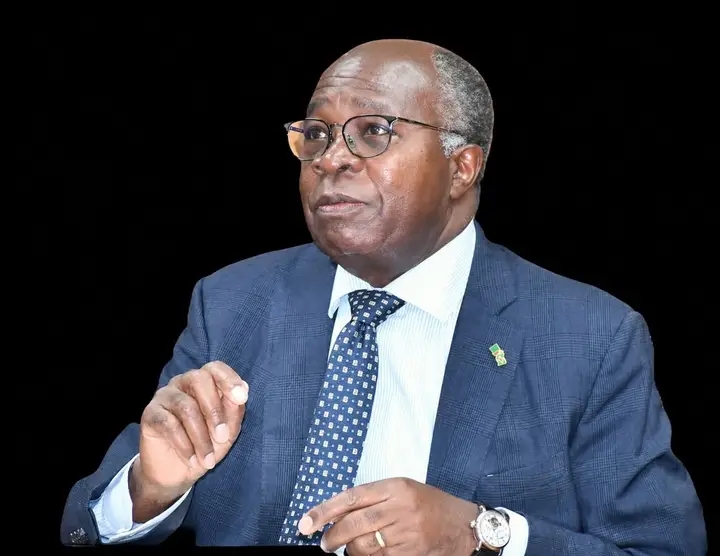
MUSOKOTWANE SEEKS $1.4B SUPPLEMENTARY BUDGET
FINANCE & NATIONAL PLANNING MINISTER Dr. SITUMBEKO MUSOKOTWANE, MP, tabled a K26.3 billion Supplementary Budget to Parliament, citing unanticipated fiscal pressures since the December, 2025 Appropriation Act.
Musokotwane Justifies Supplementary Budget
Trigger factors include:
o Higher maize procurement costs (food security intervention);
o Public sector wage adjustment (K700/month increase per employee); and,
o External shock from Middle East conflict, costing ~$200m in foregone fiscal space over 3 months.
ALLOCATION STRUCTURE — PRIORITY SIGNALS
Agriculture (K7.4bn; 28.3%)
o Replenishment for maize purchases and FISP arrears clearance; and,
o Signals continued food security prioritization + rural liquidity injection.
Loans & Investments (K7.5bn; 28.5%)
o K2.9bn: Wage bill adjustments;
o K2.1bn: Domestic arrears dismantling (contractors/suppliers);
o K390m ($15m): Initial Lobito Corridor financing tranche;
o K610m: Contingency buffer; and,
o Interpreted as dual-track fiscal strategy: consumption support + liquidity restoration.
Social Protection (K1.3bn; 5.0%)
o Expansion of Social Cash Transfer (SCT) and drought-linked Food Security Pack; and,
o Indicates counter-cyclical welfare expansion.
Electoral Commission (K1.1bn; 4.3%)
o Driven by constituency expansion (156 → 226) and polling station increase; and,
o Reflects constitutional cost scale-up.
Mining Sector (K1.1bn; 4.2%)
o Regulatory strengthening + aerial geophysical survey; and,
o Signals resource-sector pipeline development strategy.
Debt Service (K811.9m; 3.1%)
o Linked to ongoing restructuring obligations; and,
o Zambia reports 94% debt treatment coverage – significant bilateral agreements completed
FINANCING MIX — FISCAL STRATEGY
External & grant inflows:
o K2.1bn (cooperating partners);
o $95m IMF ECF disbursement (timing shift); and,
o $15m AfDB (Lobito Corridor).
Domestic sources:
o K1.4bn additional revenues;
o K7.5bn new domestic borrowing (securities market); and,
o K10bn expenditure rationalization (reprioritization).
Carryovers:
o K2.4bn from 2025, requiring parliamentary regularization.
MACRO & MARKET INTERPRETATION
Fiscal stance: Expansionary in the short term, but partially offset by internal reallocation and grant financing; and,
Liquidity signal: Strong — arrears clearance + SCT expansion inject cash into households and firms.
Debt narrative:
o Continued orderly progression under the G20 Common Framework For Debt Treatment; and,
o Rising cash flow obligations as restructuring agreements are finalized (transition from negotiation → servicing phase).
Growth linkage:
o Agriculture + mining + infrastructure allocations align with “stability → growth” transition phase.
External risk:
o Middle East shock underscores vulnerability to global commodity and geopolitical disruptions.
BOTTOM LINE
Zambia’s Supplementary Budget reflects a managed fiscal recalibration rather than slippage, combining:
o Shock absorption (food, wages, geopolitics);
o Economic support (arrears, social transfers); and,
o Forward-looking investment (mining, corridor infrastructure).
Additional domestic borrowing and recurrent spending pressures will be contained within the broader fiscal consolidation and debt sustainability framework.
***
ADDITIONAL REFERENCE NOTES
What is a Supplementary Budget?
A Supplementary Budget in Zambia is an adjustment to the already approved National Budget made during the financial year to address changes in fiscal needs. It allows Government to increase expenditure, reallocate funds, or respond to emerging priorities after the original budget has been passed by the National Assembly of Zambia. This ensures that public spending remains flexible and responsive to evolving economic and social conditions.
What leads to a Supplementary Budget?
Supplementary Budgets are typically triggered by factors like revenue shortfalls, unplanned expenditures (e.g., drought response or emergency relief), policy shifts, cost overruns, or broader macroeconomic changes such as inflation and exchange rate depreciation.
Law governing Supplementary Budgets.
Article 203 (2) of the Constitution of Zambia (Amendment) Act No. 2 of 2016 states that “The Minister responsible for finance shall, where the amount appropriated in an Appropriation Act for a financial year is insufficient to meet expenditure in that financial year, lay before the National Assembly for approval, in accordance with Article 202 (5), a supplementary estimate of expenditure.” This Article remains unchanged in the Constitution of Zambia (Amendment) Act No. 13 of 2025.
Why,we are just in second quarter of budget implantations,how can we start asking for supplement