

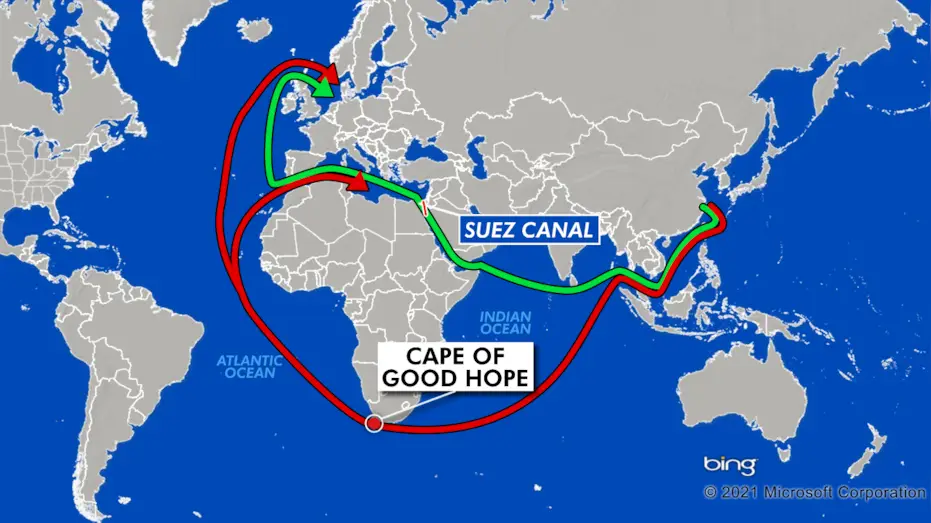
A major shift in global trade routes is underway, as shipping traffic rapidly reroutes around Africa via Cape of Good Hope, emerging as a new strategic artery amid escalating instability in the Middle East.
With disruptions at Strait of Hormuz and persistent threats near Bab el-Mandeb Strait, vessels are increasingly avoiding traditional routes linked to the Suez Canal.
Traffic around the southern tip of Africa has surged dramatically in recent years, with daily vessel counts multiplying as shipping giants redirect fleets to maintain operational continuity.
owever, the shift comes at a cost — transit times are extending by up to two weeks, while logistics expenses are rising by as much as 30–50% due to longer distances, higher fuel consumption, and the need for additional fleet capacity.
The ripple effects are already visible. Ports along Africa’s eastern and southern corridors are seeing increased activity, while traditional hubs tied to the Red Sea are experiencing sharp declines.
Meanwhile, pressure is building on alternative hubs such as Port of Jeddah and Tanger Med Port, as congestion risks begin to surface under the weight of redirected global trade.
What was once a backup route is now becoming a frontline artery of global commerce.