

“NOTED, WITH THANKS”: WHEN GOOD LAWS DIE IN GOVERNMENT INBOXES
By Isaac Mwanza
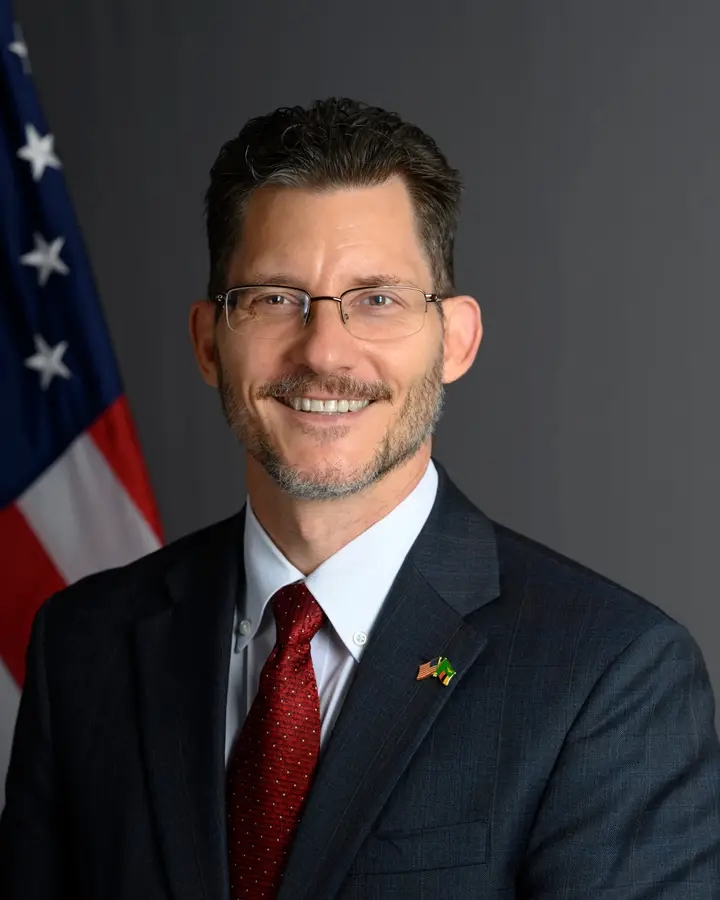
“For years, the United States funded programs and sent technical advisors to help achieve Zambia’s development objectives… we have often struggled to get successive governments to even bother answering the phone… MOUs decay on the shelf… never to be implemented because the ministry won’t even meet to discuss implementation… Why? Because generations of Zambian officials and leaders gain from the dysfunction… Sadly, so many of our overtures and goodwill have been met with… ‘Noted. With thanks.’”
— U.S. Amb. Mike Gonzales
THE outgoing United States Ambassador to Zambia has made a number of serious allegations concerning corruption and institutional conduct some of which will naturally require stronger evidentiary grounding before they can be accepted as established fact.
I recently had the opportunity to meet Ambassador Gonzales to discuss the controversial Memorandum of Understanding and other governance concerns which he has now publicly raised. During that engagement, one thing was unmistakable: the depth of frustration within the Donald J. Trump administration on inertia to sign the MOU was real.
Listening to his recent public remarks, it is difficult to say this moment came as a surprise. If anything, it felt like a diplomatic pressure point that had been building for some time, waiting to find expression.
However, on one specific observation regarding the culture of bureaucratic dysfunction in Zambia, it is difficult to entirely disagree.
On this point, Ambassador Gonzales has touched a painful truth that many citizens including President Hakainde Hichilema himself has complained about, civil society actors, cooperating partners, lawyers, and even some public officials privately acknowledge, but rarely confront publicly.
This is not merely a failing of the current United Party for National Development administration. It is a structural and historical governance problem that has survived successive governments, different political parties, and multiple generations of public leadership.
Governments change. Ministers are appointed and replaced. Policies are launched with great enthusiasm. Committees are formed. Consultations are held. Workshops are funded. Allowances are paid.
But implementation?
Implementation often dies in silence.
Zambia has enacted progressive laws that, on paper, should transform lives. Our Constitution remains one of the strongest expressions of rights, governance, and democratic aspirations.
Our 2017 refugee law is equally one of the most progressive in the region, recognizing the rights of long-term refugees and creating lawful pathways toward local integration, including eligibility for citizenship in deserving cases.
Yet in practice, many of these rights remain trapped in administrative limbo.
Take the case of refugees and persons born in Zambia to refugee parents. Some of these individuals have lived in Zambia for three, four, even five decades. They know no other home. They have raised families here, contributed to local economies here, and in many cases clearly meet the legal thresholds to apply for citizenship under Zambian law.
So why does the process remain frozen?
Because administrative barriers continue to be erected where the law intended opportunity.
Meetings are never convened. And when meetings are convened, resolutions are often abandoned the moment officials collect their sitting allowances and walk away. Policy discussions are endlessly postponed. Files gather dust. Correspondence goes unanswered. Requests for audience are ignored. Institutions that are legally mandated to operationalise these rights often appear unwilling to even begin.
And so rights guaranteed by law become rights denied in practice.
In this context, Ambassador Gonzales’ words become painfully relevant:
“…never to be implemented because the ministry won’t even meet to discuss implementation.”
The human consequences are severe.
Children born on Zambian soil continue to grow up without documentation, without legal certainty, and without access to rights that should ordinarily flow from the law. Many are harassed, arrested, and drawn into cycles of extortion simply because they were born to refugee parents or because they seek to live outside camps in pursuit of dignity and opportunity.
When people can reportedly be arrested repeatedly and forced to pay large sums simply to secure their release, one must ask an uncomfortable but necessary question:
Who benefits from maintaining this dysfunction?
Because clearly, someone somewhere, especially very a junior civil servant who enforce the law, does.
This is one of Zambia’s deepest governance contradictions: we write excellent laws, deliver inspiring speeches, sign impressive frameworks, and then quietly construct administrative barriers that make those same laws almost impossible to enjoy.
Rights become ceremonial. Reform becomes performative. Implementation becomes optional.
And yes, on a broader governance level, many Zambians know exactly what the Ambassador meant.
Calls go unanswered. Messages are ignored. Follow-ups disappear into silence. Meeting requests can take months, only to produce no action. And in many government offices, “Noted, with thanks” has become the closest thing to institutional responsiveness—when a response comes at all.
To be fair, there are exceptions. Some public officers like the Attorney General and Solicitor General still understand that public office is a duty, not a privilege. They take or return calls, they call for meetings to de-escalate and resolve litigation in line with the presidential directives. But these exceptions cannot excuse systemic failure.
If Zambia is serious about constitutionalism, accountability, and the rule of law, implementation must become as important as legislation.
And this becomes even more urgent when one considers that World Bank has just committed US$30 million to Zambia for, among other objectives, the local integration of refugees.
This is not the first time that the international community has extended financial and technical support toward refugee protection, local integration, and durable solutions in Zambia.
For over the last fifteen years, cooperating partners such as German, Japan, the European Union and many other have supported programmes aimed at ensuring that refugees and other persons of concern can transition from dependency to lawful, productive, and dignified lives within our communities.
The question, therefore, is no longer whether Zambia lacks resources. The real question is whether we genuinely lack the political and administrative will to do what the law already requires us to do.
We have heard the promises before, promises of economic empowerment, legal documentation, pathways to citizenship, and full integration, but for many affected families, those promises remain trapped in workshops, policy papers, and donor reports.
If this latest support is to mean anything, it must not become another well-funded programme whose implementation dies the moment the signing ceremony ends.
Because ultimately, Zambia does not have a law problem on this issue. Zambia has an implementation problem.
And a law that cannot be operationalised eventually becomes symbolism. A right that exists only on paper is not truly a right.
On that specific point, whether one agrees with all of Ambassador Mike Gonzales’s other assertions or not, he may have touched one of the most uncomfortable truths about governance in Zambia today.