

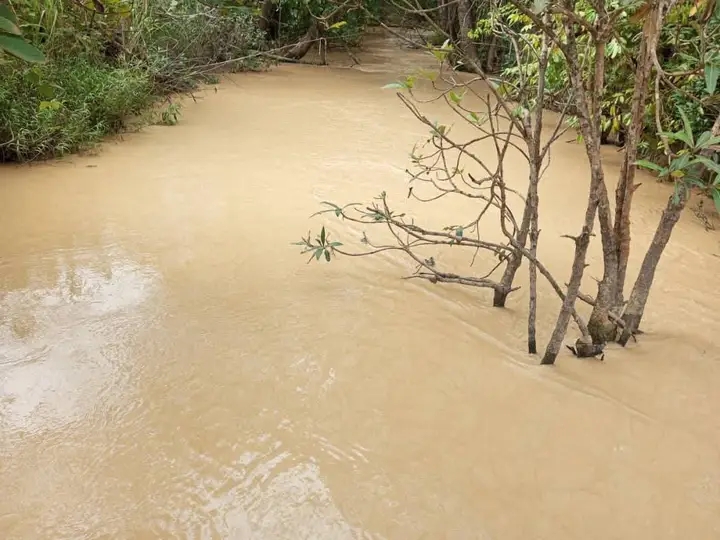
POISONED WATERS: MINING ACTIVITIES THREATEN LIVES, WILDLIFE AND RIVERS IN MPIKA
By Lazarus Kaunda
Residents of Mpika District have raised concern over increasing pollution of major rivers allegedly caused by ongoing mining activities in the Game Management Area surrounding the North Luangwa ecosystem.
Community members say the Muneshi River, a critical source of water for both people and wildlife, is becoming increasingly unsafe due to mining operations taking place near fragile ecological zones.
The river flows into the Munyamanzi River, which supplies water to the people of Nabwalya, raising fears that contamination could spread further and affect more communities.
The affected areas include Nsambe Village and surrounding settlements such as Chipowe, Simutengu, Ngalande, Mushishe, Muluka, Lushinga and Chipapaso villages.
Residents allege that the once-clear river is now heavily polluted, carrying muddy water suspected to contain harmful chemicals linked to gold mining activities involving companies and cooperatives such as MGM Company, Henrics Company, Sambolye Cooperative, Chabota Company and several Chinese-owned mining operations. Exploration licences in the area have reportedly been issued to companies including Netcare, Unicorn, Son House and Salach Global World.
Community leaders and residents fear that continued mining activities inside the Game Management Area could cause severe environmental destruction and expose local communities to serious health risks. They say the river remains the main source of drinking water for people, livestock and wildlife in the area.
Residents of Ngalande and nearby villages have also reported changes in the colour and quality of the water, forcing women and children to walk long distances in search of cleaner water sources
Environmental experts have warned that mining activities inside Game Management Areas pose serious threats because such zones serve as important buffers for protected ecosystems like North Luangwa National Park.
Experts say gold mining often involves excavation, deforestation and the use of harmful substances such as mercury, which can contaminate rivers and threaten both human and animal life. Mercury exposure has been linked to kidney damage, nervous system disorders, memory loss, birth defects and developmental complications in children.
Conservationists have further cautioned that increased siltation and chemical pollution could permanently damage aquatic ecosystems and reduce biodiversity in one of Zambia’s most ecologically important regions.
Wildlife species including elephants, antelopes and other animals that depend on the rivers during the dry season could also face serious threats.
Residents of Nsambe Village have also expressed concern over the future of the Munyamanzi River, warning that pollution in the Muneshi River could eventually affect the entire water system serving Nabwalya because the rivers are connected.
The affected communities are now calling upon the Government of Zambia, the Ministry of Green Economy and Environment, the Water Resources Management Authority and the Ministry of Mines to urgently investigate the reported pollution and enforce strict environmental regulations.
Residents are also demanding that all mining companies operating in the area conduct proper environmental impact assessments, restore damaged land and engage transparently with local communities before expanding their operations.
Community members say they are not opposed to development but want mining activities to be conducted responsibly in order to protect people, wildlife and future generations.
They fear that without urgent intervention, the environmental damage could become irreversible, threatening livelihoods, public health and the delicate ecosystem of the North Luangwa landscape.
Source:
Mpika Community Radio Station 89.5Mhz
I thought the former MP for Kanchibiya constituency, Mr. Sunday Chanda, took this matter to the courts and sued ZEMA and the government over the pollution of water sources by mining activities.
This is alarming and must be treated with urgency. We can’t allow pollution of our environment in the name of development.
Can some legal firm or NGO come to the aid of these locals and provide legal services on a Pro bono basis. The threat to both people and animals and the environment cannot be ignored.