

ZAMBIA NEVER NEEDED A SAVIOUR. WE’VE ALWAYS LACKED A METHOD.
David T. Zyambo | 13 May 2026
The election season is here, and as we head toward the August polls, we’re already hearing the usual campaign rhetoric about uniting the country, fixing the cost of living, and ending the energy crisis. Every candidate has a “What”—some big, catchy idea to sell.
But our problem is not that we lack big ideas. We’ve had plenty of those since we moved to multiparty politics in 1991. For thirty-five years, we’ve been promised the same things: better roads, a stronger Kwacha, and an improved quality of life. But after decades of witnessing this repetitive cycle with little to show for it, I’ve realised one thing—we are so focused on the destination that we’ve completely ignored the actual road we need to take to get there.
If I had to pin our national struggle on one word, it would be “Method”, a word that comes from the Greek methodos, which literally means “a way of going.” It’s the “how.”
In my years leading operations across North America and Sub-Saharan Africa—melding people, processes, and systems—I always told my teams they would know how good of a leader I was only after I left. The true mark of leadership is not how things run while you’re standing there; it’s whether the system thrives once you’re gone. Sustainability is not a fluke. It is what happens when your “how” is so solid that the system keeps running even when you are not in the room. That’s what a method does—it builds a future that does not depend on your presence to hold it together.
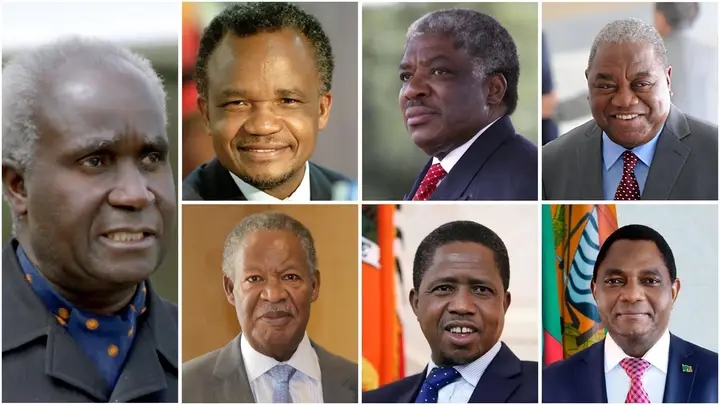
And this is exactly where our history breaks my heart. Think about the Levy Mwanawasa years. By almost every metric, his administration delivered the best economic performance Zambia has seen in modern times. We witnessed debt forgiveness, a stabilising currency, and a genuine sense of order. But when he passed away, those hard-won gains largely went with him to the grave.
Why? Because we had a great leader, but we did not have a great Method.
The progress was tied to Mwanawasa’s personal discipline and integrity. It was not baked into the “how” of our institutions. When the pilot left, the plane went into a tailspin because the autopilot—the method—had never been installed.
We’ve seen this before, even going back to the early years of Kenneth Kaunda. In the beginning, there was a predictable rhythm to how the country ran. There were systems for everything—from how our mines operated and how national wealth was distributed, to how city councils across the country functioned and delivered basic services. You knew when your garbage would be picked up and when your streetlights would be switched on. There was a sense of stability because the “how” was a common way of working. But in the early 1990s, as we transitioned into a new era under Frederick Chiluba, the focus shifted entirely.
Chiluba was a brilliant orator, a man of great charisma who stepped up when the nation needed to transition into a multiparty democracy. He promised a new era, but in the rush of that monumental transition, the steady, predictable methods Kaunda had spent decades establishing were swept aside. In our eagerness for change, we allowed the charisma of the individual to replace the integrity of the institution. We traded functioning systems for the “saviour” personality, and we’ve been trying to find our footing ever since.
Right now, as candidates prepare their manifestos for the upcoming election, they are all selling us “The What.” They want to talk about outcomes because outcomes win votes. But in my world of operations management, if I told a team to “increase production” without giving them a workflow, a maintenance schedule, or a supply chain strategy, we would have a disaster on our hands by lunchtime, and I would be fired by close of business. But we tolerate a lack of process in government that we would never tolerate in a simple business.
We have let our national leaders govern this way for decades, treating the presidency like a magic wand rather than an engineering project. Without a defined method, a leader’s promise is just an event—a ribbon-cutting ceremony that falls apart the moment the cameras go home. Zambia needs a new kind of operational maturity, one that is predicated on method. A method is essentially a nation’s “institutional memory.” It’s what allows the next president to pick up the baton and keep running in the same direction, instead of stopping to dig a brand-new hole just because they want to leave their own mark.
Success is never an accident. Whether it’s a perfectly executed corporate turnaround or a UEFA championship game where triumph is decided in the final 90 seconds, sustainability is the result of a method so refined that it functions even when the world is in chaos.
As the campaign rhetoric heats up over the next three months, we are going to hear all sorts of charismatic “Whats.” We will be told what we want to hear, wrapped in the excitement of the moment. But I’m asking you to look past the excitement. When a politician tells you they want to transform Zambia, don’t just clap. Ask them for the method. Ask them exactly how. And most importantly, ask them: How does this work when you are gone? How does this system survive the next change in leadership? For thirty-five years, we’ve been fixated on the “What,” and the results speak for themselves. This time around, we need to demand the “How.”
Consider a country like the United States; in its 250-year history, it has had its fair share of weak, incompetent, and even reckless leaders. But the country has not collapsed, and its economy continues to grow. That is not because a singular saviour stepped in to rescue them—it’s because the Method is stronger than the individual. That is the level of maturity Zambia needs.
We don’t need a “Messiah” or a “David,” as the usual political commentators often suggest; we need a system that works even when the leader doesn’t. We need Method.