By Deeleslie Mondoka
CAN A PRESIDENT VALIDLY ASSENT TO A BILL AFTER PARLIAMENT HAS BEEN DISSOLVED?
Intro.:
As Zambia’s 13th Parliament quietly dissolved at midnight on 15th May 2026, many assumed the nation’s lawmaking machinery had also folded its tents and gone into political hibernation. After all, once Members of Parliament vacate their seats and Cabinet ministers surrender office, one might reasonably think that the constitutional factory for producing laws has shut its doors entirely.
But constitutional law, as it often does, refused to behave so neatly.
A fascinating legal question immediately emerges from the shadows of dissolution: can a President still breathe life into a Bill after Parliament itself has ceased to exist? Put differently, can legislation survive the death of the very institution that created it?
Picture this:
Parliament has packed its bags, switched off the lights, and gone home. The Members of Parliament are somewhere attending farewell dinners, campaign rallies, or perhaps explaining to voters why potholes still resemble lunar craters. Then suddenly, six days after Parliament is dissolved, the President picks up a Bill and signs it into law.
Naturally, someone shouts: “Hold on! How can you make law when Parliament is already dead and buried?”
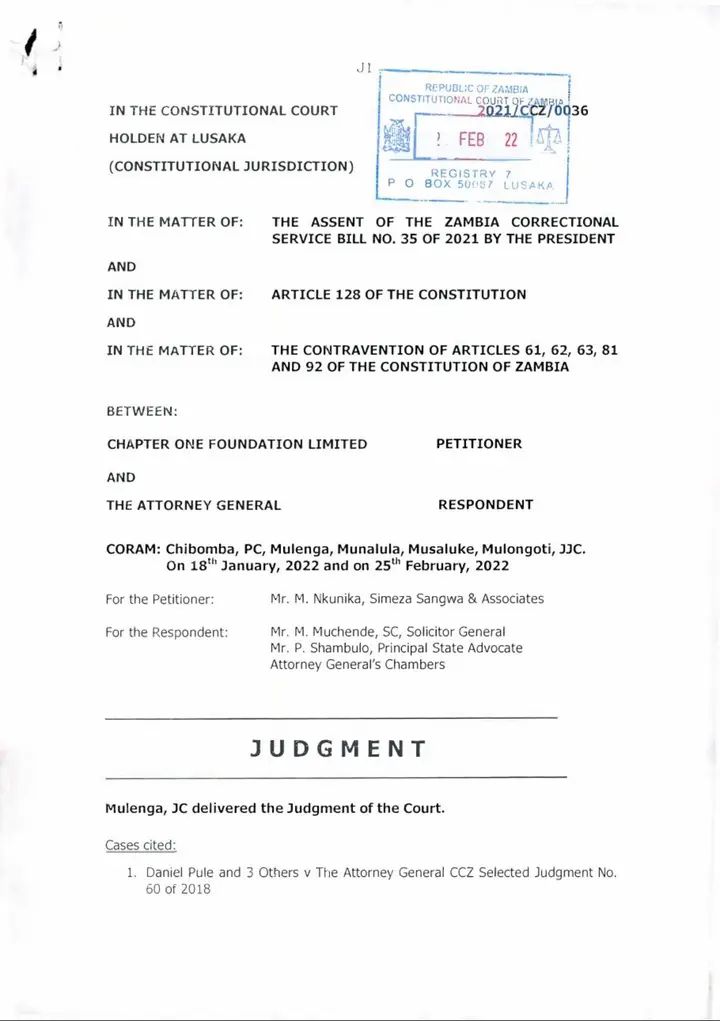
That, in essence, was the quarrel before the Constitutional Court.
The challengers argued something quite simple. Parliament, they said, is like a bicycle built for two riders: the National Assembly in front, the President at the back. Remove one rider and the bicycle is not going anywhere. Once Parliament dissolved, the National Assembly vanished. Therefore, the President could no longer perform legislative functions such as assenting to Bills. At that point, he was merely the caretaker of executive business, not a lawmaker.
But the Court answered with the constitutional equivalent of: “Not so fast.”
The judges explained that passing a Bill and assenting to it are two different stages of the same journey. By the time the Bill reached the President’s desk, Parliament had already done its heavy lifting. The cooking was finished. The President was merely ringing the dinner bell.
And the Constitution itself gave him twenty-one days to do so. Better still, Article 66 said that if the President simply sat there scratching his head and doing nothing, the Bill would become law automatically anyway. In other words, the Constitution had already lit the fuse. Dissolution of Parliament did not suddenly pour water on it.
The Court therefore concluded that the President could validly assent to the Bill even after Parliament had dissolved.
The moral of the story?
Constitutional interpretation is not an exercise in isolating single provisions and ignoring the rest. A Constitution must be read as a coherent whole, and courts will not manufacture limitations that its framers deliberately chose not to include.
Disclaimer:
My commentary on this decision is no more a legal critique than a campfire tale is a treatise on thermodynamics. It is, rather, a dramatized retelling, a lively reenactment if you will, of the judicial clash, unburdened by the solemn drudgery of analysis and delivered with the unapologetic zest of a storyteller who knows a good duel when he sees one.