

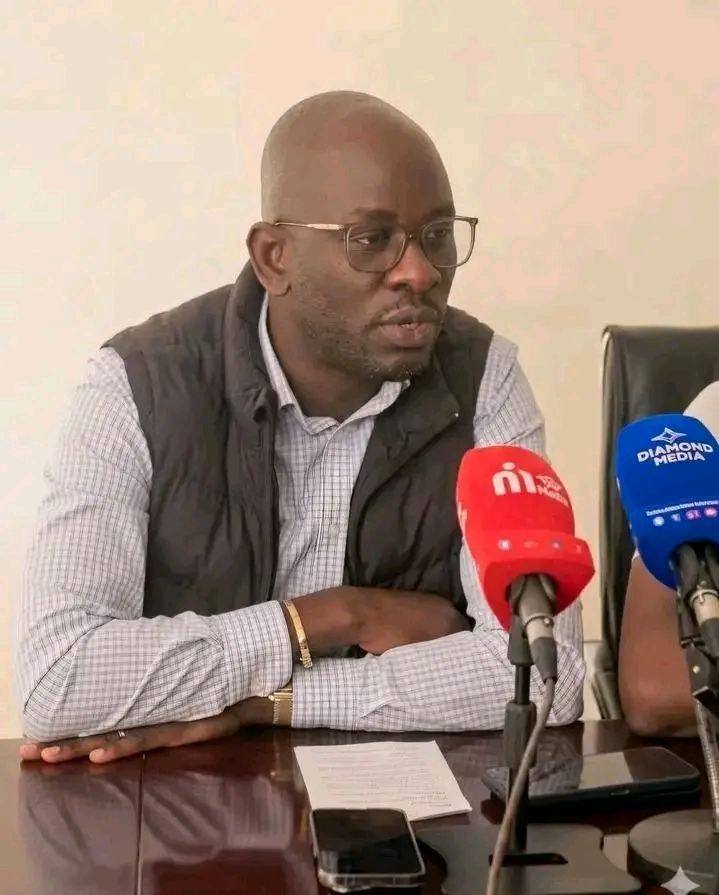
🇿🇲 ELECTION WATCH | Binwell’s “Ready to K!ll” Remark Raises Alarm Days Before Vote
With four days before Zambia votes, Tonse Pamodzi Alliance Presidential Affairs Chairperson Binwell Mpundu has injected dangerous language into an already tense election environment, declaring that he is prepared both to die and to kill if Thursday’s election goes wrong.
Mpundu made the remarks while challenging guidance from the Electoral Commission of Zambia on how voters may mark their ballot papers.
“Our lives are at stake. We are ready to die. And we are ready to kill,” he said. He went further: “For this election, people like me, I am ready to be killed. I’m also ready to kill. Because I know very well that when everything goes wrong, if anything goes wrong with these elections, some of us will not have our lives.”
Those are extraordinary words from a senior official in an alliance asking Zambians to entrust it with state power. Electoral disputes are resolved through polling procedures, verification, complaints, courts and other institutions established under the law. They are not resolved by killing.
Four days before voting, political leaders should be lowering the temperature, not introducing the language of death into disagreements over ballot markings.
The dispute itself concerns ECZ’s explanation of what constitutes a valid vote. Chief Electoral Officer Brown Kasaro told stakeholders on Friday that an X is not the only acceptable mark. According to the clarification, a tick, X or dash can indicate a voter’s choice provided the intention is clear and the mark is made within the appropriate candidate’s space. Kasaro warned voters against multiple marks, signatures, names or initials which could create problems when determining ballot validity.
Mpundu rejected this explanation and insisted: “Voting will proceed as it has been over all these years. There’s just going to be a cross sign. We will not be ticking this time around.” He questioned why stakeholders had supposedly not been consulted and suggested the clarification could raise suspicions about pre-marked ballots.
“Would you be surprised if people insinuated that there are pre-marked ballots that have been ticked? That is why you now want to bring in an alien practice,” he said.
This is precisely where political responsibility matters. Asking ECZ to explain the legal basis and history of its ballot-validity rules is legitimate. Requesting written guidance is legitimate. Challenging ECZ through established electoral mechanisms is legitimate. Suggesting possible pre-marked ballots without presenting evidence is something different. Adding “I’m also ready to kill” moves the conversation into territory no democratic election requires
The statement also arrives after a difficult final phase for Tonse Pamodzi’s messaging. Alliance officials have recently alleged possible voting by foreigners from neighbouring countries, raised claims concerning missing operatives reportedly sent to Russia for VVIP security training, complained about violence against their campaign and questioned whether the presidential ticket should proceed into Southern Province over security concerns. Some of those allegations are serious enough to warrant investigation
Serious allegations, however, require serious evidence. The closer Zambia gets to polling day, the greater the responsibility on political leaders to distinguish intelligence, suspicion, allegation and established fact.
There is an uncomfortable political question for the alliance as well. Much of Tonse Pamodzi draws personnel and political experience from the former PF establishment. That history does not make its members responsible for every abuse committed during PF rule, nor does it disqualify them from seeking office again.
But it makes language about killing particularly damaging to an opposition coalition trying to persuade voters that it represents a credible alternative. Zambia has already experienced elections where cadre violence, intimidation and political confrontation displaced policy debate. Reproducing the vocabulary of confrontation does not demonstrate readiness to govern.
Social media reaction has consequently been fierce, with some commentators interpreting Mpundu’s remarks through memories of PF-era cadre politics and asking whether some former ruling-party actors view August 13 as an opportunity to recover political power and influence lost in 2021.
This remains public interpretation, not established fact. But Tonse Pamodzi should understand why such perceptions become politically costly when one of its most visible officials publicly says he is “ready to kill.”
The burden now falls partly on Brian Mundubile. Mpundu is not an anonymous supporter speaking from a market or WhatsApp group. He is identified as the alliance’s Presidential Affairs Chairperson. Mundubile therefore has a leadership question before him: does his campaign associate itself with those words, or does it reject them? A presidential candidate cannot demand peaceful treatment for his supporters while leaving ambiguity around violent language coming from his own senior ranks.
The same standard applies to UPND. Cadres attacking opposition convoys should face the law regardless of party affiliation.
ECZ also owes voters clarity. If ticks, crosses and other marks demonstrating clear voter intention are permissible under Zambia’s electoral rules, the Commission should continue explaining this repeatedly and in the simplest possible language before Thursday.
Confusion at polling stations creates fertile ground for misinformation. Every voter should know what constitutes a valid ballot before entering the booth, and every political party should receive precisely the same written guidance.
Zambia is now entering the most sensitive days of the election. Political rhetoric travels faster. Rumours become harder to contain. A careless sentence from a senior politician can be interpreted as instruction by an excitable supporter hundreds of kilometres away.
Leaders therefore carry greater responsibility now than they did several weeks ago. Nobody needs to die for this election. Nobody needs to kill for it either. Zambians need to vote, allow the votes to be counted, protect the integrity of the process and use the law where disputes arise.
As election activity intensifies, The People’s Brief is inviting readers across all 10 provinces to help us document what is happening on the ground. Send us credible news tips, photographs, videos and eyewitness information from campaigns and polling communities, preferably with the location, date, time and original source. We will verify material before publication.
Our job during these final days is simple: separate evidence from allegation, information from propaganda and legitimate electoral disagreement from rhetoric capable of putting people in danger.
© The People’s Brief | Ollus R. Ndomu
Binwell is reminding us of what we vomited in 2021 – PF wickedness.
And then he lies that it is AI generated.
A truly despicable character. PF, the true representation of hypocrisy, lies and lawlessness.