

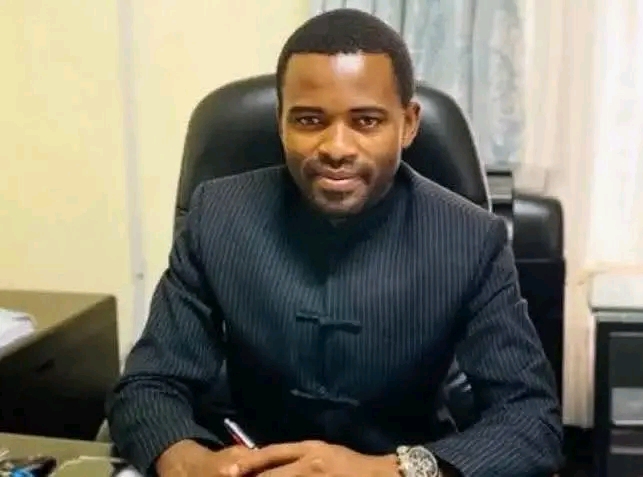
Zimba proposes unity government between UPND and NRPUP Tonse Alliance
Political scientist and NRPUP Tonse Alliance chief presidential adviser Dr Chris Zumani Zimba has proposed the formation of a national unity government between the ruling United Party for National Development (UPND) and the NRPUP Tonse Alliance as a way of promoting post-election dialogue, reconciliation and national peace.
Lusaka, 23 August – In a political letter addressed to President Hakainde Hichilema and NRPUP Tonse Alliance presidential candidate Brian Mundubile, Dr Zimba said Zambia needed a political ceasefire and dialogue rather than prolonged confrontation following the 2026 general elections.
Dr Zimba acknowledged that challenging presidential election results through the courts was a constitutional right, but argued that the country should prioritise reconciliation because of what he described as the painful legacy of post-election political conflict.
He cited the death of former Transport Minister and former Lunte MP Mutotwe Kafwaya as a reminder of the consequences of political confrontation, saying the country could not afford to continue with divisive rhetoric, hostile political campaigns and antagonistic relations.
He called for what he described as a “give and take” approach between the UPND and NRPUP Tonse Alliance, arguing that a locally designed unity-government arrangement would provide a platform for political healing and peaceful coexistence.
Among his proposals is an unconditional national amnesty for NRPUP members and leaders who, he claims, were arrested and detained before, during and after the elections.
Dr Zimba also called for political charges against Mr Mundubile and his running mate, Makebi Zulu, to be dropped, arguing that dialogue would provide a more practical route to resolving political disputes than prolonged legal battles.
He further proposed a political ceasefire between supporters of the two political camps, including bloggers and activists inside and outside Zambia.
According to Dr Zimba, the two sides should agree to end insults, attacks, misinformation and what he described as “cyber warfare”, which he said had contributed to political hostility, tribalism, regionalism and division.
He also proposed that the NRPUP Tonse Alliance’s parliamentary, mayoral and council seats should not be subjected to what he described as malicious petitions, arguing that the will of voters should be respected.
As part of his proposed power-sharing arrangement, Dr Zimba suggested that the NRPUP Tonse Alliance be allocated four Cabinet positions, four diplomatic positions, four permanent secretary positions, four chief executive officer positions in parastatal institutions and 30 district commissioner positions.
He said such an agreement would demonstrate the practical application of political compromise and could help create conditions for reconciliation regardless of the outcome of the presidential election.
Dr Zimba also called for electoral reforms, particularly reforms aimed at strengthening the autonomy, credibility and accountability of the Electoral Commission of Zambia (ECZ).
He argued that electoral reforms should be a central priority for the NRPUP Tonse Alliance, saying future elections risked repeating the political tensions witnessed during the 2026 electoral process unless stakeholders addressed concerns around electoral governance.
In one of the most significant elements of his proposal, Dr Zimba said the NRPUP Tonse Alliance should consider accepting the presidential results as declared by the ECZ and publicly recognising the President-elect in exchange for a broader political settlement.
He argued that such a move would demonstrate a genuine commitment to dialogue, reconciliation and national unity.
Dr Zimba further argued that Zambia’s political disputes could not be resolved solely through conventional court processes and that culturally sensitive dialogue, traditional reconciliation mechanisms and political engagement should play a greater role.
He also linked the proposed unity arrangement to the unresolved issue surrounding the burial of former President Edgar Lungu, saying Zambia needed a healing process after what he described as more than a year without the former president being buried with dignity.
He proposed the establishment of a “Mutotwe Kafwaya Truth and Reconciliation Commission” to address political grievances and help the country move away from confrontation.
Dr Zimba warned that a presidential election petition could become a lengthy and uncertain legal battle, describing it as a high-risk course of action that could delay the inauguration without necessarily achieving the desired outcome.
He questioned what would happen to Mr Mundubile, Mr Zulu and other NRPUP members facing criminal charges if the proposed petition failed, as well as to political supporters who were allegedly in detention or hiding because of political persecution.
Explaining his decision to intervene in the debate, Dr Zimba said his views were informed by his academic background in comparative politics, democracy promotion and public policy analysis.
He said he respected those who held opposing views but believed political actors had a responsibility to pursue solutions that could prevent further division.
Dr Zimba is the founder and secretary-general of the Tonse Alliance and chief presidential adviser to NRPUP. He previously served as political adviser to former President Edgar Lungu from 2019 to 2025 and holds academic qualifications in political studies, including a PhD.
-Nkanionline 2026 #NewsOnDemand
There’s no room for such in Zambia,we the (UPND) already has alliance partners who deserve those Ministerial appointments. Let the law visit Brian Mundubile and Makebi Zulu account for declaring themselves as duly elected president/ vice respectively.