

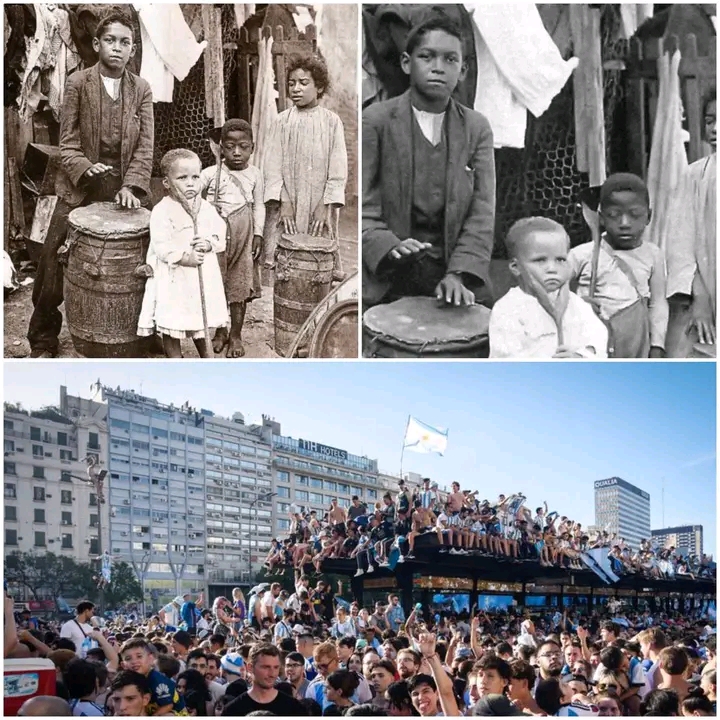
Argentina’s Dark History of Erasing Black People: How War, Disease, Discrimination, and “Racial Whitening” Wiped Out Generations of Afro-Argentines and Left the Country Almost Without a Black Population
Most people don’t realize it, but Argentina is one of the only South American countries with almost no Black population, unlike Brazil, Colombia, or Venezuela. This didn’t happen naturally—it was the result of decades of systemic hardships, wars, and social policies that targeted Afro-Argentines.
Here’s the full story:
1️⃣ Few Enslaved Africans Were Brought to Argentina
During the colonial period, Argentina’s economy was mostly cattle ranching and small farms, not the large sugar or coffee plantations seen in Brazil or the Caribbean. Because of this, the Spanish colonizers imported far fewer enslaved Africans—estimates suggest only 100,000–150,000 over several centuries. The smaller Black population made them more vulnerable to later social pressures and erasure.
2️⃣ High Mortality From Disease and Hardship
Afro-Argentines faced extremely harsh conditions. Many died young from disease, malnutrition, and overwork. During colonial conflicts and wars of independence, Black men were often forced into the army, where casualties were high. This significantly reduced the Black population over generations.
3️⃣ Discrimination and Social Marginalization
Even outside wars, Afro-Argentines were socially marginalized, denied economic opportunities, and often excluded from official records and censuses. Over time, this made Black communities less visible and more likely to lose their cultural identity.
4️⃣ Mass European Immigration and “Racial Whitening” (Blanqueamiento)
In the late 19th and early 20th centuries, Argentina encouraged millions of Europeans—mostly Italians and Spaniards—to settle in the country. The government and elite society actively promoted a policy called “blanqueamiento”, or racial whitening. Afro-Argentines were pressured to:
Intermarry with Europeans,
Hide or abandon their African heritage,
Assimilate into European-style culture,
And in some cases, move away from cities where Black communities were concentrated.
This policy, combined with historical marginalization, systematically erased Afro-Argentine culture and history, making it nearly invisible today.
5️⃣ Cultural Erasure
Today, very few Argentines openly identify as Black (less than 2%), and traditional music, dances, and stories of Afro-Argentines are largely forgotten. Even scholars note that Black contributions to tango, folk music, and other national traditions were minimized or attributed to Europeans.
6️⃣ The Result Today
Argentina’s near-total erasure of its Black population is now one of the most extreme cases of social and cultural disappearance in South America. While other countries proudly celebrate Afro-descendant communities, in Argentina, most people are unaware that the country even had a significant Black population.